Carbon Fiber Business Cards: The Complete Guide for 2026
Everything you need to know about ordering custom carbon fiber business cards — materials, printing options, NFC integration, and pricing.
This technical guide was prepared by the MASTERMATE Engineering Team based on our experience in carbon fiber material selection, composite manufacturing, CNC machining and OEM/ODM production.
A carbon fiber business card sits at the intersection of premium accessory, networking tool, and small but powerful brand statement. Done well, the card outlasts every paper card it competes against, builds a memorable handover moment in person, and — when paired with NFC — turns into a digital marketing asset that keeps working long after the meeting ends. This guide walks through the material, printing, NFC, and ordering decisions that drive cost, lead time, and final visual quality.
Anatomy of a Premium Carbon Fiber Business Card
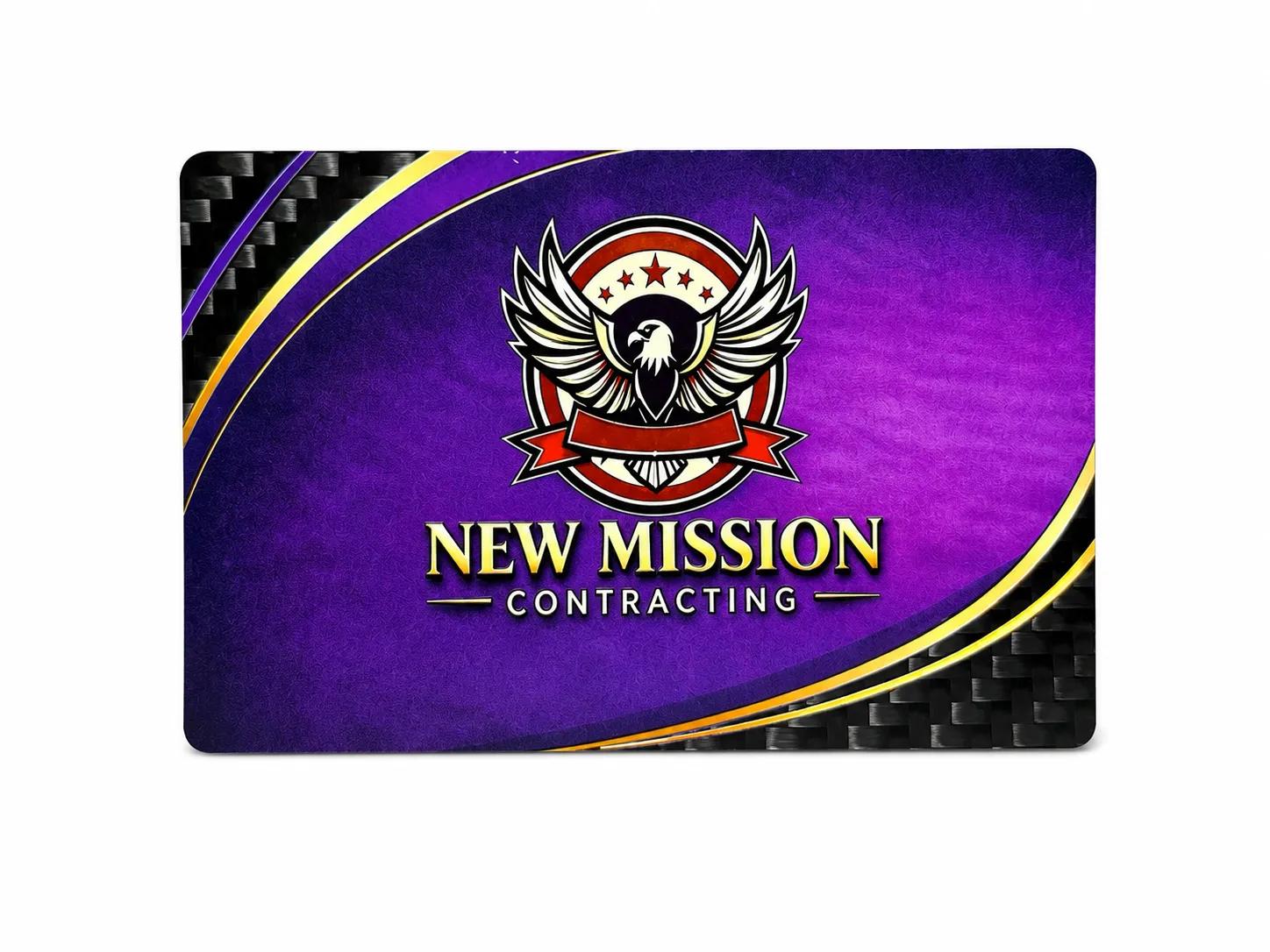
A modern CFRP business card is a 3-layer composite: a structural carbon fiber core, an optional inner NFC layer, and a UV-cured topcoat that carries the printing. Understanding what each layer does makes ordering far easier [1].
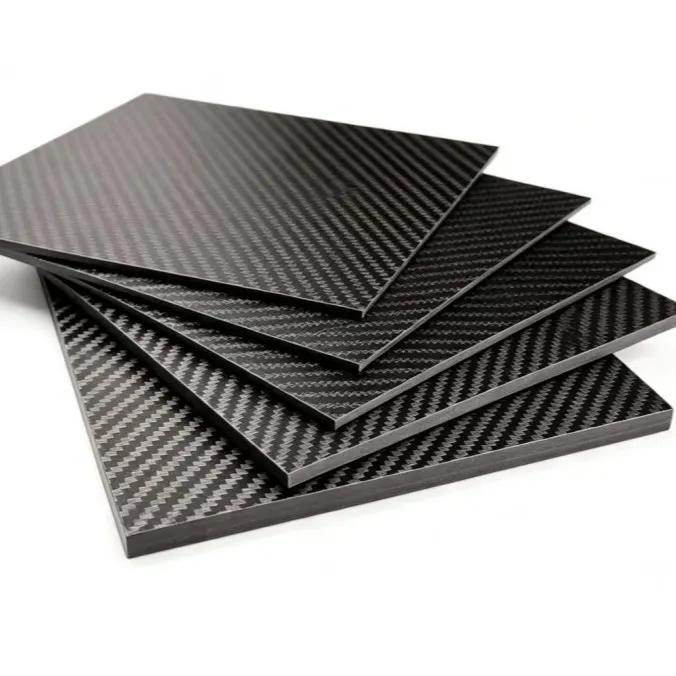
- Carbon core — typically 0.4–0.7 mm of woven 3K or 12K prepreg laminate. Defines the visible weave pattern, weight, and feel.
- Optional NFC inlay — 0.1 mm-thick chip + antenna laminated under the topcoat. Invisible from outside.
- UV topcoat — 50–100 µm of clear polyurethane that protects the carbon and accepts UV-cured ink.
- Surface print — UV-cured ink, typically 8–25 µm. CMYK + spot white possible; spot UV adds a third dimension to highlights.
Sizes, Weights, and Feel
| Format | Dimensions | Thickness | Weight | Best for |
|---|---|---|---|---|
| Standard credit card (CR80) | 85.6 × 53.98 mm | 0.5–0.8 mm | 4–7 g | Default for most uses |
| Mini card | 70 × 28 mm | 0.4–0.6 mm | 2–4 g | Pocket-friendly, networking events |
| Square / vintage | 60 × 60 mm | 0.5 mm | 4–5 g | Designers, agencies |
| Letter-size brochure | 203 × 127 mm | 0.6 mm | 15–22 g | High-touch sales handover |
| Custom shape | Any (CNC-cut) | 0.5–0.8 mm | varies | Branded silhouettes, mascots |
Printing Options Compared
| Method | Look | Durability | Min order | Cost adder |
|---|---|---|---|---|
| UV inkjet (CMYK) | Full-color artwork | Verify by sample test | Confirm by quote | Depends on coverage |
| Spot UV (raised gloss) | Gloss highlights on matte field | Verify by sample test | Confirm by quote | Extra setup step |
| Hot foil stamp (gold/silver) | Metallic accent | Verify by sample test | Confirm by quote | Tooling and setup |
| Laser engraving | Uninked etched detail | Verify depth and contrast | Confirm by quote | Process and area |
| Inlay (metal/wood) | Contrasting inset | Verify bonding and finish | Confirm by quote | Material and assembly |
| Color-dipped edges | Edge contrast | Verify wear resistance | Confirm by quote | Extra finishing step |
NFC Smart Cards — How the Tech Works
An NFC business card can embed a passive tag such as an NXP NTAG213, NTAG215 or NTAG216. These are NFC Forum Type 2 tags, not Apple Pay payment credentials. A short URL is usually the most interoperable payload; an on-tag vCard needs more space and device testing. Reading depends on the phone, software settings and antenna placement, especially beside conductive carbon fiber [2].
- 1. Pick a chipNXP lists 144 / 504 / 888 bytes of user read/write memory for NTAG213 / 215 / 216. NDEF overhead reduces usable payload further; choose based on the actual encoded record.
- 2. Encode payloadNDEF record — usually a URL pointing to a hosted vCard page or a direct vCard string for offline use.
- 3. Integrate the inlaySpecify antenna placement and laminate construction; verify the finished card can be read reliably near the carbon layer.
- 4. QC tap testAgree on representative phone models and a tap-test acceptance criterion before production.
- 5. Optional re-encodingA tag may be rewritable if it is not locked and access settings permit it. Test the chosen writer app and payload before ordering.
RFID Blocking — A Different Layer Entirely
Pricing — What You Should Expect to Pay
There is no reliable universal per-card price table: volume, tooling, laminate, finishing, NFC inlay and inspection requirements change the total. Request itemized sample, setup, unit and shipping costs for the same specification before comparing suppliers.
Beyond Business Cards
Once a brand is set up to produce CFRP cards, the same factory line spins out adjacent products. The most common upsells we see in our quoting pipeline:
- VIP / membership cards — clubs, restaurants, gyms; usually with serialised printing.
- Hotel key cards — premium properties replacing magstripe with NFC tags inside CFRP cards.
- Event badges — short runs of 50–500 for premium conferences and product launches.
- Gift cards — luxury retail using CFRP shells as physical containers for digital balances.
- Loyalty cards — auto dealerships, real estate agencies, private banks.
- Branded "drop card" inserts — packed with high-end product packaging as part of the unboxing experience.
Design Tips That Make a Real Difference
- Use the weave as a design feature, not a backdrop. Reverse-out artwork on a matte black field with the weave faintly visible is the most photographed look in the category.
- Avoid filling >70% of the surface with ink — the appeal of carbon fiber is the carbon. If everything is printed over, the card reads as plastic.
- Place QR codes and NFC indicators near a corner, not centered. Centered tap zones look like a phone case, not a card.
- Specify spot UV only on the logo and contact line — not on body text, where the gloss reads as a printing mistake.
- For dark themes, request matte topcoat. For light/neutral themes, gloss. Mismatched topcoat is the most common reason brands re-order at significant additional cost.
Ordering Workflow
- 1. Send artworkAI, PSD, PDF (vector preferred). Include CMYK values + Pantone references for any brand-critical color.
- 2. Receive proofConfirm artwork, bleed, safe area, NFC payload, price and proposed schedule in writing.
- 3. Approve sampleReview color, weave, NFC reading and finish against agreed acceptance criteria before mass production.
- 4. Mass productionConfirm the production slot and lead time after sample approval.
- 5. ShippingSelect a shipping method and obtain a destination-specific transit estimate.
Frequently Asked Questions
Quick answers to questions our sales team fields most often when customers are placing their first CFRP card order.
Will an NFC card work with every smartphone?
No universal compatibility claim is possible. NFC hardware, software settings and how the antenna is positioned affect the result. Test the finished card on the phone models your audience uses.
Can I update the link the NFC chip points to after I receive the cards?
If the tag has not been locked and its access settings allow writing, a compatible iPhone or Android NFC writer app can update the record. Alternatively, point the tag to a hosted URL and update the destination without rewriting every card.
Are CFRP cards waterproof?
Cured laminate generally tolerates brief water exposure, but coatings, edge seals and embedded electronics need product-specific testing. Do not rely on an underwater NFC reading claim or a universal heat/chemical rating.
Can carbon fiber cards bend?
They flex slightly under hand pressure (this is part of the premium feel) and return to flat. Folding past ~10° permanently kinks the topcoat. The cards survive being sat on, but not being folded in half.
What is the minimum order for custom NFC business cards?
The minimum depends on tooling, inlay, artwork and production method. Ask for separate prototype and production quantities in the quotation.
Will my card pass through airport security?
Security screening rules and equipment vary by location. A carbon fiber card is not a substitute for checking the current rules of the airport and carrier you use.
Are CFRP cards allowed in handwriting on signature panels?
No, the topcoat is non-porous and ballpoint pens will not write on it. For signed sections (loyalty cards, membership), specify a printed signature panel — a small matte rectangle that accepts pen ink.
Sources & Further Reading
- NXP Semiconductors — NTAG213/215/216 product overview
- NFC Forum — NDEF specification
- ISO/IEC 7810 — Identification cards: physical characteristics
- ISO/IEC 14443 — Proximity cards (NFC reader standard)
- Apple Developer — Core NFC framework
- Android NFC developer guide
- vCard specification (RFC 6350)
- Wikipedia — NFC business cards
- Pantone Color Bridge — coated reference
- Adobe — Preparing artwork for print (color management)
- Toray — Composite materials prepreg portfolio
- CompositesWorld — Cosmetic CFRP applications
Precisa de produtos de fibra de carbono personalizados?
Nossa equipe de engenharia ajuda marcas em todo o mundo a desenvolver soluções OEM em fibra de carbono com MOQs baixos e prototipagem rápida.
Solicite um orçamento hoje.