Pourquoi la fibre de carbone est le matériau n°1 pour les châssis de drone FPV
Les raisons d'ingénierie derrière la domination de la fibre de carbone en course de drone et builds FPV.
Ce guide technique a été rédigé par l'équipe d'ingénierie MASTERMATE sur la base de notre expérience en sélection de matériaux en fibre de carbone, fabrication de composites, usinage CNC et production OEM/ODM.
De tous les matériaux que les concepteurs de châssis de drones ont essayés — aluminium, magnésium, fibre de verre, ABS, mélanges polyamide-CF et finalement fibre de carbone — le carbone a remporté le marché pour une raison claire : rien d'autre ne fournit une rigidité spécifique et un amortissement comparables à la classe de poids dont les pilotes FPV et les drones photo prosommer ont besoin. Cet article décortique les chiffres derrière cette affirmation et montre où le carbone ne gagne pas — car il existe encore des niches où les alternatives ont du sens.
Le seul chiffre qui décide : la rigidité spécifique
Le travail d'un châssis est de maintenir les moteurs rigidement par rapport au contrôleur de vol tout en pesant le moins possible. La métrique pour cela est la « rigidité spécifique » — module divisé par densité. Les matériaux sont classés selon ce nombre quand le poids prime sur la résistance absolue [1].
Amortissement vibratoire : pourquoi l'image FPV est meilleure
Le module dit combien le châssis fléchit sous charge. L'amortissement dit à quelle vitesse les vibrations moteur s'estompent. Le facteur de perte du CFRP est environ 5–10× supérieur à l'aluminium aux 100–500 Hz typiques des petits moteurs. Traduction : lectures gyro plus propres, vidéo plus fluide, moins de stress sur les soudures [2].
| Matériau | Facteur η (×10⁻³) | Effet en vol |
|---|---|---|
| Acier | 0,5–1,0 | Vibrations résonnent longtemps |
| Aluminium 6061 | 0,5–2 | Mieux que l'acier mais résonne |
| Magnésium AZ31 | 5–15 | Naturellement amorti, bonne plateforme caméra |
| CFRP (matrice époxy) | 8–15 | Amortissement excellent, défaut industrie |
| CFRP (matrice cyanate ester) | 15–30 | Aérospatial, niche premium |
Comportement en crash : le carbone se fend net, l'aluminium plie pour toujours
Aluminium et plastique imprimé partagent un point commun après un crash : ils se déforment de manière permanente et silencieuse. Les moteurs restent à peu près parallèles, le FC vole, mais la résonance s'installe et vous passez les deux vols suivants à vous demander pourquoi votre vidéo est moins bonne. Le carbone survit intact ou se rompt nettement le long d'une ligne de fibres — les deux états sont visuellement évidents. Vous remplacez le bras fissuré et le reste retourne aux specs [3].
Épaisseur de plaque : choisir avec des chiffres, pas au feeling
Le plus grand levier de conception après le matériau est l'épaisseur. Plus épais = survie crash + rigidité ; plus fin = accélération + efficacité batterie. Tableau ci-dessous comme point de départ, à valider en FEM ou avec des données de vol.
| Classe | Bras | Plaques haut/bas | Masse châssis (typique) |
|---|---|---|---|
| Tinywhoop / 65–85 mm | TPU injecté | TPU ou CFRP 1 mm | 5–15 g |
| Toothpick 3 pouces | 2 mm | 1,5 mm | 20–30 g |
| Course 5 pouces | 4 mm | 2 mm | 85–110 g |
| Freestyle 5 pouces | 5 mm | 2 mm | 110–140 g |
| Long range 6–7 pouces | 4 mm (drapage UD) | 2 mm | 120–160 g |
| Cinelifter (8–10 pouces) | 5–6 mm | 2,5–3 mm | 300–500 g |
Nuances de carbone — la plupart sur-spécifient
Trois nuances communes pour drones. Réalité : T700 couvre 95 % des cas FPV. T800/T1000 sont souvent du marketing ; ils coûtent plus, apportent des gains marginaux en vol réel, et ne comptent que pour les pros qui mesurent en secondes [4].
- T300 — entrée de gamme. ~3,5 GPa traction, ok pour Tinywhoop et plaques cosmétiques. À éviter pour bras 5 pouces.
- T700S — le sweet spot FPV. ~4,9 GPa, excellente survie crash, bien tarifé.
- T800S — premium. ~5,9 GPa, légèrement plus rigide à épaisseur égale. Vaut le coup en 6–7" long range.
- T1000G — surdimensionné. F1 et aérospatial ; marketing en FPV. Économisez.
- Forged carbon — fibre hachée, PAS plus solide que tissé. Cosmétique uniquement, pas pour les bras.
Pourquoi la découpe CNC à partir de plaque gagne en volume
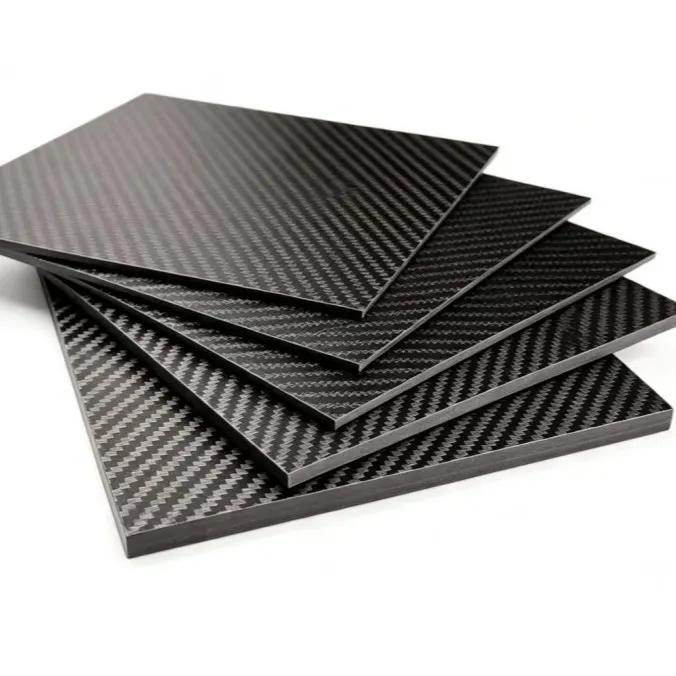
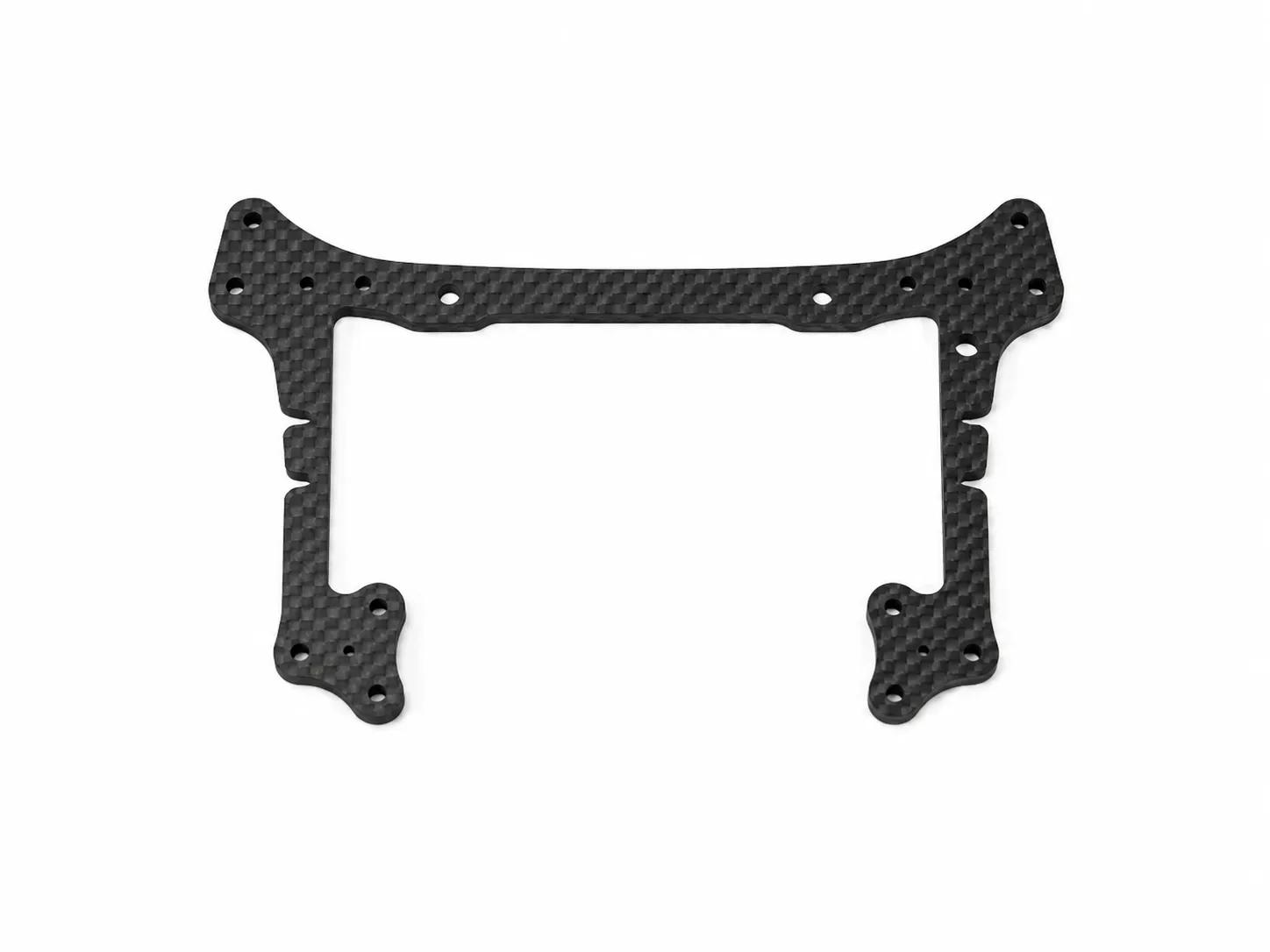
Presque tous les châssis FPV en production sont fraisés CNC depuis de la plaque. Raison économique : un kit CNC à 1 000 $ produit 5 000 châssis avant rafraîchissement, vs un moule injection comparable à 25 000 $+. Le CNC permet aussi l'itération rapide — les équipes course coupent un nouveau design toutes les quelques semaines.
- 1. CAO Fusion 360 / SolidWorksDéfinir géométrie de bras, cercle de boulons, trous stack.
- 2. Optimisation CAMDécoupes avec bridges, fraisage en avalant, avance optimale pour outil diamant.
- 3. Découpe empilée jusqu'à 8 plaquesFixation vacuum ou mécanique sur CNC 3 axes. Même trajectoire pour chaque plaque.
- 4. Scellage des bordsCyanoacrylate ou époxy sur chaque bord coupé : bloque l'humidité, stoppe le délaminage.
- 5. QC : dimensions, poids, état des bordsÉchantillonnage aléatoire. ±0,05 mm sur position de trou est le standard.
Quand le carbone N'EST PAS le bon choix
- Micro-drones <25 g — TPU ou PA-CF imprimés flexionnent là où un bras CFRP casserait ; la rigidité n'est pas la limite.
- Drones cinéma indoor avec ducts mousse — PETG ou PA-CF plus doux pour doigts et murs.
- Drones >100 °C ambiant — l'époxy CFRP ramollit ; passer au CFRP-BMI ou aluminium.
- Prototypes hobby unitaires où une plaque de contreplaqué à 15 $ suffit — oui, contreplaqué. Rigide, bien amorti, facile à couper.
Questions fréquentes
Questions courantes des builders comparant les matériaux.
Le T800 vaut-il vraiment la prime sur T700 ?
Pour course/freestyle 5 pouces, non — T700 est assez rigide, la différence en vol n'est pas mesurable. Pour 6–7" long range où passer à T800 permet de réduire 1,5 mm d'épaisseur, le gain de poids vaut le coup. Sinon, T700.
Pourquoi mon châssis carbone grince après quelques mois ?
Presque toujours une vis moteur ou entretoise stack légèrement desserrée, pas le carbone lui-même. Re-couplez (1,5–2,5 Nm pour M3) et le bruit disparaît. Si c'est un bord délaminé, scellez au cyanoacrylate fluide.
Les bras unidirectionnels sont-ils plus rigides que sergé ?
Oui — de 20–35 % dans le sens des fibres à poids égal. Compromis : 50 % moins solides perpendiculairement. UD pour bras (axe principal), sergé pour plaques haut/bas (impacts multi-directionnels).
Puis-je mélanger les épaisseurs sur un même drone ?
Absolument — les pros le font. 4 mm bras + 2 mm haut/bas est la disposition course 5 pouces standard car les charges diffèrent.
Le carbone bloque-t-il GPS ou vidéo ?
Il peut atténuer. Le carbone est légèrement conducteur (anisotrope), un FC ou GPS directement au-dessus d'une plaque pleine voit ~3–8 dB de perte. Solution : antennes au-dessus de la plaque, ou montage non conducteur.
Comment couper mes propres plaques avec un CNC ?
Fraises diamant 1,5–2 mm, 8 000–14 000 RPM, avance 100–250 mm/min, aspiration obligatoire (poussière CFRP = risque respiratoire). Fraisage en avalant donne des bords plus nets.
Sources & Further Reading
- Toray T700S Technical Datasheet
- Toray T800S Technical Datasheet
- Wikipédia — Polymère renforcé de fibre de carbone
- Hexcel — fiche HexTow IM7
- ASTM D3039 — Traction des composites
- ASTM D7264 — Flexion des composites
- CompositesWorld — Amortissement structures composites
- OSHA — Sécurité poussière composites
- NIOSH — Protection respiratoire usinage composite
- Aluminum Association — fiche 6061
- FAI — règles classes course FPV
- Wikipédia — Module spécifique
Besoin de produits en fibre de carbone sur mesure ?
Notre équipe d'ingénierie aide les marques du monde entier à développer des solutions OEM en fibre de carbone avec de faibles MOQ et un prototypage rapide.
Demandez un devis dès aujourd'hui.