Warum Carbonfaser der beste Werkstoff für Drohnenrahmen ist
Technische Analyse, warum Carbonfaser den Drohnen- und FPV-Markt dominiert — Schwingungsdämpfung, Steifigkeit und Crash-Robustheit.
Dieser technische Leitfaden wurde vom MASTERMATE Engineering Team auf Basis unserer Erfahrung in Carbonfaser-Materialauswahl, Composite-Fertigung, CNC-Bearbeitung und OEM/ODM-Produktion erstellt.
Dieser Leitfaden ist die praktische Ergänzung zu unserem Materialartikel — er überspringt die „Warum Carbon"-Frage und geht direkt zu Geometrie-, Layup- und Montageentscheidungen, die ein CFK-Blatt in einen flugfähigen Rahmen verwandeln. Wenn Sie Ihren ersten FPV-Build planen oder eine kleine Rahmenmarke in Serie skalieren, ist jeder Abschnitt ein Checkpoint, den es vor dem ersten Span zu durchlaufen gilt.
Geometrie zuerst: Motor-zu-Motor und Stack-Layout
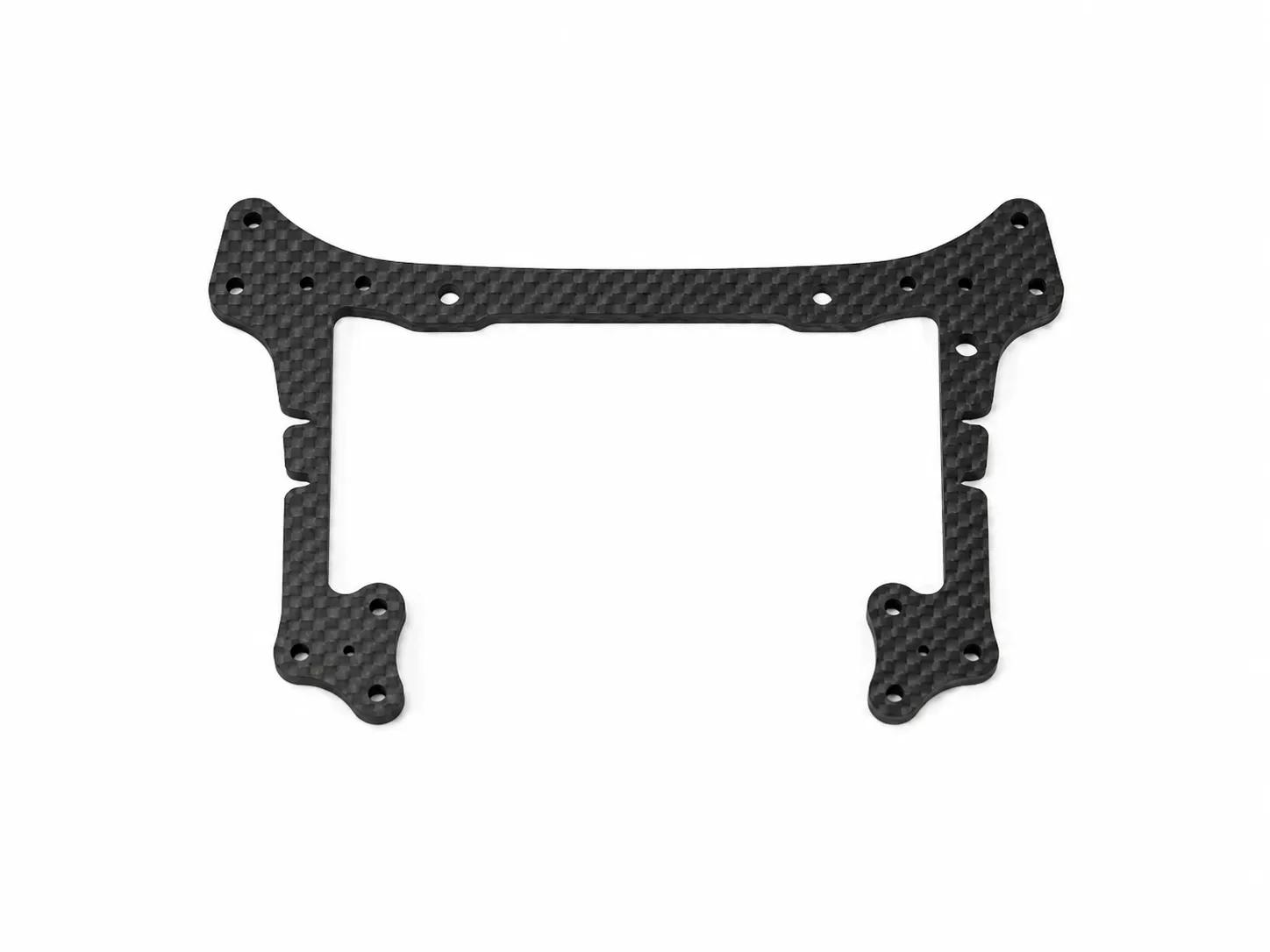
Rahmendesign beginnt mit zwei Zahlen: Motor-zu-Motor-Diagonale (bestimmt Propellergröße) und Stack-Höhe (begrenzt FC, ESC, VTX). Diese falsch und der Build ist nicht reparierbar; richtig und der Rest sind nur CNC-Tweaks [1].
| Klasse | Motor-zu-Motor | Propellergröße | Typische Nutzung |
|---|---|---|---|
| Tinywhoop | 60–85 mm | 31–40 mm (Ducted) | Indoor-Cruise, Anfänger |
| Toothpick | 110–150 mm | 2,5–3,5 Zoll | Indoor / leichtes Outdoor |
| CineWhoop | 160–200 mm (Ducted) | 2,5–3 Zoll (Ducted) | Cinema Indoor |
| 5-Zoll Racing | 210–225 mm | 5 Zoll | Race + Freestyle |
| Long-Range | 260–315 mm | 6–7 Zoll | Cruise, FPV-Exploration |
| Cinelifter | 350–500 mm | 8–10 Zoll | Profi-Cinematography (RED, BMPCC) |
Arm-Design: Wo Layups ihren Wert beweisen
Arme sehen die höchsten zyklischen Lasten am Quad. Reine Köperplatte funktioniert, aber UD-Layups entlang der Lastachse können Armgewicht bei gleicher Steifigkeit um 25–30 % senken. Trade-off: spröder gegen Seitenaufpralle — okay für Race-Arme, weniger ideal für Freestyle, das Treffer aus jeder Richtung nimmt.
Montagelöcher, Standoffs und der stille Killer
Carbonplatten versagen an Löchern, nicht im Freien. Häufigster DIY-Fehler: 4-mm-Loch 4 mm vom Plattenrand — zu nah, und das Laminat delaminiert um den Fastener unter jeder Seitenlast [2].
- Lochkanten immer fasen oder senken — scharfe Kanten konzentrieren Spannung und können Topcoat anreißen.
- M3 Nyloc-Muttern an Motorhaltern. Standard-Nyloc lockern sich nach ~50 Flügen.
- Für permanente Stack-Baugruppen: Tropfen Mittelfest-Schraubensicherung (Loctite 243) auf jede Schraube spart Stunden Influg-Überraschungen.
- Bei eingelegten Muttern: mit Epoxid einkleben — eingepresste Muttern wandern unter zyklischer Last.
Gewichtsbudget: Wohin jedes Gramm geht
Ein Profi-5-Zoll-Race-Build kommt auf ~480 g All-Up-Weight (AUW) mit Akku. Aufschlüsselung hilft, Optimierungspriorität zu setzen.
| Komponente | Gewicht | Optimierungspotenzial |
|---|---|---|
| Rahmen (CFK) | 95–110 g | Wechsel zu UD-Armen (-15 g) |
| 4× Motoren | 110–140 g | Kleinerer Stator (-20 g, kostet Leistung) |
| FC- / ESC-Stack | 15–25 g | AIO-Board (-5 g) |
| VTX + Antenne | 6–14 g | Kleiner Festleistungs-VTX (-5 g) |
| Kamera + Halter | 10–18 g | DJI O3 Air Unit (+12 g, lohnt sich) |
| 4× Propeller | 12–18 g | Tri-Blade vs. Five-Blade |
| Empfänger | 0,5–3 g | Vernachlässigbar |
| Akku (4S 1300 mAh) | 160–185 g | Zellwahl dominiert Flugzeit |
Montagesequenz: Die 30-Minuten-Checkliste
- 1. Jede Platte inspizierenUnter Lampe halten. Auf Delamination an Kanten, fehlende Schnitte an Lochpositionen, Oberflächenrisse achten. Defekte zurückweisen — einfacher als später entfernen.
- 2. Schnittkanten versiegelnDünnflüssiger CA-Kleber an jede CNC-Schnittkante. Blockiert Feuchteaufnahme und stoppt Faserausriss.
- 3. Standoffs trocken anpassenLochfluchtung oben/unten bestätigen. Zu enge Löcher mit Reibahle nachbearbeiten, bevor Schraube zwingt.
- 4. Motoren mit Schraubensicherung montierenLoctite 243 oder äquivalent. Auf Hersteller-Spec anziehen — typisch 1,5–2,5 Nm bei M3.
- 5. ESC und FC löten, dann Stack einsetzenPower-up-Test vor Stack-Festziehen. Lötfehler vor Verschrauben viel einfacher zu beheben.
- 6. Pre-Flight: sanfter Druck-Test je ArmHand-Last ~1 kg auf jeden Armspitz. Auf Knacken hören. Defekt am Tisch besser als in der Luft.
Rahmensteifigkeit und PID-Tuning hängen zusammen
Ein Rahmen, der bei Punch-outs federt, schiebt Phasenverschiebung ins Gyro-Signal — Ihr Tune kämpft gegen den Airframe statt gegen die Luft. Zwei Warnzeichen, dass Rahmensteifigkeit das Problem ist und nicht PIDs: (1) Prop-Wash okay, aber Rolls fühlen sich „matschig" über 80 % Throttle, (2) Gyro-Rauschspitzen korrelieren mit Throttle, nicht RPM. Erst Rahmen, dann Re-Tune [3].
Skalierung: Von 10 zu 10.000 Rahmen
Die meisten Rahmenmarken starten mit 10 Hand-CNC-Prototypen. Ökonomie ändert sich schnell mit Volumen — bei 100+ Rahmen senkt gestapeltes Schneiden auf Produktionsmaschine Arbeitskosten unter 5 $/Rahmen. Bei 1.000+ amortisiert sich Aufspann-Investition in der ersten Charge. Pressformen kommt erst über ~5.000 Rahmen pro Design ins Spiel.
Häufig gestellte Fragen
Praktische Fragen von Buildern beim Übergang vom Prototyp zur Kleinserie.
Wie fest M3-Stack-Schrauben am CFK-Rahmen anziehen?
1,0–1,5 Nm für Stack-interne Schrauben (FC/ESC/Standoffs), 1,5–2,5 Nm für Motorhalter. Übermäßiges Anziehen quetscht das Laminat um das Loch und schwächt es dauerhaft.
Kann ich neue Löcher in einen vorhandenen Rahmen bohren?
Nur mit scharfem diamantbeschichtetem Bohrer, Klebeband auf beiden Seiten und Unterlagblock. Austrittsloch immer fasen. 2×-Kantenabstandsregel beachten. Im Zweifel zum Hersteller zurück.
Warum beschichten Piloten ihre CNC-Platten mit Epoxid?
Dünner Epoxid-Versiegelung über die Fläche (nicht nur Kanten) versteckt Mikrokratzer-Effekte und verlangsamt UV-Degradation. Fügt 2–4 g pro Rahmen hinzu, ist optional — die meisten Race-Rahmen liefern ohne aus.
Was ist die sichere Mindestdicke für einen 5-Zoll-Arm?
4 mm in T700-Layup ist die realistische Untergrenze für Race-Misshandlung. 3-mm-Arme existieren, brechen aber bei hartem Kontakt routinemäßig. Für Freestyle ist 5 mm Standard.
Kann ich einen Desktop-Laser auf Carbon einsetzen?
Nein. Laserschnitt von CFK setzt gefährliche Gase frei (HCN u. a.) und hinterlässt verkohlte Harzkante, strukturell schwächer. Verwenden Sie CNC-Router mit Diamantwerkzeug und ordentlicher Staubabsaugung.
Wie verhindere ich, dass Vibrationen Fasteners über eine Saison lockern?
Loctite 243 (mittelfest) auf alle Stack- und Motorschrauben ist Standardprävention. Mit Nyloc-Muttern an Motoren brauchen Sie zwischen Rebuilds nicht nachziehen.
Sources & Further Reading
- Wikipedia — Verbindungselement-Kantenabstand-Regeln
- NASA Composite Materials Handbook (CMH-17)
- OSHA — Carbonstaub-Handhabungsleitfaden
- NIOSH — Atemschutz für Verbundwerkstoff-Bearbeitung
- Loctite 243 Produktdatenblatt
- Toray — Prepreg-Verbundwerkstoffe
- Betaflight-Dokumentation (Gyro-Filterung und PID)
- FAI — UAV/FPV-Race-Klassenregeln
- ASTM D5379 — Iosipescu-Schertest für Verbundwerkstoffe
- Hexcel — Prepreg-Verarbeitungshandbuch
- Cyanacrylat-Klebstoffe — Eigenschaften und Kantenversiegelung
- CompositesWorld — CNC-Bearbeitung von CFK
Benötigen Sie kundenspezifische Carbonfaser-Produkte?
Unser Engineering-Team unterstützt Marken weltweit bei der Entwicklung von OEM-Carbonfaser-Lösungen mit niedrigen MOQs und schnellem Prototyping.
Fordern Sie noch heute ein Angebot an.