Warum Carbonfaser der Werkstoff Nr. 1 für FPV-Drohnenrahmen ist
Die ingenieurstechnischen Gründe für die Dominanz von Carbonfaser im Drohnen-Rennsport und FPV-Builds.
Dieser technische Leitfaden wurde vom MASTERMATE Engineering Team auf Basis unserer Erfahrung in Carbonfaser-Materialauswahl, Composite-Fertigung, CNC-Bearbeitung und OEM/ODM-Produktion erstellt.
Von allen Werkstoffen, die Drohnenrahmen-Designer ausprobiert haben — Aluminium, Magnesium, Glasfaser, ABS, Polyamid-CF-Mischungen und schließlich Carbonfaser — hat Carbon den Markt aus einem klaren Grund erobert: Nichts liefert vergleichbare spezifische Steifigkeit und Dämpfung in der Gewichtsklasse, die FPV-Racer und Prosumer-Foto-Drohnen brauchen. Dieser Artikel entpackt die Zahlen hinter dieser Aussage und zeigt, wo Carbon nicht gewinnt — denn es gibt Nischen, in denen Alternativen sinnvoll sind.
Die eine entscheidende Zahl: Spezifische Steifigkeit
Die Aufgabe eines Drohnenrahmens ist es, die Motoren steif relativ zum Flight Controller zu halten und dabei so wenig wie möglich zu wiegen. Die Kennzahl für diese Aufgabe ist „spezifische Steifigkeit" — Modul geteilt durch Dichte. Werkstoffe werden danach gerankt, sobald Gewicht wichtiger ist als absolute Festigkeit [1].
Schwingungsdämpfung: Warum FPV-Footage besser aussieht
Modul sagt aus, wie stark der Rahmen unter Last federt. Dämpfung sagt aus, wie schnell motorbedingte Schwingungen abklingen. Der Verlustfaktor von CFK ist bei den 100–500 Hz, die für kleine Drohnenmotoren typisch sind, etwa 5–10× höher als bei Aluminium. Übersetzung: sauberere Gyro-Werte für den FC, ruhigere Kamerabilder, geringere Belastung an Lötstellen [2].
| Werkstoff | Verlustfaktor η (×10⁻³) | Auswirkung auf Flug |
|---|---|---|
| Stahl | 0,5–1,0 | Schwingungen klingen viele Zyklen aus |
| 6061-Aluminium | 0,5–2 | Besser als Stahl, schwingt aber |
| Magnesium AZ31 | 5–15 | Natürlich gedämpft, gute Kameraplattform |
| CFK (Epoxidmatrix) | 8–15 | Hervorragende Dämpfung; Branchenstandard |
| CFK (Cyanester-Matrix) | 15–30 | Luftfahrtqualität, Premium-Nische |
Crash-Verhalten: Carbon bricht sauber, Aluminium verbiegt sich für immer
Aluminium- und 3D-gedruckte Kunststoffrahmen haben eines gemeinsam: Sie verformen sich nach einem Crash dauerhaft und unbemerkt. Die Motoren bleiben einigermaßen parallel, der FC fliegt weiter, doch Resonanz schleicht sich ein und Sie wundern sich die nächsten zwei Flüge, warum Ihr Video schlechter aussieht. Carbon übersteht den Aufprall entweder intakt oder bricht sauber entlang einer Faserlinie — beide Zustände sind sofort sichtbar. Sie tauschen den gerissenen Arm und der Rest des Airframe geht zurück in Spec [3].
Plattendicke: Mit Zahlen wählen, nicht mit Bauchgefühl
Der größte Designhebel nach der Materialwahl ist die Plattendicke. Schwerere Platten geben Crash-Robustheit und Steifigkeit; leichtere Platten geben Beschleunigung und Akkueffizienz. Nutzen Sie die Tabelle als Startpunkt und validieren Sie dann mit FEM oder Flugdaten Ihres spezifischen Builds.
| Klasse | Armdicke | Top-/Bodenplatten | Rahmenmasse (typ.) |
|---|---|---|---|
| Tinywhoop / 65–85 mm | TPU spritzgegossen | TPU oder 1 mm CFK | 5–15 g |
| 3-Zoll Toothpick | 2 mm | 1,5 mm | 20–30 g |
| 5-Zoll Racing | 4 mm | 2 mm | 85–110 g |
| 5-Zoll Freestyle | 5 mm | 2 mm | 110–140 g |
| 6–7-Zoll Long-Range | 4 mm (UD-Aufbau) | 2 mm | 120–160 g |
| Cinelifter (8–10 Zoll) | 5–6 mm | 2,5–3 mm | 300–500 g |
Carbon-Qualitäten — die meisten Builder überspezifizieren
Es gibt drei gängige Qualitäten für Drohnenrahmen. Die Realität: T700 deckt 95 % der FPV-Anwendungsfälle ab. T800/T1000 sind meist Marketing-Sprache; sie kosten mehr, liefern marginale Performancegewinne im echten Flug und zählen nur für Profi-Racer, die Unterschiede in Time-Trial-Sekunden messen [4].
- T300 — Einstiegsklasse. ~3,5 GPa Zugfestigkeit, gut für Tinywhoop-Arme und Kosmetikplatten. Vermeiden bei 5-Zoll-Race-Armen.
- T700S — der FPV-Sweet-Spot. ~4,9 GPa Zugfestigkeit, ausgezeichnete Crash-Robustheit, gut bepreist.
- T800S — Premium. ~5,9 GPa Zugfestigkeit, etwas steifer bei gleicher Dicke. Lohnt sich bei 6–7" Long-Range-Builds, wo jedes Gramm zählt.
- T1000G — Overkill. In F1 und Luftfahrt verwendet; in FPV ein Marketing-Begriff. Geld sparen.
- Forged Carbon — gehackte Faser, NICHT stärker als gewebt. Kosmetische Option; nicht für Arme verwenden.
Warum CNC-Schnitt aus Plattenstock bei Volumen gewinnt
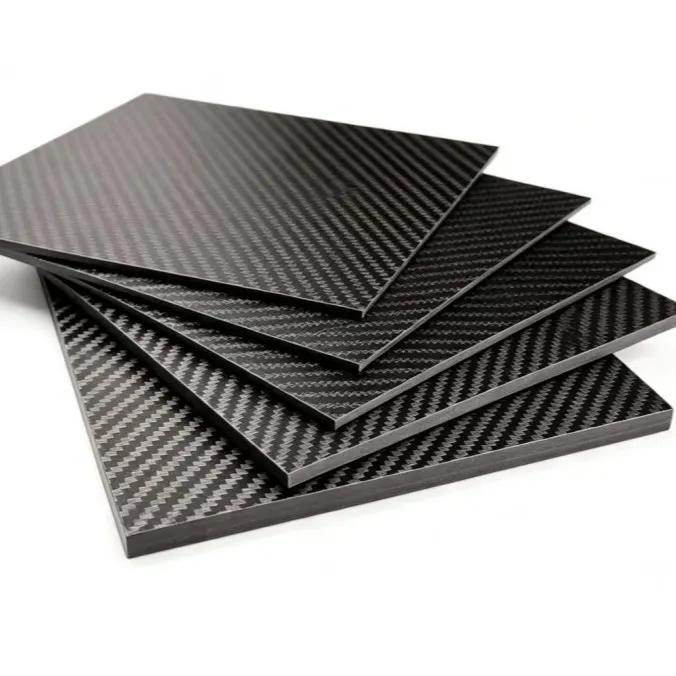
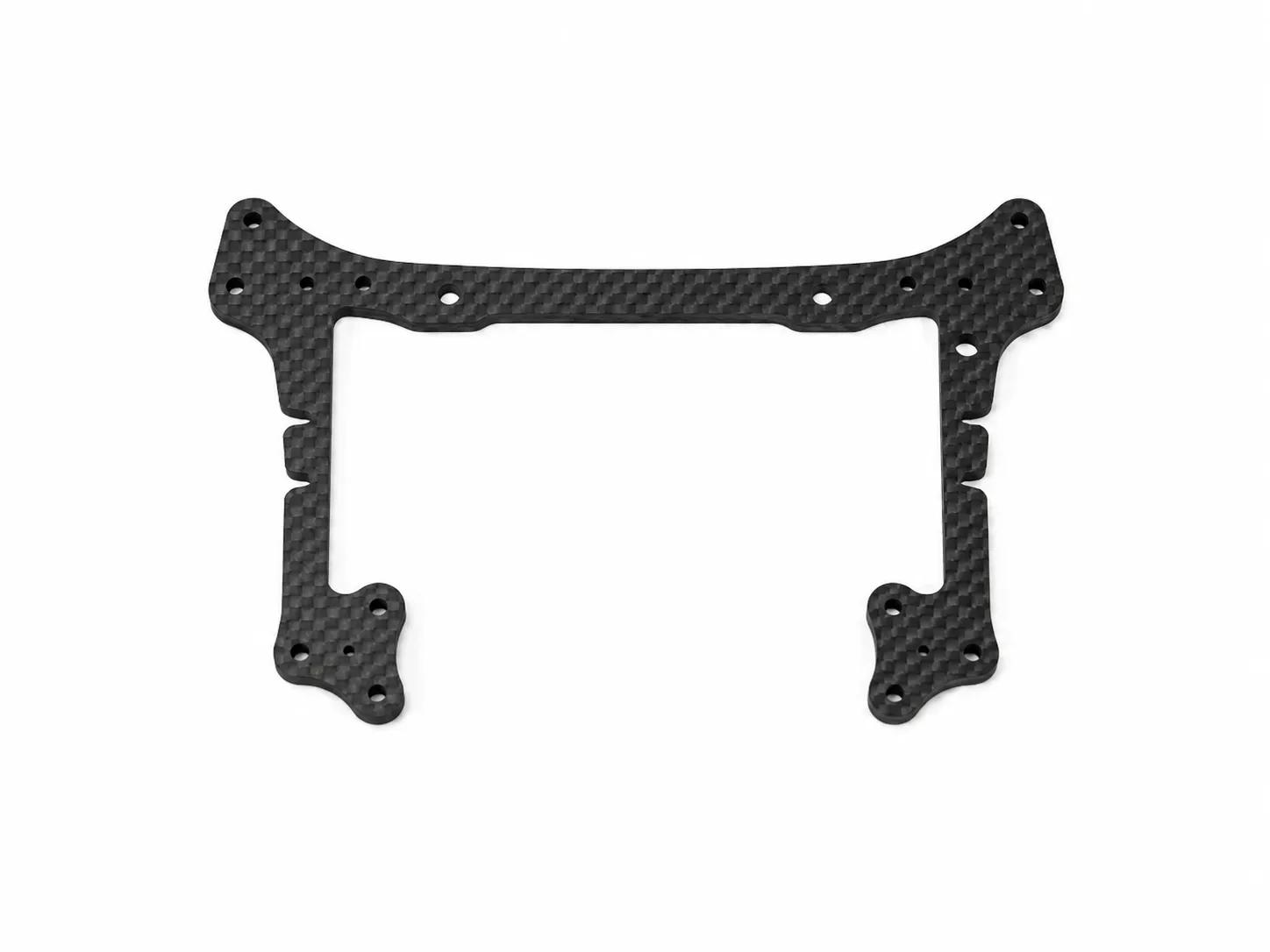
Nahezu jeder FPV-Rahmen in Serie wird CNC-gefräst aus Carbonplatten. Der Grund ist wirtschaftlich: ein 1.000-USD-Set CNC-Vorrichtungen produziert 5.000 Rahmen vor Werkzeugauffrischung, während ein vergleichbares Spritzgusswerkzeug 25.000+ USD kostet. CNC erlaubt zudem rasche Geometrie-Iteration — Race-Class-Teams schneiden während der Wettkampfsaison routinemäßig alle paar Wochen ein neues Rahmendesign.
- 1. CAD in Fusion 360 / SolidWorksArmgeometrie, Lochkreis, Stack-Montage definieren.
- 2. CAM-Werkzeugbahn-OptimierungBridges für Restmaterial, Gleichlauffräsen für saubere Kanten, optimaler Vorschub für Diamantwerkzeug.
- 3. Bis zu 8 Platten gestapelt schneidenVakuum- oder mechanische Aufspannung auf 3-Achs-CNC. Dieselbe Werkzeugbahn produziert jede Platte.
- 4. KantenversiegelungCA-Kleber oder Epoxidversiegelung an Schnittkanten verhindert Feuchteaufnahme und Delamination.
- 5. QS: Maße, Gewicht, KantenfinishStichproben für Chargenverifikation. ±0,05 mm Lochposition ist Standard.
Wann Carbon NICHT die richtige Wahl ist
- Sub-25 g Mikro/Whoop-Drohnen — TPU- oder PA-CF-Drucke überstehen Crashes elastisch, die einen CFK-Arm brechen würden; Steifigkeit ist auf dieser Skala nicht der Limit.
- Indoor-Cinema-Drohnen mit Schaum-Propellerschutz — PETG oder PA-CF ist freundlicher zu Fingern und Wänden.
- Drohnen über 100 °C Umgebungstemperatur — Epoxid-CFK erweicht; auf BMI-Matrix-CFK oder Aluminium wechseln.
- Einzel-Prototyp-Hobby-Builds, wo eine 15-USD-Sperrholzplatte reicht — ja, Sperrholz. Steif, gut gedämpft, einfach zu schneiden. Die halbe FPV-Szene begann dort.
Häufig gestellte Fragen
Häufige Fragen von Buildern, die Materialien vor einer Rahmenbestellung vergleichen.
Lohnt sich T800-Carbon wirklich gegenüber T700?
Für 5-Zoll-Race und Freestyle nein — T700 ist steif genug, der praktische Flugunterschied ist nicht messbar. Für 6–7" Long-Range-Builds, wo Sie 1,5 mm Plattendicke durch Upgrade auf T800 sparen können, lohnt sich die Gewichtsersparnis. Außerhalb dieser zwei Fälle ist T700 die richtige Wahl.
Warum knarrt mein Carbonrahmen nach einigen Monaten?
Fast immer durch eine lockere Motorschraube oder Stack-Standoff, der sich leicht gelöst hat — nicht durch das Carbon selbst. Jedes Verbindungselement auf Spec nachziehen (meist 1,5–2,5 Nm bei M3) und das Geräusch verschwindet. Ist das Geräusch von einer delaminierten Kante, mit dünnflüssigem CA-Kleber versiegeln.
Sind unidirektionale (UD) Carbonarme wirklich steifer als Köper?
Ja — um 20–35 % in Faserrichtung bei gleichem Gewicht. Der Trade-off: Sie sind in der senkrechten Richtung schwächer (etwa 50 % weniger). UD für Arme (klare Hauptlastachse) und Köper für Top-/Bodenplatten (multidirektionale Aufpralle) verwenden.
Kann ich verschiedene Plattendicken auf derselben Drohne mischen?
Absolut — Profis tun das routinemäßig. 4 mm Arme mit 2 mm Top/Bottom ist der Standard-5-Zoll-Race-Aufbau, gerade weil die Lasten je Platte unterschiedlich sind.
Blockiert Carbon GPS- oder Videosignale?
Es kann sie dämpfen. Carbon ist leicht leitfähig (anisotrop), daher sieht ein FC oder GPS-Antenne, die direkt über einer massiven Carbonplatte montiert ist, ~3–8 dB Signalverlust gegenüber Freiraum. Lösung: Antennen über der Platte halten, durch Schlitz routen oder nichtleitende Halterung verwenden.
Wie schneide ich eigene Carbonplatten mit CNC-Router?
Diamantbeschichtete Endmills (1,5–2 mm), 8.000–14.000 U/min, 100–250 mm/min Vorschub, Staubabsaugung Pflicht (CFK-Staub ist Atemwegsrisiko). Gleichlauffräsen erzeugt sauberere Kanten als Gegenlauffräsen bei diesem Material.
Sources & Further Reading
- Toray T700S Technical Datasheet
- Toray T800S Technical Datasheet
- Wikipedia — Kohlenstofffaserverstärkter Kunststoff
- Hexcel — HexTow IM7 Datenblatt
- ASTM D3039 — Zugeigenschaften polymermatrix-faserverstärkter Verbundwerkstoffe
- ASTM D7264 — Biegeeigenschaften polymerer Verbundwerkstoffe
- CompositesWorld — Dämpfung in Verbundstrukturen
- OSHA — Sicherheitsleitfaden Verbundwerkstoff-Staub
- NIOSH Atemschutz für Verbundwerkstoff-Bearbeitung
- AISI Aluminum Association — 6061 Datenblatt
- IPC FPV-Race-Klassenregeln
- Wikipedia — Spezifischer Modul
Benötigen Sie kundenspezifische Carbonfaser-Produkte?
Unser Engineering-Team unterstützt Marken weltweit bei der Entwicklung von OEM-Carbonfaser-Lösungen mit niedrigen MOQs und schnellem Prototyping.
Fordern Sie noch heute ein Angebot an.