FPV 机架组装指南:机臂厚度、CNC 孔位与铺层
几何尺寸、边距规则、UD 与斜纹机臂对比,以及工厂 CNC 要点——切割碳纤维 FPV 机架前的完整清单。
本技术指南由 MASTERMATE 工程团队基于碳纤维选材、复合材料制造、CNC 加工及 OEM/ODM 量产经验编写。
本指南是材料文章的实操配套——跳过「为何选碳纤维」,直接进入将 CFRP 板材变成可飞机架的几何、铺层与组装决策。若您即将搭建第一台 FPV,或将小型机架品牌扩产,以下每一节都应在开切前逐项核对。
先定几何:motor-to-motor 与 stack 布局
机架设计从两个数字开始:motor-to-motor 对角线(决定桨尺寸)与 stack 高度(约束飞控、ESC 与 VTX 选型)。这两个错了,整机无法补救;对了,其余只是 CNC 微调 [1]。
| 类别 | Motor-to-motor | 桨尺寸 | 典型用途 |
|---|---|---|---|
| Tinywhoop | 60–85 mm | 31–40 mm(ducted) | 室内巡航、新手 |
| Toothpick | 110–150 mm | 2.5–3.5 英寸 | 室内 / 轻户外 |
| CineWhoop | 160–200 mm(ducted) | 2.5–3 英寸(ducted) | 室内电影感 |
| 5 英寸竞速 | 210–225 mm | 5 英寸 | 竞速 + freestyle |
| Long-range | 260–315 mm | 6–7 英寸 | 巡航、FPV 探索 |
| Cinelifter | 350–500 mm | 8–10 英寸 | 专业电影(RED、BMPCC 载荷) |
机臂设计:铺层真正体现价值之处
机臂承受四轴上最高的循环载荷。纯斜纹板可用,但沿载荷轴的单向铺层可在同等刚度下将机臂重量降低 25–30%。代价是对侧向冲击更脆——竞速机臂可接受,freestyle 各向受击则略逊。
安装孔、standoff 与隐形杀手
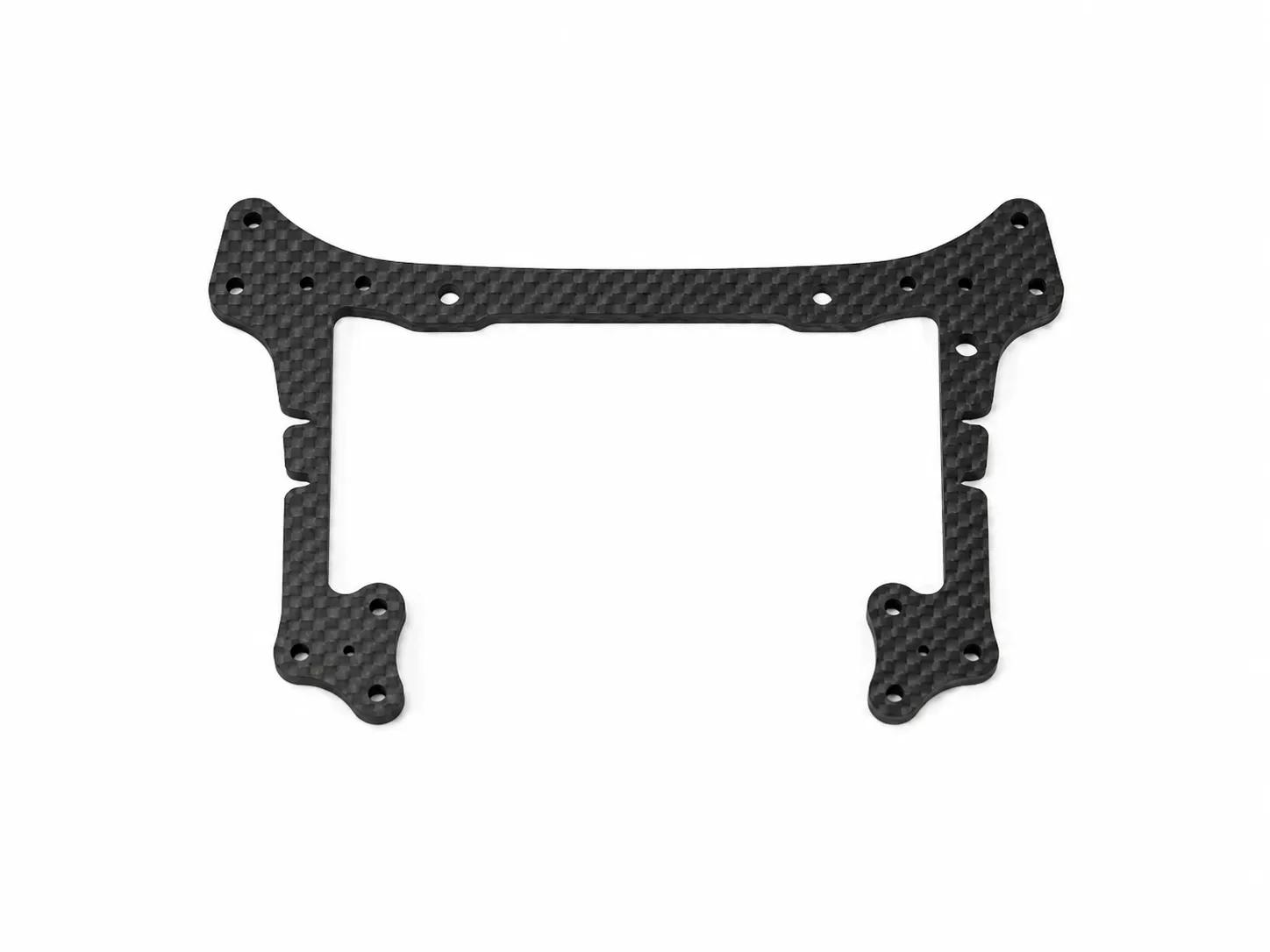
碳纤维板在孔位失效,而非开阔区域。最常见的 DIY 错误:在距板边 4 mm 处钻 4 mm 孔——过近时,任何侧向载荷都会使层合板在紧固件周围分层 [2]。
- 孔入口务必倒角或沉头——锐边集中应力,可能使面漆龟裂。
- 电机安装使用 M3 nylon insert lock-nuts。普通 nylock 约 50 次飞行 pack 后会在振动下松动。
- 永久 stack 组装时,每颗螺丝滴一滴 medium-strength threadlocker(Loctite 243),可避免飞行中意外。
- 若用 captive nuts,用环氧胶固定——压配螺母在循环载荷下会松脱。
重量预算:每一克去向
专业级 5 英寸竞速整机含电池约 480 g AUW。了解构成有助于决定优先优化何处。
| 部件 | 重量 | 优化潜力 |
|---|---|---|
| 机架(CFRP) | 95–110 g | 换 UD 机臂(−15 g) |
| 4× 电机 | 110–140 g | 更小 stator(−20 g,牺牲功率) |
| 飞控 / ESC stack | 15–25 g | AIO 板(−5 g) |
| VTX + 天线 | 6–14 g | 小功率固定 VTX(−5 g) |
| 相机 + 支架 | 10–18 g | DJI O3 air unit(+12 g 但值得) |
| 4× 螺旋桨 | 12–18 g | Tri-blade vs five-blade |
| 接收机 | 0.5–3 g | 可忽略 |
| 电池(4S 1300 mAh) | 160–185 g | 电芯选型主导续航 |
组装顺序:30 分钟清单
- 1. 逐块检查板材灯下查看。边缘分层、孔位漏切、表面裂纹。任何缺陷拒收——比事后拆坏板容易。
- 2. 封边切割面每条 CNC 切边涂薄层 CA 胶。阻潮并阻止纤维 tear-out 扩展。
- 3. Dry-fit standoff确认上下孔对齐。紧孔用合适 reamer 扩孔后再拧螺丝。
- 4. 涂 threadlocker 装电机Loctite 243 或同等。按电机厂规格力矩——M3 通常 1.5–2.5 Nm。
- 5. 焊 ESC 与 FC,再装 stack收紧 stack 前通电测试。机架合拢前修焊点容易得多。
- 6. 飞前:轻压测试每根机臂机臂尖端手载约 1 kg。听有无 cracking。在台面上发现缺陷好过在空中。
机架刚度与 PID 调参相互关联
punch-out 时机架挠曲会在陀螺信号中引入相位滞后——调参在与机体较劲而非空气。两个迹象表明问题在机架刚度而非 PID:(1)prop-wash 处理正常但 80% 油门以上 roll 发「软」;(2)陀螺噪声尖峰与油门位置相关而非 RPM。先修机架再重调 [3]。
规模化:从 10 架到 10,000 架
多数机架品牌先用 hobby CNC 手切 10 个原型。产量上来后经济性迅速变化——100+ 架时,生产机 batch stack-cutting 可将单架人工降至 $5 以下。1,000+ 架时,夹具投资首轮即可摊销。Compression molding 通常仅在单款设计 ~5,000 架以上才纳入考量。
常见问题
从单台原型到小批量生产的搭建者常问的实际问题。
CFRP 机架上 M3 stack 螺丝应拧多紧?
stack 内部螺丝(FC/ESC/standoff)1.0–1.5 Nm,电机安装 1.5–2.5 Nm。过紧会压溃孔周层合板并永久削弱。
能否在现有机架上钻新孔?
仅可用锋利 diamond 钻头、双面美纹纸与垫板。出口孔务必倒角。新孔须遵守 2× 边距规则。不确定时将设计交回厂家重切。
为何有些飞手给 CNC 板做环氧涂层?
薄层环氧封整面(非仅边缘)可掩盖微划 cosmetic 并减缓 UV 老化。每架增 2–4 g,纯可选——多数 race 级机架出厂不做。
5 英寸机臂安全最小厚度?
T700 铺层 4 mm 是 race 级滥用的现实下限。3 mm 机臂存在但在硬碰时经常断。freestyle 标准 5 mm。
能否用桌面激光切碳纤维?
不能。激光切 CFRP 会释放有害气体(含 HCN)并留下结构更弱的碳化树脂边。请用 diamond 刀具 CNC router 并配 proper 吸尘。
如何防止振动在一季内松动紧固件?
所有 stack 与电机螺丝涂 Loctite 243(medium-strength)为标准预防。配合电机 M3 nylon insert lock-nuts,重建之间通常无需重紧。
来源与延伸阅读
- Wikipedia — Aircraft fasteners and edge-distance rules
- NASA Composite Materials Handbook (CMH-17)
- OSHA — Carbon fiber dust handling guidance
- NIOSH — Respiratory protection for composite machining
- Loctite 243 product datasheet
- Toray — Composite Materials prepreg systems
- Betaflight documentation (gyro filtering and PID basics)
- FAI — UAV / FPV racing class regulations
- ASTM D5379 — Iosipescu shear test for composites
- Hexcel — Prepreg processing handbook
- Cyanoacrylate adhesives — properties and edge sealing applications
- CompositesWorld — CNC machining of CFRP