免费样品 · 2 小时内报价 · ISO 9001 碳纤维工厂 · 已发 100+ 国家info@carbonfactorys.comWhatsApp
Carbon Fiber Jewelry: The New Luxury Material
Guide 2026-02-20 5 min

Carbon Fiber Jewelry: The New Luxury Material

Why high-end jewelry brands are turning to carbon fiber for rings, bracelets, and pendants.

Mastermate Engineering Team
ISO 9001 Certified Composites Engineers · 10+ Years
Our in-house engineering team has shipped carbon fiber components into aerospace, motorsport, drone, and consumer-product programs since 2014. Every guide on this site is reviewed against current ASTM/ISO test data and our own factory production records.

Five years ago, "carbon fiber jewelry" meant a niche of motorsport-themed wedding bands sold from a handful of independent jewellers. Today it is one of the fastest-growing categories in the men's premium accessories market, with mainstream luxury brands launching dedicated lines and Etsy makers shipping into six-figure-revenue businesses. The material has the right combination of qualities for jewelry — distinctive look, lifetime durability, and a price point that sits between fashion jewelry and gold without competing directly with either. This guide explains the material choices, manufacturing methods, and styling considerations buyers ask about most often.

Why Carbon Fiber Works for Jewelry

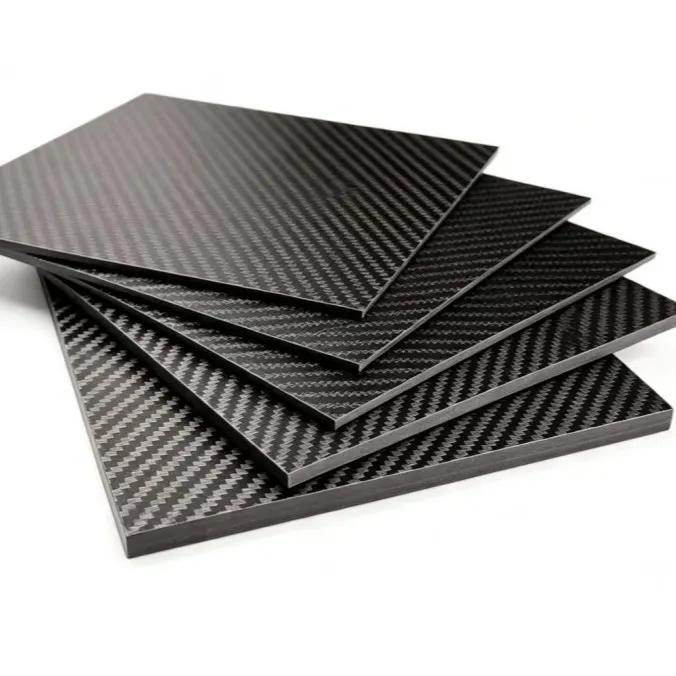
Most jewelry materials trade durability against beauty (delicate gold, scratch-prone platinum, dent-prone aluminum) or against price (gold, platinum). Carbon fiber sidesteps both trade-offs: it is harder than gold and platinum, lighter than every other premium jewelry material, hypoallergenic, and visually distinct enough that the pattern itself becomes the design feature [1].

Specific weight (lower = lighter on the wearer)
Density (g/cm³) Mohs hardness (relative)
Carbon fiber composite
1.55
~6 (resin) / >9 (fiber)
Titanium
4.43
6
Tungsten carbide
15.6
8.5–9
Sterling silver
10.49
2.5–3
14k gold
13.07
2.5–3
Platinum (PT950)
21.45
4–4.5

Material Options for Jewelry

FormLookBest forPrice tier
3K twill weaveClassic diagonal pattern, fine grain (~4 mm × 4 mm cells)Wedding bands, dress watches, pendants$$
12K twill weaveLarger, bolder diagonal patternStatement rings, men's cuffs$$
Plain weaveSymmetric square checker patternVintage-style and Art Deco pieces$$
Unidirectional (UD)Straight parallel lines, no checkerInlay strips, bracelet links$$
Forged carbonMarbled, no woven pattern; each piece uniqueSculptural rings, art-jewelry pieces$$$
Color-shifted carbonStandard weave with dyed resin (red, blue, gold tones)Statement pieces, fashion jewelry$$$
Carbon fiber forms used in jewelry.

Wedding Bands: What to Specify

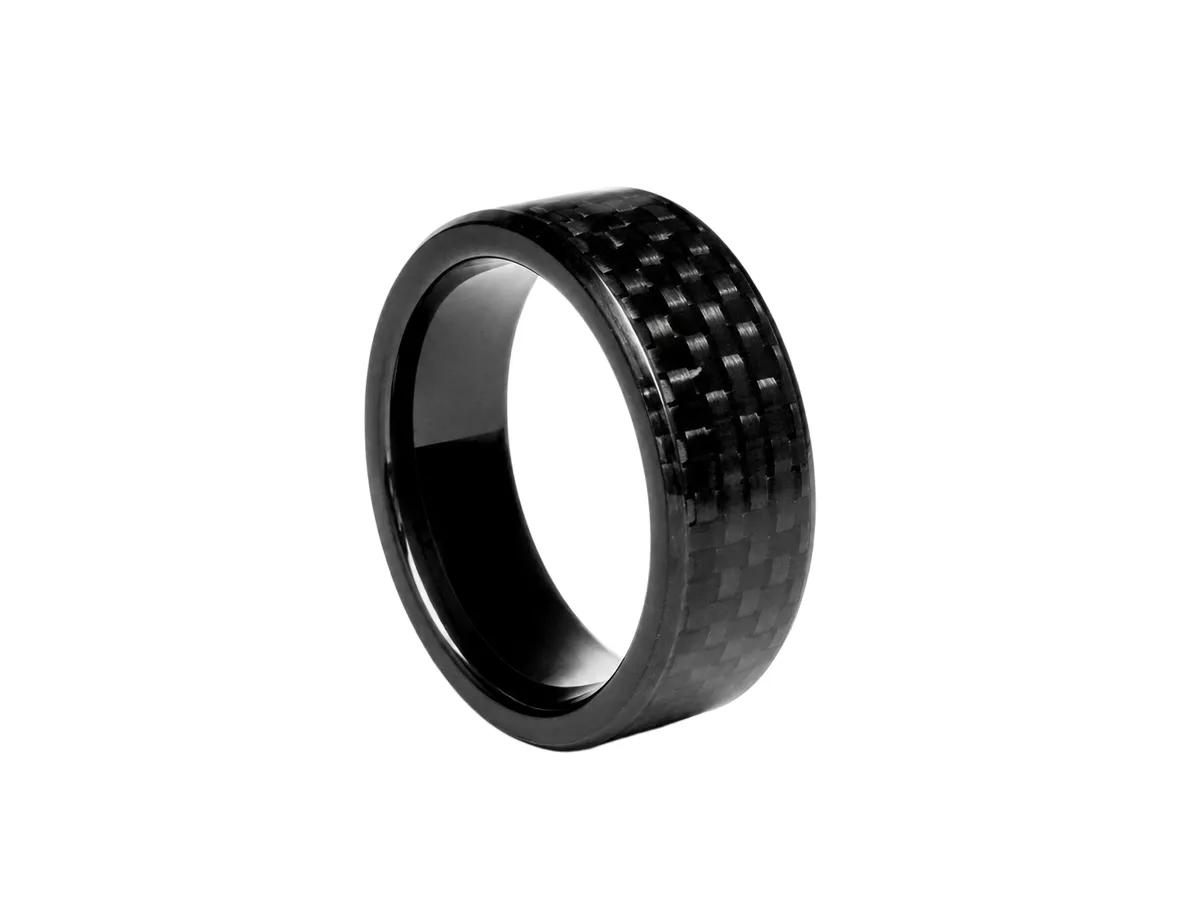
Rings are the largest category in carbon fiber jewelry by far. They are also the category most often returned for sizing and fit issues, simply because the market norms differ from gold rings. A few practical specifications buyers should always confirm with the supplier [2]:

  • Wall thickness: 1.6–2.0 mm minimum on the outside surface and 0.8 mm minimum at the inside contour. Below this, the ring is fragile at the seam.
  • Comfort fit profile: standard or comfort fit (rounded inside surface). Comfort fit makes a CFRP ring sit "one size larger" than a flat-fit version of the same nominal size.
  • Inlay or solid: solid CFRP, or CFRP with a precious metal inlay (gold, silver, koa wood, meteorite). Inlays drive cost up by 30–80% but are the dominant style for men's bands.
  • Edge finish: bevelled, rounded, or stepped. Bevelled and rounded hide everyday wear better than sharp stepped edges.
  • Allergen statement: confirm the resin is fully cured and that no nickel/cobalt is used in any inlay or post-processing — important for hypoallergenic claims.

How a Carbon Fiber Ring Gets Made

  1. 1. Tube production
    Roll-wrapped or bladder-molded carbon fiber tube cured at 120 °C, ~24 hours. Inner and outer diameter ground to spec.
  2. 2. CNC turning
    Tube sliced and turned on a precision lathe to ring profile (comfort-fit or flat).
  3. 3. Inlay routing (optional)
    CNC mills a channel for metal/wood inlay; inlay pressed in with epoxy.
  4. 4. Wet sanding
    400 → 800 → 1500 → 2500 grit progressive wet-sand to remove tooling marks.
  5. 5. Polish
    Diamond paste polish on cotton wheel; final clear coat applied with a spray gun in a dust-free booth.
  6. 6. QC and ring sizing
    ±0.1 mm dimensional check, weight verification, optical inspection for inclusions.

Pendants and Bracelets — Different Constraints

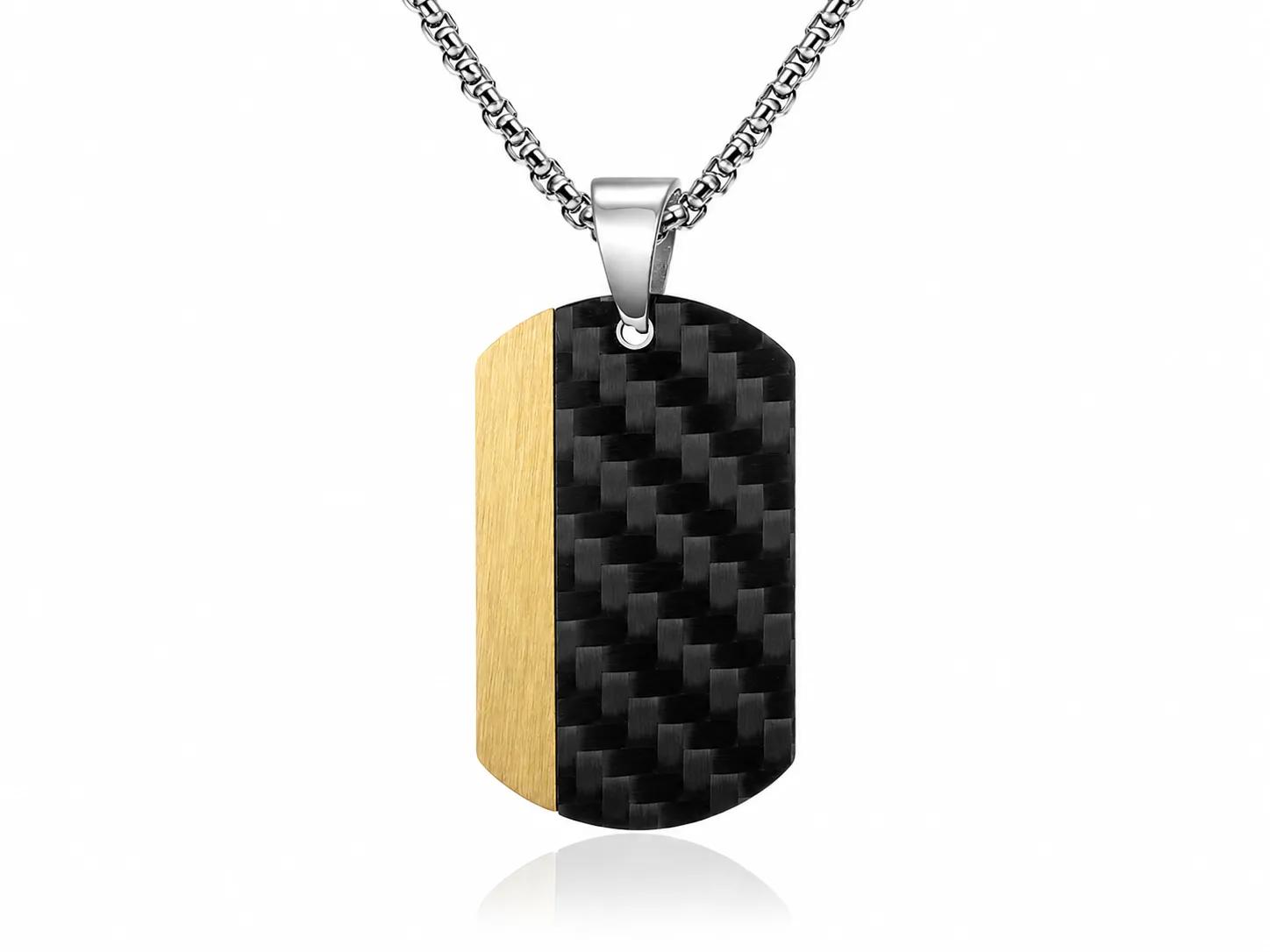
Pendants and bracelet links are routed from solid CFRP plate stock rather than tube, which gives more design freedom but adds cost in CNC time. The most common geometries: cross pendants (12 mm wide × 30 mm tall, 2.5 mm thick), dog tags (50 mm × 30 mm, 1.5 mm), and bracelet links (15 mm × 8 mm × 2 mm). Each requires bezel mounting points or precision drilled holes for chain or rivet attachment.

Pricing — What You Should Pay and What Margin to Expect

ItemComponent (FOB China)Typical retailBrand markup
Solid CFRP wedding band$18–$45$120–$2804–6×
CFRP + gold inlay band$45–$120$280–$6505–7×
CFRP + meteorite inlay$80–$180$400–$9004–5×
Forged carbon statement ring$60–$140$280–$5503–4×
Cross or dog-tag pendant$8–$22$60–$1607–9×
Bracelet (8–10 links)$35–$80$220–$4805–6×
Indicative wholesale pricing for finished carbon fiber jewelry components.

Styling Considerations

  • Carbon fiber pairs visually with cool metals (white gold, platinum, stainless) better than warm metals (yellow gold, copper).
  • For everyday wear with formal attire, stick to 3K twill — the smaller pattern reads as "textured neutral" rather than as a statement.
  • 12K twill and forged carbon are statement pieces — wear with simple outfits, not paired against busy fabrics.
  • Color-shifted (red, blue, copper-tone) carbon is fashion jewelry — design lifecycle of 2–3 years before the look feels dated.
  • For bridal sets, pair a CFRP men's band with a complementary white-gold or platinum women's band rather than mixing carbon-on-carbon.

Long-Term Care

Carbon fiber jewelry needs essentially zero upkeep beyond the standard "wipe with a damp cloth" — the fibers themselves are inert and the protective topcoat shields the resin. The only failure mode worth flagging is repeated impact against hard surfaces (countertop edges, gym equipment): unlike gold which deforms and can be polished out, CFRP either survives intact or chips. Take rings off before climbing, weightlifting, or motorcycle work and they will outlast you.

Frequently Asked Questions

The questions our jewelry-brand clients ask most often when sourcing components.

Is carbon fiber jewelry hypoallergenic?

Yes — pure CFRP contains no nickel, cobalt, or precious-metal alloys, all common allergens in cheap jewelry. Confirm the resin is fully cured (post-cure cycle at 80–120 °C) and that any inlay is itself hypoallergenic.

Can I resize a carbon fiber ring?

No, in the way that gold rings can be resized. CFRP cannot be stretched or compressed without delaminating the fibers. Reputable suppliers offer a one-time exchange policy for sizing rather than resizing — if you are buying for a partner whose size you do not know, plan for an exchange in the first 60 days.

Will my carbon fiber ring fade or yellow over time?

A properly UV-stabilized clear coat (which any reputable supplier uses) is good for 10+ years of normal indoor wear. Yellowing happens with constant outdoor exposure on lightly-protected components, not with the topcoats used in jewelry-grade CFRP.

Can I shower or swim wearing carbon fiber jewelry?

Yes. CFRP is fully waterproof and resistant to chlorine, salt water, and most soaps. Avoid prolonged contact with hot tubs at temperatures above 40 °C and do not wear in saunas — sustained heat above 80 °C softens the topcoat.

How does a carbon fiber ring compare to titanium for everyday wear?

Titanium is harder than CFRP's topcoat and more dent-resistant; CFRP is lighter and visually more distinctive. Titanium wins on absolute scratch resistance and impact survivability; CFRP wins on weight, comfort, and aesthetics. Both are hypoallergenic.

Are forged carbon pieces stronger than woven?

No — forged carbon (chopped fiber) is roughly 70–80% as strong as woven CFRP. The reason it is popular in jewelry is purely aesthetic: each piece has a unique marbled pattern impossible to replicate.

Sources & Further Reading

  1. Wikipedia — Carbon-fiber-reinforced polymer
  2. Mohs scale of mineral hardness (jewelry context)
  3. GIA — Hypoallergenic materials in jewelry
  4. Toray — Composite materials portfolio
  5. EU REACH compliance for jewelry materials
  6. ASTM F2999 — Standard Consumer Safety Specification for Adult Jewelry
  7. CompositesWorld — Carbon fiber in consumer products
  8. JCK Online — Men's alternative metals market reports
  9. Wikipedia — Forged composite (forged carbon)
  10. NIST — Polymer coatings and durability research
  11. CPSC — Consumer Product Safety Commission jewelry guidelines
  12. Hexcel — Cosmetic surface CFRP solutions
需要定制碳纤维解决方案?

联系我们的团队获取免费报价。