Carbon Fiber Insoles: Do They Work? Buyer's Guide for Sport & Support
How carbon fiber insoles work, who actually benefits (runners, plantar fasciitis, turf toe, hallux rigidus), rigid vs semi-rigid, full-length vs 3/4, sizing, the medical AFO angle, and how to source factory-direct.
This technical guide was prepared by the MASTERMATE Engineering Team based on our experience in carbon fiber material selection, composite manufacturing, CNC machining and OEM/ODM production.
Carbon fiber insoles get two very different reactions: runners swear by the "spring" and people with foot pain swear by the relief — while plenty of buyers try a cheap pair, feel nothing, and conclude they are a gimmick. Both camps are right, because a carbon insole is a tool with a specific job, and it only works when matched to the right shoe and the right foot. This guide explains how they actually work, who benefits, and how to buy (or source) the right one.
How Carbon Fiber Insoles Actually Work
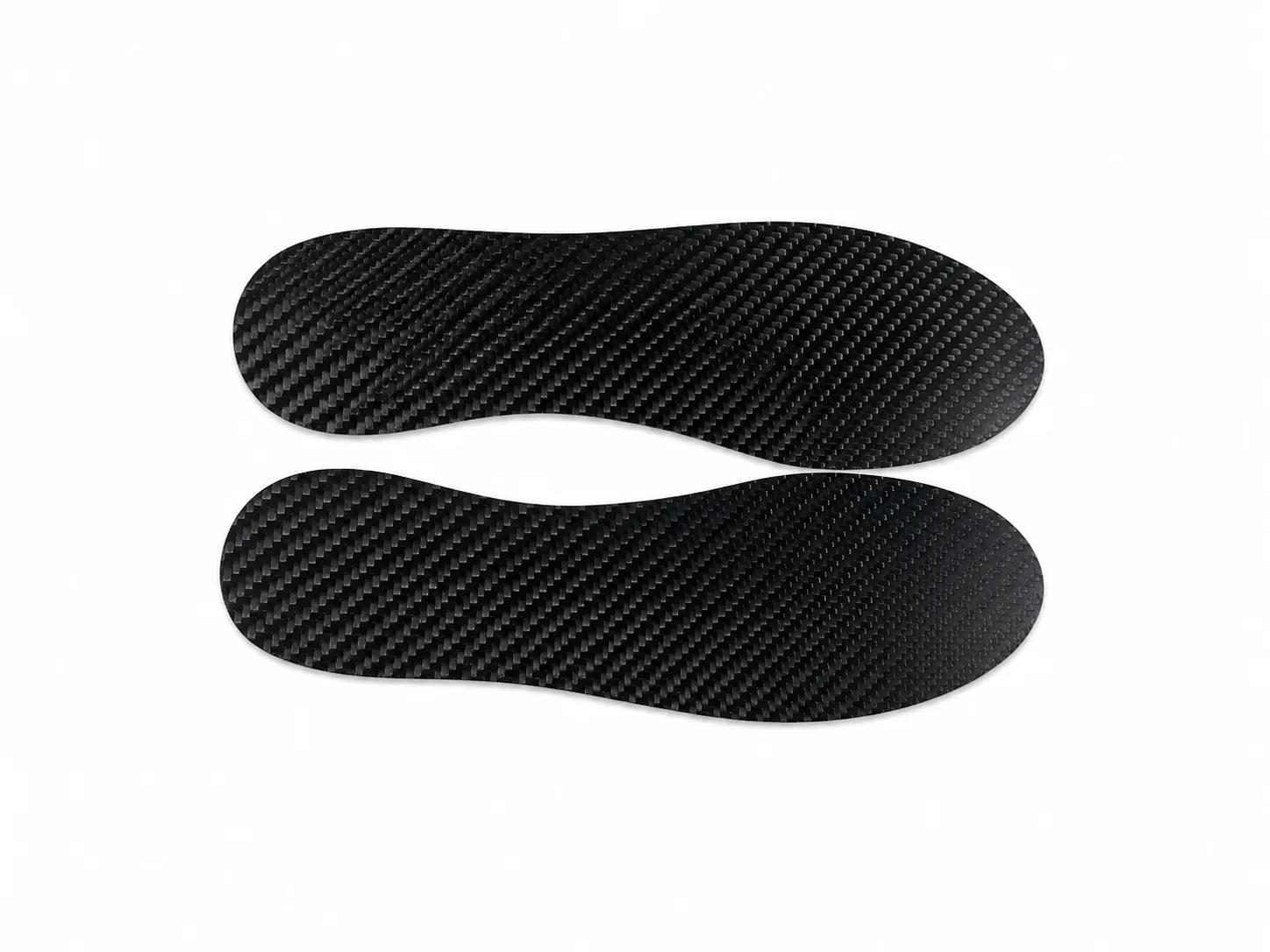
A carbon fiber insole is a thin, very stiff plate. Its only trick is resisting bending — but that one property does two useful things [1].
- Energy return / efficiency: a stiff plate stops the shoe (and your foot) from flexing and "wasting" energy on toe-off, the same principle behind carbon-plated racing shoes.
- Off-loading / protection: by stopping the foot from bending, it takes load and motion off a painful joint — the arch (plantar fasciitis), the big-toe joint (turf toe, hallux rigidus), or a healing stress fracture.
Who Actually Benefits
| Goal / condition | Why carbon helps | Stiffness |
|---|---|---|
| Running / sport performance | Energy return, less flex loss at toe-off | Semi-rigid |
| Plantar fasciitis | Limits arch collapse and strain | Semi-rigid to rigid |
| Turf toe / hallux rigidus | Stops the painful big-toe joint bending | Rigid (full-length) |
| Stress fracture recovery | Off-loads the healing bone | Rigid |
| Standing all day (work) | Reduces foot fatigue from repeated flex | Semi-rigid |
Rigid vs Semi-Rigid, Full-Length vs 3/4
| Type | What it does | Best for |
|---|---|---|
| Full-rigid plate | Almost zero flex | Off-loading a painful joint; medical use |
| Semi-rigid plate | Some controlled return | Sport, all-day comfort |
| Full-length | Stiffens the whole shoe | Turf toe, max efficiency |
| 3/4 (heel-to-arch) | Targets arch, fits more shoes | Plantar fasciitis, dress shoes |
What Makes a Good Carbon Insole
- Layup: a proper multi-ply carbon laminate (often with a fiberglass or aramid layer) tuned for the right stiffness — not a single brittle sheet that cracks.
- Thickness: typically 0.8–2 mm; thicker = stiffer. Too thick won't fit in the shoe.
- Edge finish: rounded, sealed edges so the plate doesn't fray or cut the foot/sock.
- Top cover: many add a thin EVA/leather top layer for comfort and grip; structural stiffness still comes from the carbon.
- Trim-to-fit: some are trimmable to shoe size; rigid medical plates are sized exactly.
Sizing & Fit
Fit matters more than with a soft insole, because a stiff plate in the wrong size or shoe is uncomfortable [2].
- Match the plate length/width to your shoe's footbed, not just your shoe size.
- Account for thickness — a 2 mm rigid plate tightens the shoe; size the shoe accordingly or use a 3/4 plate.
- For a specific condition, the stiffness and the cutout location matter — follow a professional's spec for medical use.
The Medical / AFO Angle
Carbon fiber is widely used in ankle-foot orthoses (AFOs) — braces for conditions like foot drop — because it is light and stores/returns energy. But an AFO is a prescribed, fitted medical device, not an off-the-shelf insole [3].
Cost, MOQ & Sourcing Factory-Direct
For brands and clinics, carbon insoles are a high-margin, light-to-ship product. Factory-direct, the economics depend on whether the shape is stock or custom [4].
| Order | MOQ | Indicative cost |
|---|---|---|
| Stock shape (trim-to-fit) | 50–200 | $3–9 / pair |
| With top cover / branding | 100–300 | $5–14 / pair |
| Custom shape / stiffness | 300+ (new tooling) | Quoted |
- State the use + stiffness: e.g. "semi-rigid full-length sport insole, trim-to-fit, 200 pairs, your logo".
- For a clinic/brand: private-label with your branding and a chosen top cover.
- For a custom shape or stiffness curve: send a sample or spec for tooling.
See our daily-goods category for carbon insoles and accessories, or the custom page for private-label runs. Related reading: what is carbon fiber? and is carbon fiber stronger than steel?
Frequently Asked Questions
The questions buyers ask most about carbon fiber insoles.
Do carbon fiber insoles actually work?
Yes, for what they are designed to do: a carbon insole is a stiff plate that resists bending, which improves toe-off efficiency in sport and off-loads painful, flex-sensitive conditions (turf toe, hallux rigidus, plantar fasciitis, stress-fracture recovery). They do not add cushioning, so if you expect softness you will feel "nothing". Matched to the right goal and shoe, they work well.
Who should use a carbon fiber insole?
Athletes wanting energy return, people on their feet all day wanting less fatigue, and people with conditions that hurt when the foot bends — plantar fasciitis, turf toe, hallux rigidus, or a healing metatarsal stress fracture. People who need shock absorption (not stiffness) are better served by a cushioned insole, or a carbon plate with a cushioned top layer.
What is the difference between rigid and semi-rigid carbon insoles?
A full-rigid plate allows almost no flex and is used to off-load a painful joint or for medical purposes. A semi-rigid plate allows some controlled return and is more comfortable for sport and all-day wear. Choose rigid to stop a joint moving (e.g. turf toe), semi-rigid for performance and comfort.
Are carbon fiber insoles good for plantar fasciitis?
They can help, because a semi-rigid-to-rigid plate limits how much the arch collapses and strains the plantar fascia. Many people pair the carbon plate with a cushioned top layer for comfort. For a diagnosed condition, follow your clinician's recommendation on stiffness and whether a full-length or 3/4 plate is right.
Is a carbon fiber AFO the same as an insole?
No. An AFO (ankle-foot orthosis) is a prescribed, fitted medical brace — often used for foot drop — that uses carbon fiber for its light weight and energy return. A carbon insole is an off-the-shelf footbed. If you have a diagnosed medical condition, you need a clinician-prescribed and fitted device, not a generic insole.
Can you produce custom or private-label carbon fiber insoles?
Yes. We make carbon insoles and offer private-label production: your chosen stiffness, shape, top cover and branding. MOQ is typically 50–200 pairs for stock shapes (trim-to-fit) and higher for custom tooling. Tell us the use case, stiffness and quantities for a quote.
Sources & Further Reading
Need Custom Carbon Fiber Products?
Our engineering team helps brands worldwide develop OEM carbon fiber solutions with low MOQs and rapid prototyping.
Request a Quote Today.