Carbon Fiber Motorcycle Helmets: The Complete Buyer's Guide
Everything that matters before you buy a carbon fiber motorcycle helmet — real weight savings, DOT vs ECE 22.06 vs SNELL certification, full-face vs modular, real vs forged carbon, and how to source factory-direct or private-label.
This technical guide was prepared by the MASTERMATE Engineering Team based on our experience in carbon fiber material selection, composite manufacturing, CNC machining and OEM/ODM production.
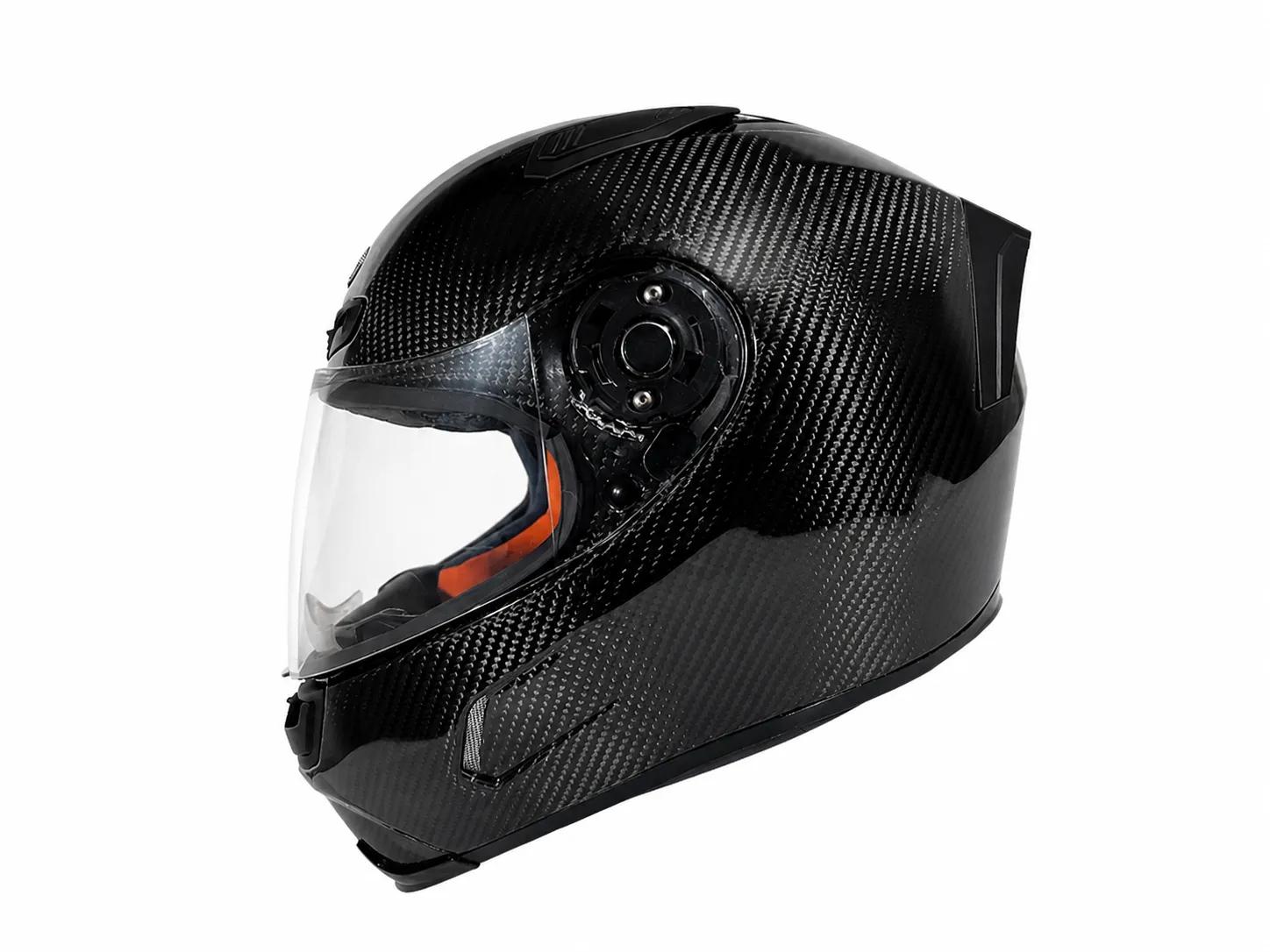
A carbon fiber motorcycle helmet promises the same thing every time: less weight on your neck, the same or better protection, and a shell that looks like it belongs on a MotoGP grid. Most of that promise is real — carbon is genuinely the best shell material for a lightweight, stiff, high-strength helmet. But the carbon helmet market is also where buyers get cheated most often, because "carbon fiber" on a product page can mean a fully autoclaved structural shell or a sticker of a weave printed onto plastic. This guide is the same briefing we give buyers and brands sourcing carbon fiber crash helmets from our factory.
Why Carbon Fiber for a Motorcycle Helmet
A helmet shell has one structural job: spread and absorb impact energy so less of it reaches the EPS liner and your skull. Carbon fiber does this at lower weight than any mainstream alternative. A full carbon fiber moto helmet shell is stiffer and lighter than polycarbonate or fiberglass, which is why nearly every premium full-face helmet offers a carbon variant [1][2].
Certification: DOT vs ECE 22.06 vs SNELL
This is the most important section in the guide. A carbon fiber helmet with no safety certification is a costume, no matter how good the weave looks. The three standards you will see — and what each actually means — are below [3][4][5].
| Standard | Region | What it tests | Reality |
|---|---|---|---|
| DOT (FMVSS 218) | United States (mandatory) | Impact, penetration, retention; self-certified by maker | Legal minimum in the US — but self-certified, so trust the brand |
| ECE 22.06 | Europe + 50+ countries | Multi-point impact, rotational (oblique) testing, batch lab-tested | Current gold standard — independently lab-tested per batch |
| SNELL M2025 | Voluntary (US) | Stricter, higher-energy repeat impacts | Favoured for racing; very stringent, voluntary |
Real Carbon vs Forged Carbon vs "Carbon Look"
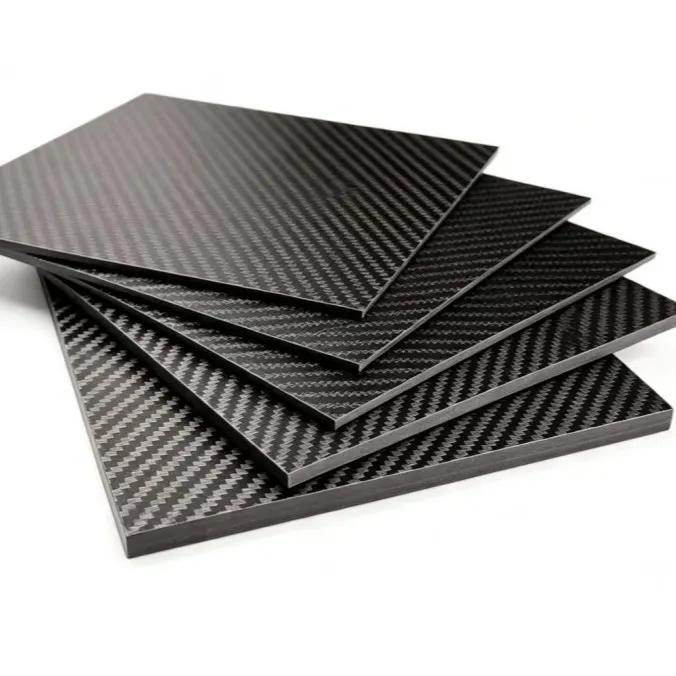
Just like car parts, "carbon fiber" on a helmet listing can mean three completely different things — and the price gap between them is enormous [6].
| Construction | Look | Real carbon? | Notes |
|---|---|---|---|
| Full woven carbon (prepreg) | Crisp 3K/12K twill weave | Yes — true carbon shell | Lightest, stiffest; autoclave or vacuum cured |
| Forged carbon | Marbled, no straight weave lines | Yes — chopped fiber | Premium cosmetic / accent areas |
| Carbon + fiberglass hybrid | Carbon outer, glass inner plies | Partly | Cost-down; heavier than full carbon |
| "Carbon look" hydro-dip | Printed weave on plastic | No — it is polycarbonate | Cosmetic only; not a carbon helmet |
The test is simple: a genuine carbon fiber motorcycle helmet states its shell construction and certification, weighs in the 1,150–1,400 g range for a full-face, and shows a real woven texture under the clear coat — not a repeating printed pattern.
Full-Face vs Modular vs Open-Face
Carbon's weight advantage shows up differently across helmet types. The heavier the helmet, the more a carbon shell is worth.
- Full-face carbon: the classic choice — lightest, quietest, safest, best for sport, touring and track. The carbon weight saving is most valuable here.
- Modular / flip-up carbon: the chin bar hinges up for convenience; the hinge adds weight, so a carbon shell helps offset it for touring riders.
- Open-face / 3-4 carbon: lighter duty, urban and cruiser use; carbon keeps an already-light helmet feather-light.
- Dirt bike / motocross carbon: extended chin and peak, vented for off-road; carbon cuts fatigue on long motos.
- Track / racing carbon: SNELL/FIM-spec shells with aero and emergency-release cheek pads.
How a Carbon Fiber Helmet Shell Is Made
A certified carbon shell is not just carbon laid in a mold — it is a validated system of shell, EPS liner and retention hardware. The production path:
- 1. Shell toolingA CNC master and matched mold are built for each shell size (most quality lines use 3–4 shell sizes, not one).
- 2. Carbon layupWoven prepreg carbon (often with aramid/fiberglass plies in impact zones) is laid into the mold to the validated ply schedule.
- 3. CureAutoclave or vacuum-bag cure consolidates the laminate and removes voids for consistent strength and weight.
- 4. Trim & portsCNC-trim the eyeport, vents and shield mounts; bond shield mechanism and edge trim.
- 5. EPS + fitMulti-density EPS liner fitted to the shell; cheek pads, liner and retention (D-ring or micrometric) installed.
- 6. Certification testBatch samples impact-tested to DOT / ECE 22.06 / SNELL before the run ships.
What to Check Before You Buy
- Certification mark: confirm DOT, ECE 22.06 or SNELL is printed on the helmet and matches your market — not just claimed on the listing.
- Real weight: ask for the actual size-M weight in grams. A "carbon" full-face over ~1,500 g is likely a hybrid or carbon-look shell.
- Shell sizes: quality lines use multiple shell sizes so a size S is not riding a size XL shell. One-shell-fits-all is a cost-down sign.
- Construction stated: a real maker states "full carbon", "carbon hybrid" or "forged carbon" — vagueness usually means carbon-look.
- Shield & optics: anti-fog/Pinlock-ready, anti-scratch, optically correct visor; a quick-release shield for cleaning.
- Homologation for export: ECE 22.06 for Europe, DOT for the US — buying the wrong certification for your market makes the helmet unsellable there.
Cost, MOQ & Private-Label Production
For riders buying one helmet, a genuine certified carbon full-face runs roughly $300–$700 factory-direct depending on certification and finish. For brands building a product line, the economics shift to tooling and volume [7].
| Scenario | Certification | MOQ | Indicative cost |
|---|---|---|---|
| Single / small order | DOT or ECE | 1–10 | $300–700 / helmet |
| Custom graphics (your design) | DOT or ECE | 50–100 | $180–340 / helmet |
| Private-label (your brand) | ECE 22.06 / DOT | 100–300 | Quoted by spec + volume |
| New custom shell tooling | Certified to your market | Set by amortization | Mold + per-shell quote |
Most brands start with our existing certified carbon shells and add custom graphics, liners and packaging — skipping the cost and lead time of new shell tooling while still selling under their own name.
Sourcing Carbon Fiber Helmets Factory-Direct
Whether you want one helmet or a private-label line, the fastest routes into a quote:
- State the type + certification: e.g. "full-face carbon, ECE 22.06, size range S–XXL" — we match it to a certified shell.
- Send your graphics or brand kit: we apply custom paint/graphics, liners and packaging to a certified base shell.
- For a new shell design: send references or CAD; we build and certify tooling to your target market.
At MASTERMATE we manufacture carbon fiber motorcycle helmets as an OEM supplier — custom-graphic and private-label programs included. Browse the Carbon Fiber Helmet Manufacturer hub for motorcycle and safety lines, or use the custom page to start a branded run — we quote within 24 hours.
Frequently Asked Questions
The questions our helmet sales engineers field most often.
Are carbon fiber motorcycle helmets safer than polycarbonate or fiberglass?
Not automatically — safety comes from the certification (DOT/ECE 22.06/SNELL), not the shell material alone. What carbon reliably adds is lower weight (typically 300–500 g less than polycarbonate) at equal or better stiffness, which reduces neck fatigue and rotational leverage. A certified carbon helmet gives you the safety of the standard plus the weight benefit.
How much does a real carbon fiber crash helmet weigh?
A genuine full-face carbon helmet typically weighs 1,150–1,400 g in size M. If a helmet advertised as "carbon fiber" weighs over about 1,500 g, it is most likely a carbon-fiberglass hybrid or a hydro-dipped "carbon look" polycarbonate shell rather than a full carbon shell.
What is the difference between DOT, ECE 22.06 and SNELL?
DOT is the US legal minimum and is self-certified by the manufacturer. ECE 22.06 is the current European standard, independently lab-tested per batch and includes rotational (oblique) impact testing. SNELL M2025 is a stricter voluntary US standard popular for racing. For Europe buy ECE 22.06; for the US buy DOT (and SNELL if you race).
Is forged carbon better than woven carbon for a helmet?
Neither is "better" for safety — both are real carbon. Woven prepreg carbon is the standard structural shell construction; forged carbon (chopped fiber) is prized for its marbled cosmetic look and is often used on accent areas. The certification, not the weave style, determines protection.
How do I tell a real carbon helmet from a "carbon look" one?
Check three things: stated shell construction (a real maker says "full carbon"), actual weight (real carbon full-face is ~1,150–1,400 g), and the weave texture (woven carbon flows with the shell's curves; printed "carbon look" repeats as a perfect pattern). And always confirm a real certification mark.
Can you produce carbon fiber motorcycle helmets under my own brand?
Yes. We offer custom-graphic and private-label/OEM production on certified carbon shells: your design, liners, packaging and logo on a DOT or ECE 22.06 certified base. MOQ is typically 50–100 for custom graphics and 100–300 for full private-label, with pricing scaling by volume. Send your brand kit and target market for a quote.
Sources & Further Reading
- ECE Regulation No. 22.06 — Protective helmets (UNECE)
- NHTSA FMVSS No. 218 — Motorcycle helmets (DOT)
- Snell Memorial Foundation — M2025 standard
- SHARP — UK motorcycle helmet safety ratings
- CompositesWorld — Carbon fiber in protective equipment
- Wikipedia — Motorcycle helmet
- Wikipedia — Carbon-fiber-reinforced polymer
- FIM — Racing homologation program
Need Custom Carbon Fiber Products?
Our engineering team helps brands worldwide develop OEM carbon fiber solutions with low MOQs and rapid prototyping.
Request a Quote Today.