Carbon Fiber Sheets & Plates: The Complete Buyer's Guide (Weave, Thickness & Sourcing)
How to choose carbon fiber sheets and plates — solid vs sandwich panels, 3K vs 12K weave, twill vs plain, thickness and tolerance, mechanical properties, and how to source cut-to-size factory-direct.
MASTERMATE supports T300, T700 and T800 carbon fiber options according to the required mechanical performance, application and project budget.
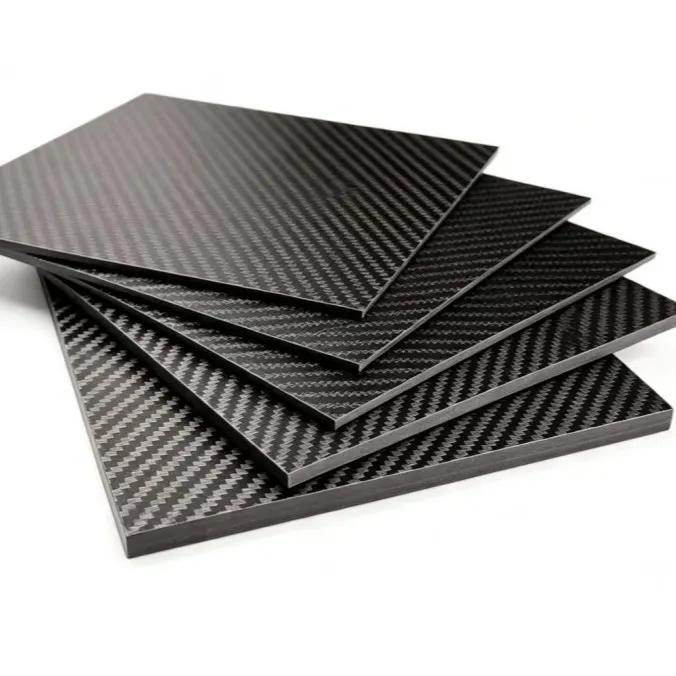
Carbon fiber sheets and plates are the raw building blocks behind most custom composite parts — drone arms, camera rigs, machine guards, structural brackets and panels. But the term "carbon fiber plate" covers a huge range: 0.5 mm cosmetic veneers, 5 mm structural laminates, and lightweight sandwich panels with a foam or honeycomb core. Pick the wrong one and you either overpay or it fails in service. This guide explains the types, the weave and surface options, the numbers that actually matter, and how to source cut-to-size factory-direct.
For sourcing, MASTERMATE supplies carbon fiber sheets, plates and raw materials with cut-to-size and custom layup support. Questions on spec? See guides from the MASTERMATE Engineering Team or submit drawings for engineering review.
Sheet vs Plate vs Laminate: What the Terms Mean
The terms overlap in practice: "sheet" usually means thinner stock (under ~2 mm), "plate" means thicker structural stock, and "laminate" describes how either is built up from multiple plies. All are cured carbon-fiber-reinforced polymer (CFRP) [1].
- Sheet — thin stock (~0.3–2 mm) for panels, covers, veneers and light brackets.
- Plate — thicker structural stock (~2–10 mm and up) for load-bearing parts, arms and machined components.
- Laminate — the layup itself: ply count, fiber orientation (0/90, ±45) and resin, which set the final properties.
Solid Plate vs Sandwich Panel
A solid plate is all carbon laminate — dense, stiff and easy to machine. A sandwich panel bonds thin carbon skins to a lightweight core (foam or Nomex/aluminum honeycomb), giving far more bending stiffness per gram, at the cost of thickness and edge machinability [2].
| Factor | Solid plate | Sandwich panel |
|---|---|---|
| Stiffness-to-weight | Good | Excellent |
| Weight | Heavier | Lightest |
| Machinability | Drill, mill, tap directly | Edges need sealing / inserts |
| Thickness | 0.5–10 mm+ | Usually 5–25 mm |
| Typical use | Arms, brackets, plates | Large panels, decks, enclosures |
| Relative cost | Lower | Higher |
Weave & Surface: 3K, 12K, Twill, Plain, Gloss, Matte
Weave and finish are mostly cosmetic on a structural plate — the layup underneath drives strength — but they change appearance, surface flatness and cost.
- 3K twill — the classic fine "checkerboard" weave; the default for a premium visible surface.
- 12K — larger tow, bolder pattern, lower cost per area; used where the look matters less.
- Plain weave — tighter and more uniform; twill drapes better over curves.
- Forged / chopped — marbled look from chopped tow, popular on accent parts.
- Gloss vs matte — a clear-coat gloss deepens the weave; matte is understated and hides fingerprints.
Thickness, Tolerance & Properties
For structural work the numbers that matter are thickness tolerance, fiber orientation and the resulting stiffness — not just the visible weave. Stiffness rises sharply with thickness, so a small thickness change makes a big difference [3].
| Spec | Why it matters | Typical |
|---|---|---|
| Thickness | Bending stiffness scales with thickness cubed | 0.5–10 mm |
| Tolerance | Fit into slots, joints and assemblies | ±0.1–0.2 mm |
| Fiber orientation | Sets directional strength | 0/90 or quasi-isotropic |
| Resin | Temperature resistance & finish | Epoxy (standard) |
| Surface | Appearance & flatness | 3K twill, gloss |
| Core (if sandwich) | Weight & stiffness | Foam / honeycomb |
How to Choose the Right Sheet or Plate
- Start from the load and stiffness you need, then pick thickness — going thicker raises stiffness fast (it scales with thickness cubed).
- Decide solid vs sandwich: solid for machinable structural parts; sandwich for large, light, stiff panels.
- Choose weave and finish for the visible faces only; the internal plies do the structural work.
- Specify a tolerance if the part fits into a slot, joint or assembly.
- Order cut-to-size (CNC) to avoid paying for offcuts and extra machining.
MOQ & Sourcing Factory-Direct
Buying direct from the factory removes distributor markups, and cut-to-size service means you pay for the part, not the offcut. The right option depends on whether you need stock sizes or parts CNC-cut to your drawing.
- Stock sheets / plates — standard sizes (e.g. 400×500 mm) in common thicknesses; lowest cost and fastest.
- Cut-to-size — send a DXF or drawing and we CNC-cut, drill and chamfer to spec.
- Custom layup — choose orientation, thickness and core for a specific stiffness target.
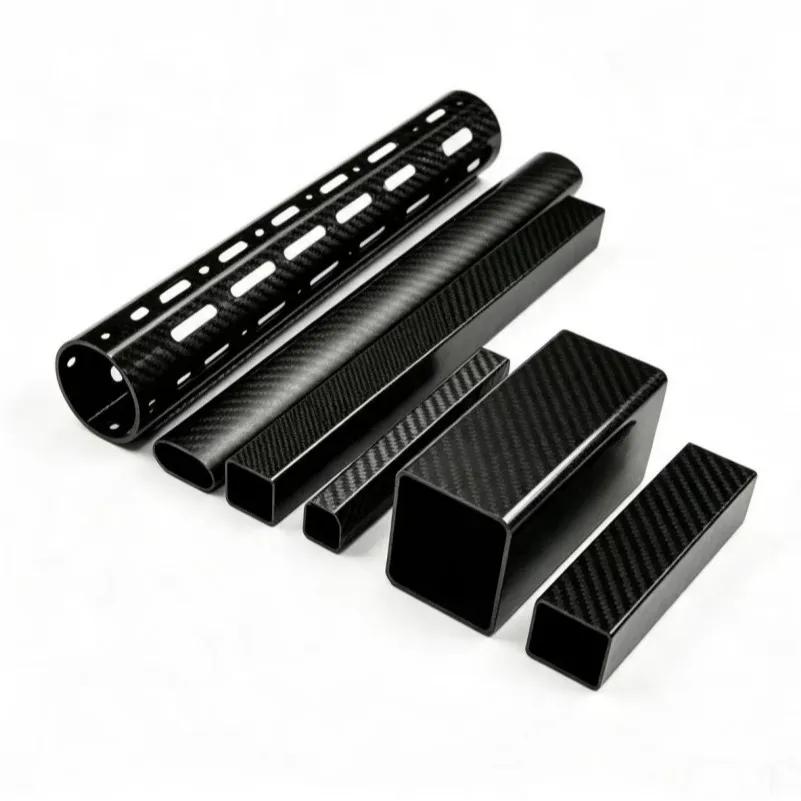
Browse our raw-materials category for plates, sheets, tubes and rods, or use the custom page to send a drawing. New to the material? Start with "What Is Carbon Fiber?" and "Is Carbon Fiber Stronger Than Steel?".
Frequently Asked Questions
The questions buyers ask most about carbon fiber sheets and plates.
What is the difference between a carbon fiber sheet and a plate?
It is mostly about thickness. "Sheet" generally refers to thinner stock (roughly under 2 mm) used for panels, covers and light brackets, while "plate" refers to thicker structural stock (2 mm and up) used for load-bearing and machined parts. Both are the same material — a cured carbon fiber and epoxy laminate (CFRP) — so the choice comes down to the thickness and stiffness your part needs.
How thick should a carbon fiber plate be?
Pick thickness from the stiffness you need, not a guess. Bending stiffness scales with thickness cubed, so doubling thickness makes a plate roughly eight times stiffer in bending. Thin cosmetic panels are often 0.5–1.5 mm; structural brackets and arms are commonly 2–5 mm; heavy load-bearing parts go thicker or switch to a sandwich panel. If you are unsure, send us the load case and we will recommend a thickness.
What is the difference between 3K and 12K carbon fiber?
3K and 12K describe how many filaments are in each fiber tow (3,000 vs 12,000). 3K gives a finer, tighter weave that most people consider the premium look; 12K has a larger, bolder pattern and is cheaper per area. On a structural plate the difference is mainly cosmetic — strength comes from the layup and orientation, not the surface weave.
Are solid plates or sandwich panels better?
Neither is universally better — they solve different problems. A solid plate is dense, stiff and easy to drill, mill and tap, which suits brackets, arms and machined parts. A sandwich panel (carbon skins over a foam or honeycomb core) gives much higher stiffness per gram, which suits large, light panels like decks and enclosures, but its edges need sealing or inserts. Choose solid for machinable parts and sandwich for light, stiff panels.
Can you cut carbon fiber sheets to a custom size and shape?
Yes. Send a DXF file or drawing and we CNC-cut the sheet or plate to your exact outline, including holes, slots and chamfered edges. Cut-to-size means you pay for the finished part rather than a full sheet plus offcuts, and it removes the secondary machining you would otherwise do in-house.
Does the weave pattern affect strength?
Only slightly. The visible weave (3K, 12K, twill, plain) is mainly a surface and cosmetic choice. The real strength of a plate comes from the number of plies, the fiber orientation (for example 0/90 versus quasi-isotropic) and the resin. For structural parts, specify those properties rather than choosing by the weave you can see.
What is the minimum order for custom carbon fiber plates?
Stock-size sheets and plates can be ordered in small quantities. For cut-to-size and custom layups the minimum depends on thickness, size and whether new tooling is involved — typically a modest batch for CNC-cut parts. Tell us the spec, size and quantity and we will send a quote with the applicable MOQ and lead time.
Sources & Further Reading
Need Custom Carbon Fiber Products?
Our engineering team helps brands worldwide develop OEM carbon fiber solutions with low MOQs and rapid prototyping.
Request a Quote Today.