Carbon Fiber vs Titanium: Weight, Strength & Cost
Compare carbon fiber vs titanium in weight, strength, durability, heat resistance, cost and applications to choose the right material for your project.
This technical guide was prepared by the MASTERMATE Engineering Team based on our experience in carbon fiber material selection, composite manufacturing, CNC machining and OEM/ODM production.
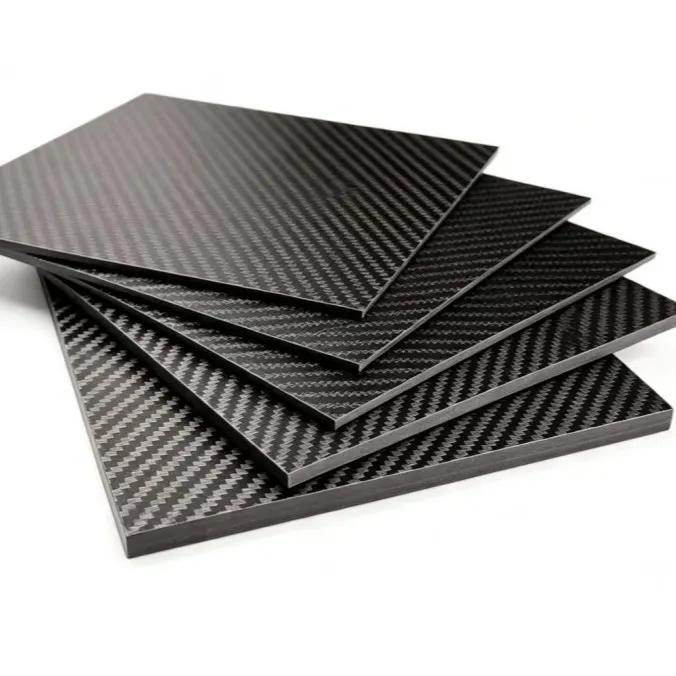
Carbon fiber composite (CFRP) and titanium alloy are the two materials engineers reach for when ordinary aluminum is not good enough. Both are expensive, both are corrosion-resistant, and both show up in aerospace, motorsport, automotive, and premium consumer goods — for different reasons. Use the decision table below first, then dig into the engineering data.
Carbon Fiber vs Titanium at a Glance
Direct answers to the questions buyers and engineers usually search for.
| Question | Carbon Fiber (CFRP) | Titanium (Ti-6Al-4V) | Winner |
|---|---|---|---|
| Which is lighter? | ~1.5–1.6 g/cm³ | ~4.43 g/cm³ | Carbon fiber (~65% lighter) |
| Which is stronger by weight? | Higher specific strength & stiffness | Lower specific strength | Carbon fiber (≈2–3×) |
| Which handles impact better? | Strong but brittle; invisible impact damage risk | Dents before it loses load capacity | Titanium |
| Which handles heat better? | Epoxy CFRP ~120–180 °C continuous | ~400 °C continuous | Titanium |
| Cost difference | Higher $/kg prepreg; molding scales well | Lower $/kg billet; machining is expensive | Volume-dependent |
| Automotive — how to choose? | Body panels, aero, trim, weight save | Fasteners, exhaust mounts, suspension links | Hybrid (CFRP + Ti hardware) |
| Aerospace — how to choose? | Primary structure, skins, fairings | Fasteners, lugs, pylons, hot zones | Hybrid (industry standard) |
| Consumer goods — how to choose? | Cards, cases, jewelry look & weight | Rings, tools, implants, durable hardware | Pick by feel & duty cycle |
Engineering Properties Compared
The properties below compare a typical aerospace CFRP laminate (Toray T800S quasi-isotropic prepreg) with Grade 5 titanium (Ti-6Al-4V) — the most widely specified high-strength titanium alloy [1][2].
| Property | CFRP (T800S, quasi-iso) | Ti-6Al-4V (Grade 5) | Carbon advantage |
|---|---|---|---|
| Density | 1.60 g/cm³ | 4.43 g/cm³ | ~64% lighter |
| Tensile strength | ~1100 MPa | 950 MPa | Comparable / slight CFRP edge |
| Tensile modulus | ~85 GPa (laminate) | 114 GPa | Titanium higher absolute, CFRP higher specific |
| Specific stiffness | ~53 GPa·cm³/g | 26 GPa·cm³/g | ~2× CFRP |
| Fatigue endurance | Excellent (matrix-dominated) | Excellent (alloy-dominated) | Comparable |
| Max continuous service temp | 120–180 °C (epoxy) | ~400 °C | Titanium far higher |
| Galvanic potential | Cathodic (carbon) | Noble | Compatible together |
| Typical raw cost | $40–90 / kg (prepreg) | $15–25 / kg (mill product) | Titanium cheaper / kg |
Density and Specific Strength
Titanium is the lightest of the common structural metals (4.43 g/cm³, vs. 7.85 for steel and 2.70 for aluminum). CFRP at ~1.6 g/cm³ is still nearly three times less dense. When designers talk about "carbon vs. titanium" it usually means they are choosing between holding stiffness constant (CFRP wins on weight) and holding bearing strength or temperature capability constant (titanium wins) [3].
Stiffness, Damage Tolerance, and Fatigue
Titanium handles repeated cyclic loads exceptionally well; the alloy can sustain 10⁷+ cycles below ~50% of its ultimate tensile strength with no visible damage. CFRP has excellent fatigue life too, but the failure mode is different — matrix microcracking, ply delamination, and eventually fiber breakage. For parts that see millions of stress reversals (engine mounts, suspension links, springs, hinges) titanium is usually the safer choice [4].
Temperature: Where Titanium Pulls Ahead
Standard epoxy CFRP starts losing properties above 120 °C and is generally retired by 180 °C. Bismaleimide (BMI) systems extend that to ~230 °C, and PEEK thermoplastic composite to ~260 °C, but each step roughly doubles the matrix cost. Titanium retains > 80% of room-temperature strength up to 400 °C, and Ti-6Al-2Sn-4Zr-2Mo (a higher-temperature alloy) holds out to ~540 °C [5].
| Material | Continuous service | Short-term peak | Typical use |
|---|---|---|---|
| Epoxy CFRP | 120–180 °C | 200 °C | Drone, racing, sporting goods |
| BMI CFRP | 180–230 °C | 260 °C | Engine bay covers, spacecraft |
| PEEK CFRP | 230–260 °C | 300 °C | Aerospace primary structure |
| Ti-6Al-4V | ~400 °C | 500 °C | Engine brackets, hot fasteners |
| Ti-6242 / Ti-1100 | ~540 °C | 600 °C | Compressor blades, aerospace |
Cost: Material vs. Manufactured Part
On per-kilogram raw cost, titanium is actually cheaper than aerospace CFRP. The story flips when you include manufacturing. Titanium is one of the hardest engineering metals to machine — it work-hardens, generates heat, and chews tooling — which means low feed rates, expensive tool changes, and lots of coolant. Buy-to-fly ratios of 8:1 are normal (i.e. 8 kg of billet for every 1 kg of finished part), wasting 87% of the material. CFRP molding has a much better material utilization (typically 70–85%) but higher tooling and process cost [6].
Bottom line: above ~50 parts per year of a moderately complex geometry, CFRP usually wins on landed cost. Below ~10 parts per year, titanium wins. The 10–50 zone is where most program managers should quote both routes and decide on TCO, not unit price.
Galvanic Compatibility
Carbon fiber is strongly cathodic; aluminum and steel paired with it in wet environments corrode rapidly. Titanium, however, sits very close to carbon on the galvanic scale, so the two materials can be bolted together with minimal risk. This is one reason CFRP+titanium hybrid construction is so common in aerospace — you can fasten with titanium hardware without worrying about the bolt holes turning green [7].
When Hybrid Designs Win
- 1. Map the loadsIdentify which areas are weight-sensitive (large surface areas, low-load structures) and which are bearing/fatigue-driven (joints, hinges, hot zones).
- 2. Skin in CFRPUse CFRP for the big, low-density volume elements — panels, fairings, longerons.
- 3. Frame & joints in titaniumUse titanium for inserts, lugs, hardware, and any part that sees concentrated stress, high temperature, or galvanic exposure.
- 4. Insulate dissimilar metalsIf aluminum brackets must be present, isolate from CFRP with a fiberglass ply or insulating washer; do not isolate titanium-CFRP joints — they are compatible.
- 5. Test the assemblyCoupon-level data is necessary but not sufficient. Coupon-tested CFRP panels still fail at hybrid joints during full-scale testing roughly 1 in 5 times if joint design has not been verified.
Best Uses by Industry
Aerospace
Modern airliners (Boeing 787, Airbus A350) use ~50% CFRP by structural weight, with titanium fasteners, lugs, and engine pylons. The combination cuts ~20% off airframe weight vs. an all-aluminum equivalent.
Automotive & motorsport
On cars and race cars, CFRP wins for body panels, aero, and large weight-sensitive structures. Titanium wins for fasteners, exhaust-adjacent mounts, and high-cycle suspension links. Formula 1 monocoques are CFRP; wishbones and hot mounts are often titanium. Crash structures favor CFRP because it absorbs energy by progressive crushing — titanium would bend and transfer load to the cabin.
Consumer goods
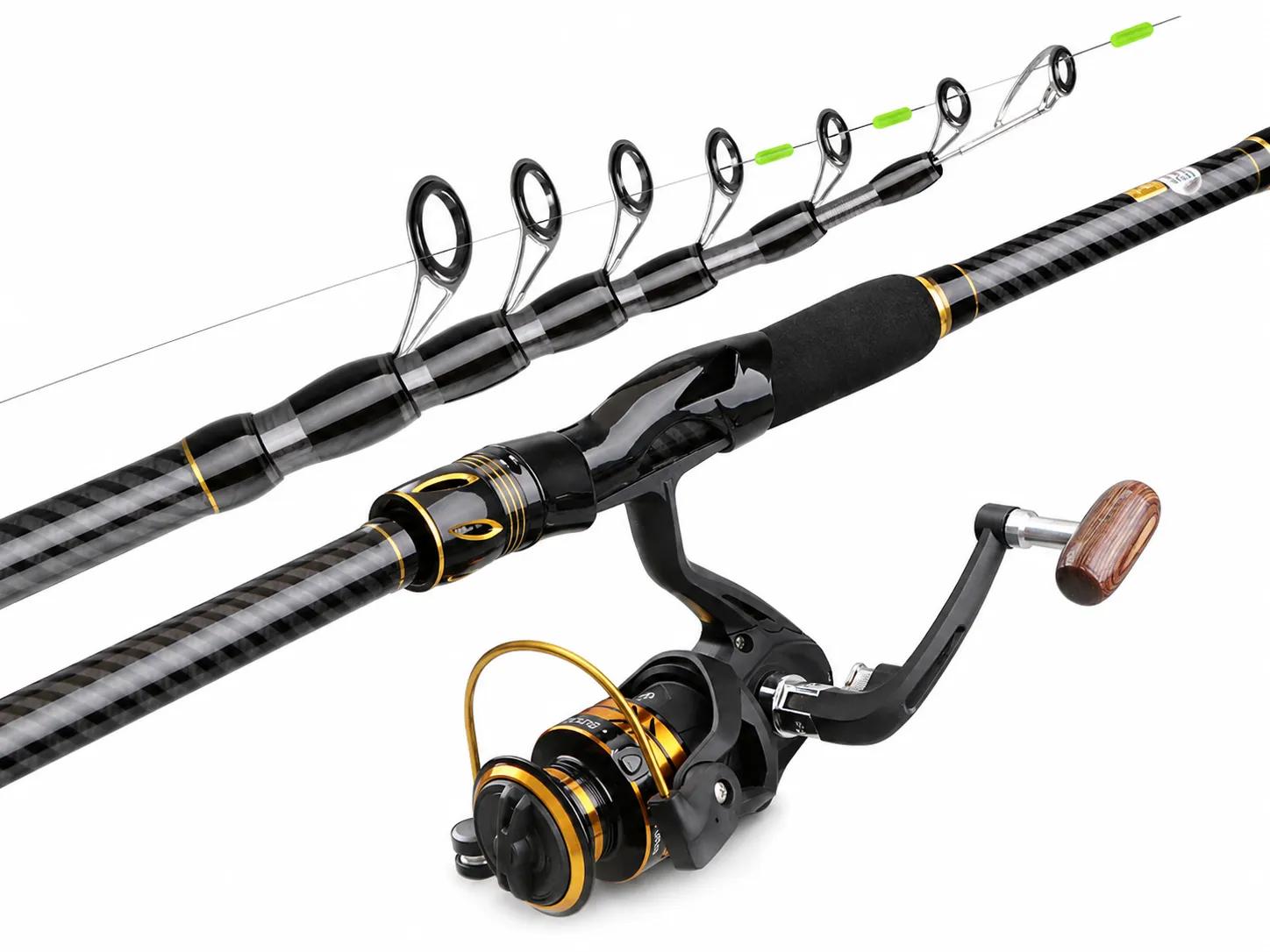
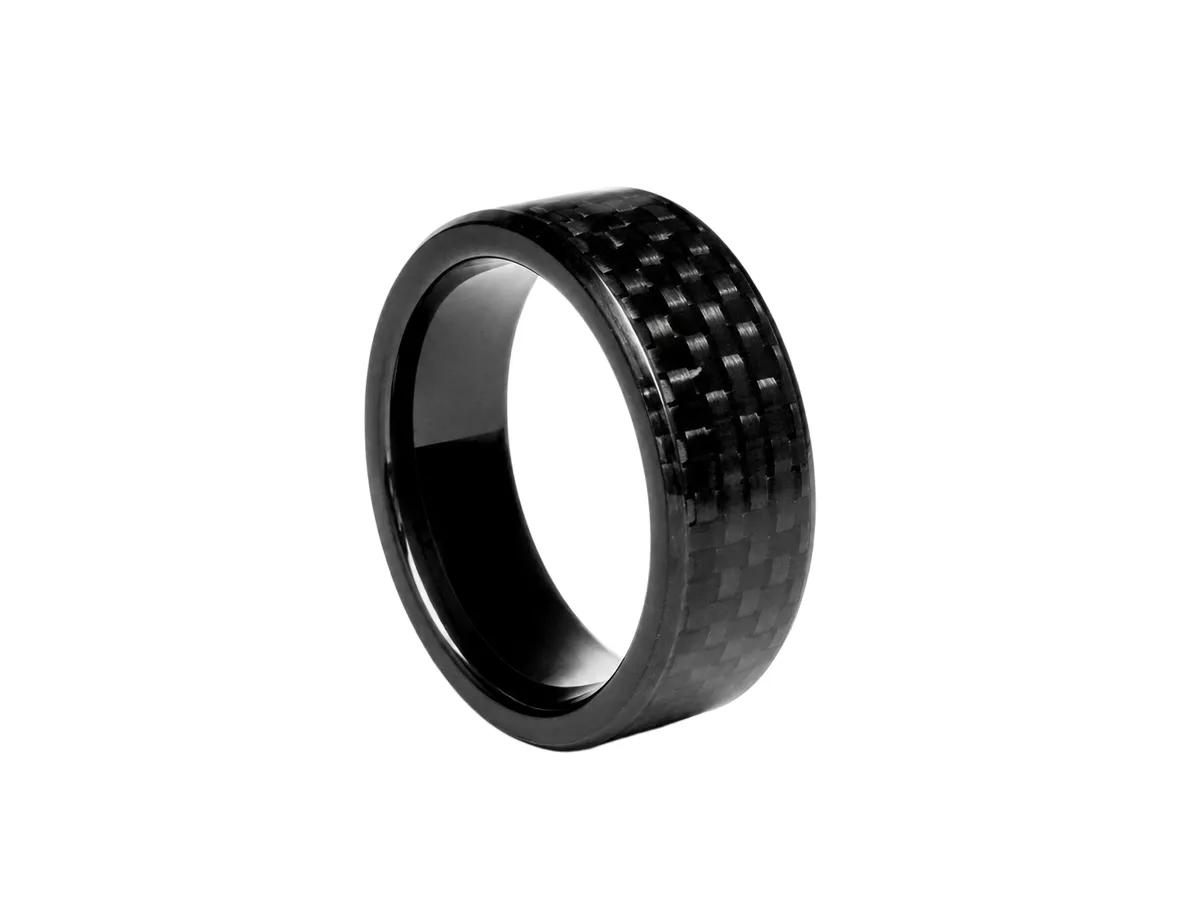
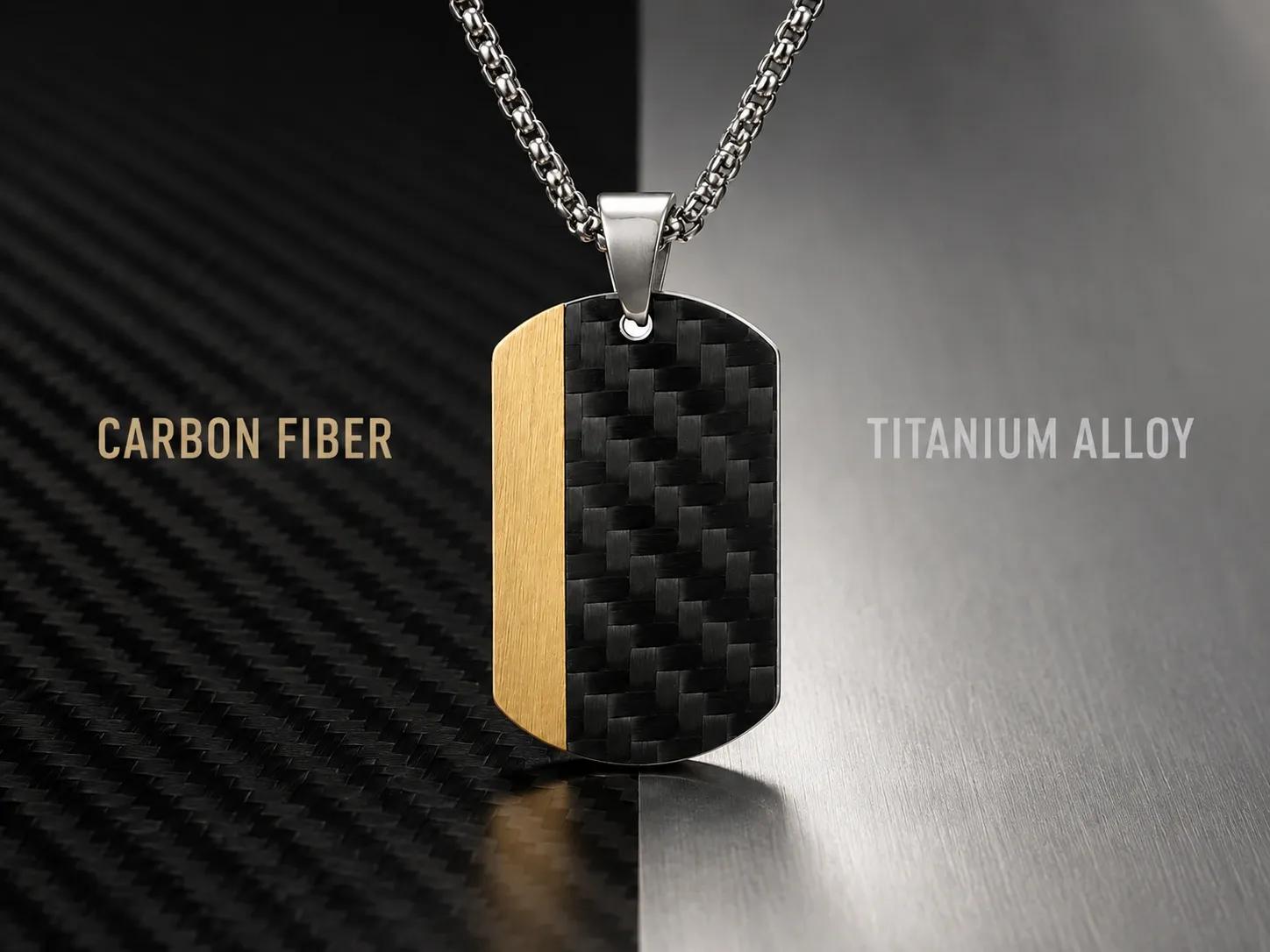
Choose carbon fiber when look, lightness, and brand signaling matter — cards, cases, jewelry shells, sporting goods. Choose titanium when durability, impact, and skin-safe metal feel matter — rings, tools, medical-adjacent hardware. Many premium products use both (CFRP body + titanium hardware).
Medical implants
Titanium dominates orthopaedic implants because of its biocompatibility and fatigue life. CFRP appears in radiolucent surgical instruments and external fixation rings — places where weight and X-ray transparency matter more than fatigue.
Frequently Asked Questions
The questions our team fields most often when clients are choosing between the two materials.
Is titanium stronger than carbon fiber?
Per kilogram, no — CFRP wins on specific strength by 2–3×. In absolute terms a thick titanium part can outperform a thin CFRP one. Titanium also tolerates dents, point loads, and impacts better; CFRP is stronger but more brittle.
Which is lighter, carbon fiber or titanium?
Carbon fiber. Typical CFRP density is about 1.5–1.6 g/cm³ versus ~4.43 g/cm³ for Grade 5 titanium — roughly 65% lighter by volume for the same part envelope.
Carbon fiber or titanium for car parts?
Use carbon fiber for panels, aero, and trim where weight and stiffness matter. Use titanium for fasteners, mounts near heat, and high-cycle mechanical joints. Most performance builds hybridize both.
Why are titanium and CFRP often used together in aircraft?
They are galvanically compatible (no corrosion at the interface), share similar coefficients of thermal expansion in the relevant range, and cover each other's weaknesses — CFRP carries large structural loads, titanium handles concentrated loads and high temperatures.
Can carbon fiber replace titanium in jet engines?
Only in cooler sections. The hot stages of a jet engine see 600–1500 °C, well above any current polymer matrix composite. Fan blades on engines like the GE9X already use ceramic-matrix composites and titanium aluminide, but conventional CFRP is limited to nacelles, ducts, and casings.
Which is harder to machine?
Titanium — by a wide margin. It is gummy, work-hardens quickly, and burns expensive carbide tooling. CFRP machining produces airborne dust and abrades tooling but is not as tough on the spindle. Both require purpose-built fixturing.
Is titanium more environmentally friendly?
Recyclability favors titanium (mature scrap stream). Energy intensity is mixed — titanium primary production is energy-hungry due to the Kroll process, but recycled titanium has a much smaller footprint than virgin CFRP, which currently has limited recycling pathways.
How do I choose for a small batch (10 parts)?
For 10 parts, machined titanium is usually the lowest total cost because it avoids tooling. CFRP makes economic sense once you can amortize a $2k–$15k mold over hundreds or thousands of parts.
Sources & Further Reading
- Toray Composite Materials — T800S product datasheet
- ASTM B265 — Standard Specification for Titanium and Titanium Alloy Strip, Sheet, and Plate
- AMS 4928 — Titanium Alloy, Bars, Wire, Forgings 6Al-4V Annealed
- Wikipedia — Titanium alloys
- Wikipedia — Ti-6Al-4V
- NASA Composite Materials Handbook (CMH-17)
- CompositesWorld — Hybrid composite/metal joints
- ASM Handbook, Volume 2 — Properties and Selection: Nonferrous Alloys
- FAA AC 20-107B — Composite Aircraft Structure
- TIMET (Titanium Metals Corp) Technical Data
- Hexcel HexTow® IM7 Carbon Fiber datasheet
- ISO 5832-3 — Implants for surgery: Wrought titanium 6-aluminium 4-vanadium alloy
Need Custom Carbon Fiber Products?
Our engineering team helps brands worldwide develop OEM carbon fiber solutions with low MOQs and rapid prototyping.
Request a Quote Today.