Carbon Fiber Hard Hats: The Complete Safety & Sourcing Guide
Everything that matters before you buy carbon fiber hard hats — real weight savings, ANSI Z89.1 / CSA Z94.1 Type I vs Type II, electrical class, full-brim vs cap, and how to source branded hard hats for your crew factory-direct.
This technical guide was prepared by the MASTERMATE Engineering Team based on our experience in carbon fiber material selection, composite manufacturing, CNC machining and OEM/ODM production.
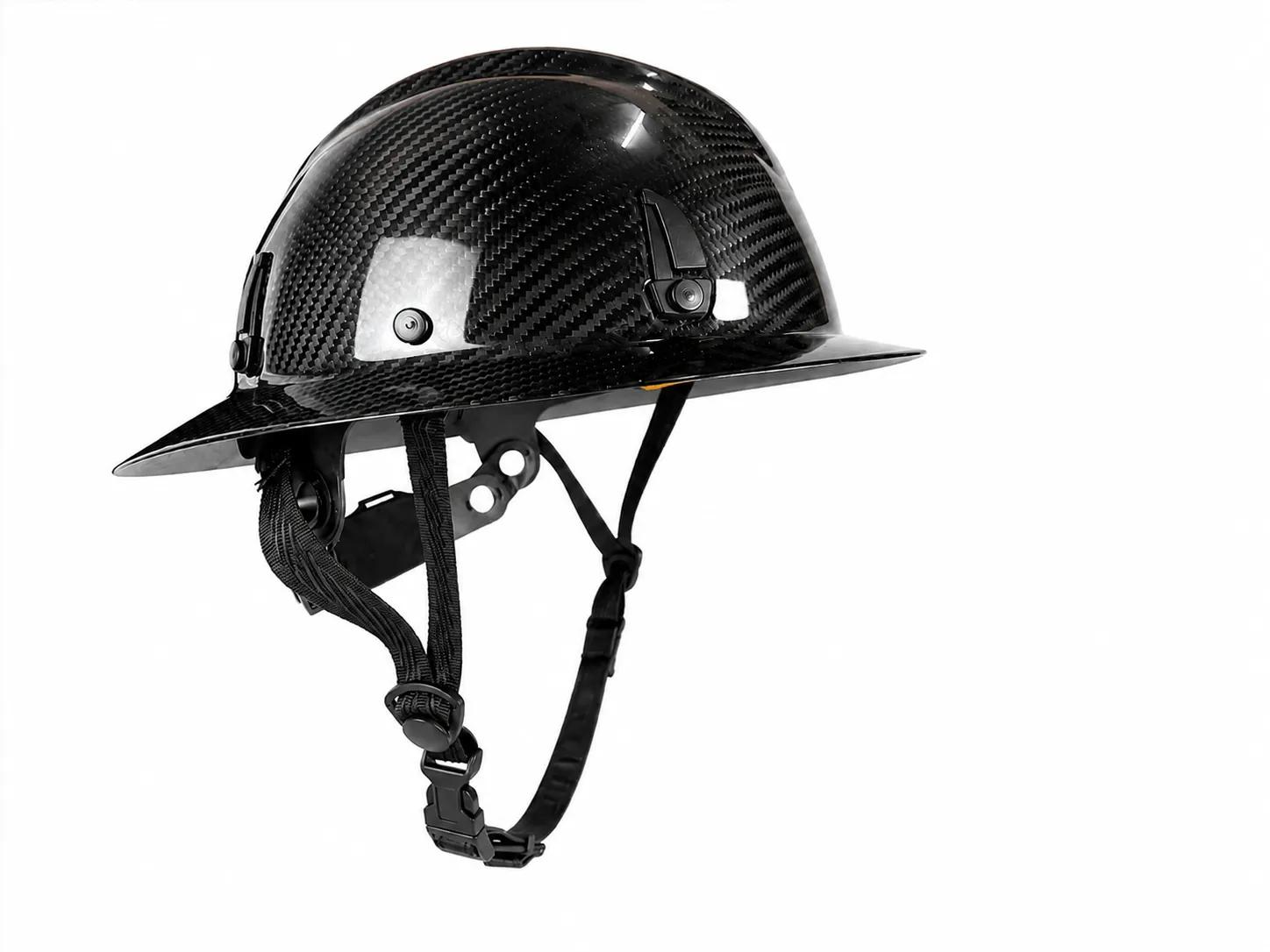
A hard hat is the one piece of PPE a worker wears every minute on site, so weight and comfort are not vanity — they decide whether it stays on and how tired the wearer is by the end of a shift. Carbon fiber hard hats answer exactly that: a stiffer, lighter shell than the standard HDPE helmet. But "carbon fiber hard hat" carries a critical caveat that does not apply to any other carbon product — carbon conducts electricity — plus the usual certification traps. This guide is the briefing we give safety managers and distributors sourcing carbon hard hats from our factory.
Why a Carbon Fiber Hard Hat
A standard hard hat shell is injection-molded HDPE. A carbon fiber shell is stiffer at lower weight, which on an all-day helmet translates directly into less neck and shoulder fatigue — the most-cited reason crews and individuals upgrade [1].
Certification: ANSI Z89.1 & CSA Z94.1
This is non-negotiable. A carbon hard hat is only protective equipment if it is tested and certified to the standard your jurisdiction requires [2][3].
| Standard | Region | What it covers |
|---|---|---|
| ANSI/ISEA Z89.1 | United States | Impact (Type I/II), electrical class, flammability |
| CSA Z94.1 | Canada | Impact and penetration; Canadian jobsite requirement |
| EN 397 / EN 14052 | Europe | Industrial helmets (14052 = high-performance) |
Type I vs Type II: Top vs Side Impact
Under Z89.1, the Type rating tells you which impacts the helmet is tested against. Pick by your jobsite hazards [2].
| Type | Protects against | Typical use |
|---|---|---|
| Type I | Top (vertical) impact only | General construction, most US sites |
| Type II | Top + lateral (side) impact | Higher fall/struck-by risk, many utilities |
The Carbon Caveat: Electrical Class
This is the single most important thing to understand about a carbon fiber hard hat, and it is the opposite of what most buyers assume. Carbon fiber is electrically conductive. That means a true carbon shell cannot provide Class E (high-voltage) electrical insulation the way a non-conductive plastic shell can [4].
| Class | Protection | Carbon hard hat? |
|---|---|---|
| Class G (General) | Up to 2,200 V | Possible with proper design/liner |
| Class E (Electrical) | Up to 20,000 V | Not from a bare conductive carbon shell |
| Class C (Conductive) | No electrical protection | Typical for exposed carbon shells |
Full-Brim vs Cap Style
- Full-brim: a 360° brim sheds rain, sun and debris all around — favoured for outdoor, utility and roadwork.
- Cap style: front brim only, lighter and lower profile, fits better under welding shields and in tight spaces.
- Suspension: 4- or 6-point ratchet suspension and a moisture-wicking sweatband decide all-day comfort as much as the shell.
- Accessories: slots for ear muffs, face shields and lamp clips — confirm your carbon shell has the accessory rail you need.
Custom & Branded Hard Hats (the B2B Use Case)
The biggest carbon hard hat orders are not individuals — they are companies outfitting crews with branded helmets, and distributors stocking a premium line. Both want certified shells with custom color, logo and packaging [5].
- 1. Spec the standardConfirm Type I/II, electrical class and region (ANSI/CSA/EN) your crews require.
- 2. Color + logoCompany colors, printed or molded logo, and per-crew color coding for roles.
- 3. Suspension + accessoriesChoose ratchet suspension, sweatband, and accessory slots (ear muffs, shields, lamps).
- 4. Certified productionBatch-tested to the chosen standard, with certificates and your branding/packaging.
Sourcing Factory-Direct or Private-Label
Order branded hard hats for your crew, or stock a private-label line. Fastest routes to a quote:
- State standard + type + class: e.g. "ANSI Z89.1 Type I Class G, full-brim, 200 pcs, company logo".
- Send your logo/colors: we apply custom branding to a certified carbon shell.
- For a distributor line: private-label production to your spec, with your brand and packaging.
Browse the Helmet manufacturer hub for carbon fiber safety hard hats and motorcycle OEM lines, or use the custom page to start a branded PPE run. Related reading: our carbon fiber motorcycle helmet guide covers the same shell-and-certification logic for riding helmets.
Frequently Asked Questions
The questions safety managers and distributors ask most about carbon hard hats.
Are carbon fiber hard hats ANSI certified?
They can be — but only specific models tested to ANSI/ISEA Z89.1 (US) or CSA Z94.1 (Canada). The carbon shell material does not make a helmet certified; the tested, marked product does. Always confirm the helmet carries the Z89.1 marking with its Type (I/II) and electrical class before treating it as protective equipment.
Can you use a carbon fiber hard hat for electrical work?
Usually not. Carbon fiber is electrically conductive, so an exposed carbon shell is typically Class C — explicitly no electrical protection. For electrical hazards you need a Class E (20,000 V) or Class G (2,200 V) rated helmet, which generally means a non-conductive shell. Never use a Class C carbon hard hat near live electrical work; always confirm the electrical class in writing.
What is the difference between Type I and Type II hard hats?
Type I hard hats are tested for top (vertical) impact only; Type II hard hats add lateral (side) impact protection. Most general US construction uses Type I; jobs with higher struck-by or fall risk (and many utilities) require Type II. Match the Type to your jobsite hazard assessment.
How much lighter is a carbon fiber hard hat?
A carbon full-brim shell typically weighs about 280–360 g versus roughly 400–450 g for standard HDPE — meaningfully lighter on a helmet worn all shift. The weight saving reduces neck and shoulder fatigue, which is the main reason crews upgrade. Total helmet weight also depends on the suspension and accessories.
Full-brim or cap style carbon hard hat — which should I choose?
Full-brim has a 360° brim that sheds rain, sun and debris all around, ideal for outdoor, utility and roadwork. Cap style is lighter and lower profile and fits better under welding shields and in confined spaces. Choose by your environment; both are available in certified carbon.
Can you produce branded carbon fiber hard hats for our company or brand?
Yes. We make certified carbon hard hats and offer custom branding and private-label production: your colors, logo, suspension and accessory spec on a shell certified to ANSI Z89.1, CSA Z94.1 or EN 397/14052. Typical MOQ is 100–300 for full branding. Tell us your standard, Type, electrical class and quantities for a quote.
Sources & Further Reading
Need Custom Carbon Fiber Products?
Our engineering team helps brands worldwide develop OEM carbon fiber solutions with low MOQs and rapid prototyping.
Request a Quote Today.