NFC vs Paper vs QR Business Cards: 2026 Comparison
Compare NFC, paper and QR business cards by handoff, compatibility, updates and cost, then choose a single format or an NFC-plus-QR combination.
This technical guide was prepared by the MASTERMATE Engineering Team based on our experience in carbon fiber material selection, composite manufacturing, CNC machining and OEM/ODM production.
"Should I switch from paper to NFC?" and "Is QR good enough?" are the two questions we hear most from sales teams, agencies and brands ordering cards in bulk. The answer is not either/or — each format solves a different job. Paper is fine for mass events where cost dominates. QR is the universal digital fallback. NFC is the premium, friction-free handoff when you want the contact saved on the first tap. This guide compares NFC vs paper vs QR on the factors that actually matter — speed, compatibility, updateability, cost and brand impression — and shows why many buyers in 2026 choose a hybrid card instead of betting on one technology alone.
Three Formats, Three Jobs
Before comparing specs, align the format with what happens at the moment you hand someone your card [1].
- Paper — printed name, phone, email. Recipient must type or photograph; details cannot update after print.
- QR code — encodes a URL or vCard; recipient opens the camera (or QR app) and scans. Works on nearly all modern phones.
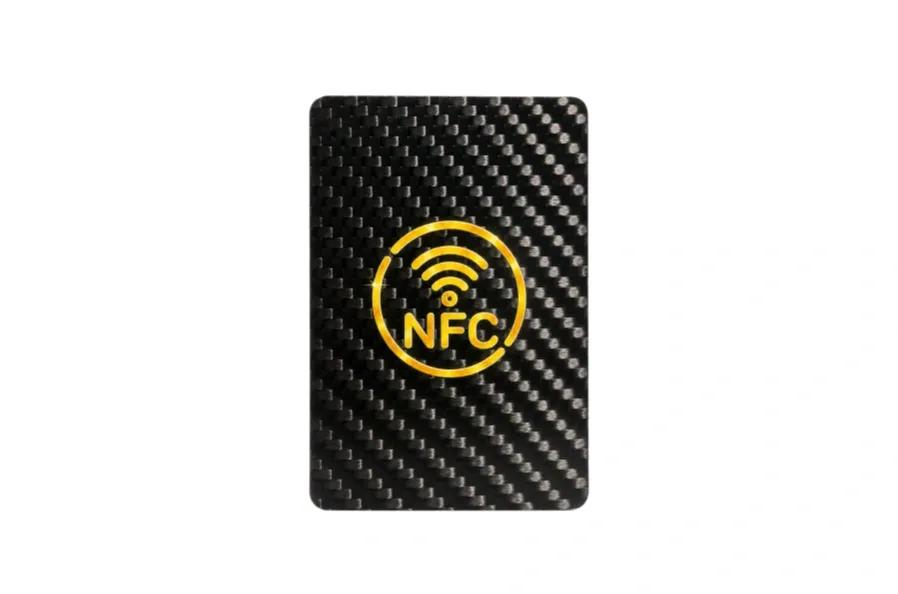
- NFC — passive chip in the card body; recipient taps the card to the phone and the link or contact opens instantly on NFC-enabled devices.
NFC vs Paper vs QR: Side-by-Side Comparison
| Factor | Paper | QR code | NFC card |
|---|---|---|---|
| Handoff speed | Slow (type or photo) | Medium (open camera, scan) | Fast (one tap) |
| Phone compatibility | Human-readable | Broad on phones with a camera | Requires a compatible phone with NFC enabled |
| Update contact info | Reprint required | Yes if QR points to dynamic URL | Yes if chip points to dynamic URL |
| Reusable per card | No (one recipient mindset) | Yes | Yes |
| Premium impression | Standard | Functional / tech-forward | Premium (especially metal/carbon) |
| Unit cost at 100 pcs | Lowest | Low–mid (print + encode URL) | Mid–high (chip + encode + body) |
| Best for | Events, low budget | Universal digital link | Sales, founders, luxury brands |
When Paper Still Makes Sense
Paper is not dead — it is just the wrong tool when your goal is a saved digital contact. It wins when volume and cost dominate and the card is a reminder, not a CRM action.
- Large conferences with 500+ handouts — unit cost matters more than tap rate.
- Local trades where recipients expect a physical card for the wallet.
- Markets where NFC phone penetration is uncertain (some corporate-locked devices).
- Temporary campaigns where the URL will expire before a reorder.
When QR Code Cards Are Enough
A QR code on a card — paper, PVC, metal or carbon fiber — gives you a digital bridge without an NFC chip. Scanning is one extra step versus tapping, but it works on virtually every smartphone with a camera [2].
- Point the QR to a dynamic profile (Linktree-style, vCard host, or your own landing page) so details stay current.
- Print large enough (minimum ~2 cm) and with quiet-zone margin — blurry QRs fail in dim event lighting.
- Add a short CTA: "Scan for contact" beats a naked QR with no context.
- Use QR-only when budget excludes NFC chips but you still want trackable digital handoffs.
When NFC Is Worth the Upgrade
NFC removes friction at the highest-value moment — right after a good conversation when the recipient is willing to save your contact but not willing to hunt for a link [1].
- Sales and founders — a tap-first handoff can reduce the steps needed to open a profile.
- Premium brands — carbon fiber or metal NFC bodies signal quality before the tap happens.
- Teams with stable branding but changing roles — dynamic NFC profile + one physical card per person.
- Agencies reselling to clients — pre-encoded chips with CSV bulk URLs, private-label packaging.
For chip basics, materials and MOQ, see our NFC business cards guide and Best NFC Business Cards in 2026 buyer's guide.
The 2026 Hybrid: NFC + QR on One Card
The format debate ends when you stop treating NFC and QR as competitors. Production best practice:
- Front — clean logo, name, subtle "Tap" icon; NFC chip encoded to your profile URL or vCard.
- Back — QR code to the same URL (fallback) plus optional social icons or tagline.
- Dynamic profile — one URL on both NFC and QR; update title, phone or links online without reprinting.
- Material — PVC for volume promos; carbon fiber or metal when impression drives the sale.
Dynamic vs Static: Matters More Than NFC vs QR
Whether you choose NFC, QR or both, decide if the destination URL is editable. Static encoding writes fixed data to the chip or QR — fine for a stable vCard. Dynamic encoding points to a hosted profile you can change anytime — essential for teams and job changers [2].
| Setup | Paper | QR only | NFC only | NFC + QR hybrid |
|---|---|---|---|---|
| Update links later | Reprint | Change QR target if dynamic URL | Change chip target if dynamic URL | Update once, both work |
| Ongoing cost | Reprint cycles | Possible platform fee | Possible platform fee | Possible platform fee |
| Recommended for | Temporary promos | Budget digital | Premium handoff | Most professionals (2026) |
Does the Card Body Still Matter?
The chip and QR do the digital work — the body sets tactile impression. For B2B and luxury positioning, material choice often matters as much as the technology inside.
- PVC — lowest cost, full-color UV print; ideal for 500+ event cards or agency resale.
- Metal — weight and executive feel; laser engraving for logos.
- Carbon fiber — ultra-light (~8 g CR80), real 3K twill weave; tech, motorsport and design brands.
- Wood / bamboo — eco narrative; NFC chip embeds the same way.
Browse the Cards category for carbon fiber and NFC lines — custom carbon fiber business cards or the carbon fiber NFC business card — or the custom page for OEM specs.
Ordering Custom Cards Factory-Direct
Personal-card platforms may suit very small quantities. For custom programs with pre-encoding, variable URLs or private-label boxes, compare suppliers on samples, controls, lead time and landed cost [3].
- 1. Pick formatNFC only, QR only, or hybrid NFC + QR (recommended).
- 2. Choose dynamic or staticDynamic profile URL for teams; static vCard for individuals.
- 3. Send artwork + CSVFront/back PDF; one URL per card if variable encoding.
- 4. Approve sampleTap-test and scan-test before bulk — 7–10 days typical.
- 5. Bulk encode & shipQC every chip; express worldwide from Shenzhen.
Frequently Asked Questions
Common questions when choosing between NFC, paper and QR business cards.
Are NFC business cards better than paper cards?
For saving contacts digitally, yes — NFC (or QR) turns a handoff into a one-step action instead of hoping someone types your details. Paper is still fine for low-cost mass handouts where digital save rate is not the goal. Many professionals keep a few paper cards as backup but use NFC + QR as the primary card.
Is QR good enough, or do I need NFC?
QR alone works on virtually every smartphone and costs less than adding an NFC chip. NFC is faster at the moment of handoff — one tap versus opening the camera and scanning. The best setup in 2026 is both: NFC on the front for speed, QR on the back for phones with NFC disabled.
Do NFC cards work on iPhone?
Yes. iPhone XS/XR and newer read standard NFC tags natively — no app required for the recipient. Android phones with NFC enabled work the same way. Always print a QR fallback for the small share of devices with NFC turned off.
Can I update my details without reprinting?
Only if your NFC chip or QR code points to a dynamic profile URL you can edit online. Static encoding bakes a fixed vCard or URL into the chip — changing details requires re-encoding or reprinting. Teams with changing titles should default to dynamic profiles.
Which is cheaper — paper, QR or NFC?
Paper is cheapest per unit. QR adds minimal print cost if you already have a digital URL. NFC adds chip cost plus factory encoding — typically mid-range at 100 pcs, competitive at 500+ factory-direct. Compare total cost including reprints: paper looks cheap until you reprint every time a detail changes.
What material works best for NFC + QR hybrid cards?
PVC for volume and full-color promos; metal for executive weight; carbon fiber for a light, premium look with visible weave. The NFC chip and QR print the same way in each body — material is about impression and durability, not technology compatibility.
Can I order wholesale or private-label NFC and QR cards?
Yes. We produce NFC business cards, QR-only cards and hybrid NFC + QR cards with OEM/ODM service: your material (PVC, metal, carbon fiber), print, NTAG chip encoding, QR to matching URLs, variable CSV encoding for agencies, and private-label packaging. Send quantity, format and artwork for MOQ and lead time.
Sources & Further Reading
Need Custom Carbon Fiber Products?
Our engineering team helps brands worldwide develop OEM carbon fiber solutions with low MOQs and rapid prototyping.
Request a Quote Today.