How Is Carbon Fiber Made? The Process from PAN to Finished Part
How carbon fiber is made — from PAN precursor through oxidation, carbonization, prepreg, compression molding, autoclave cure, CNC machining and surface finishing into a finished CFRP part.
This guide explains the carbon fiber manufacturing process used and evaluated by the MASTERMATE Engineering Team, from material selection and lay-up to curing, CNC finishing and quality inspection.
A carbon fiber part starts life as a white plastic thread and ends as a black, glossy, metal-stiff component. The transformation is essentially controlled baking: heat a plastic precursor in precise stages until only carbon remains, then combine that fiber with resin and cure it into a shape. Here is the whole process, explained step by step, from raw precursor to finished CFRP part.
In custom OEM projects, MASTERMATE normally confirms drawings, material requirements, surface finish, tolerances, order quantity and inspection standards before sample production. For a broader process overview, see OEM/ODM manufacturing explained or submit drawings for engineering review.
Step 1: The Precursor (PAN)
About 90% of carbon fiber begins as PAN (polyacrylonitrile), a plastic spun into a fine white fiber; the remainder uses pitch or rayon. The quality and consistency of this precursor largely determines the quality of the final carbon fiber — it is the foundation of everything that follows [1][2].
Step 2: Oxidation (Stabilization)
The precursor fibers are heated to roughly 200–300°C in air for a controlled time. This "stabilizes" the molecular structure — cross-linking the chains so they will not melt in the much hotter next step. The fiber turns from white to black during this stage [3].
Step 3: Carbonization
The stabilized fiber moves into an oxygen-free furnace and is heated to roughly 1,000–1,500°C (high-modulus fibers go higher). With no oxygen to let it burn, the intense heat drives off nearly all non-carbon atoms (nitrogen, hydrogen, oxygen) as gas, leaving long, tightly bonded chains of nearly pure carbon. This is where the fiber gains its strength and stiffness [3].
Step 4: Surface Treatment & Sizing
Fresh carbon fiber has a smooth, chemically inert surface that resin struggles to grip. A light surface oxidation treatment roughens and activates it, then a "sizing" coating is applied to protect the fiber and help it bond to the resin matrix later. Good adhesion here is what makes the finished composite strong [4].
The Full Process at a Glance
- 1. PrecursorSpin PAN into a fine white plastic fiber.
- 2. OxidationHeat to ~200–300°C in air to stabilize; fiber turns black.
- 3. CarbonizationHeat to ~1,000–1,500°C with no oxygen; non-carbon atoms leave.
- 4. Surface treat + sizeActivate the surface and coat for resin bonding.
- 5. Weave / spoolBundle into tows and weave into cloth (3K/12K twill, UD, etc.).
- 6. Prepreg (optional)Pre-impregnate the cloth with controlled resin for consistent parts.
- 7. Mold layupCut plies and place into a tool aligned to load paths.
- 8. CureCompression molding, heated press, vacuum bag, or autoclave.
- 9. CNC + finishTrim, drill, profile, clear-coat, engrave, or print.
From Fiber to Cloth and Prepreg
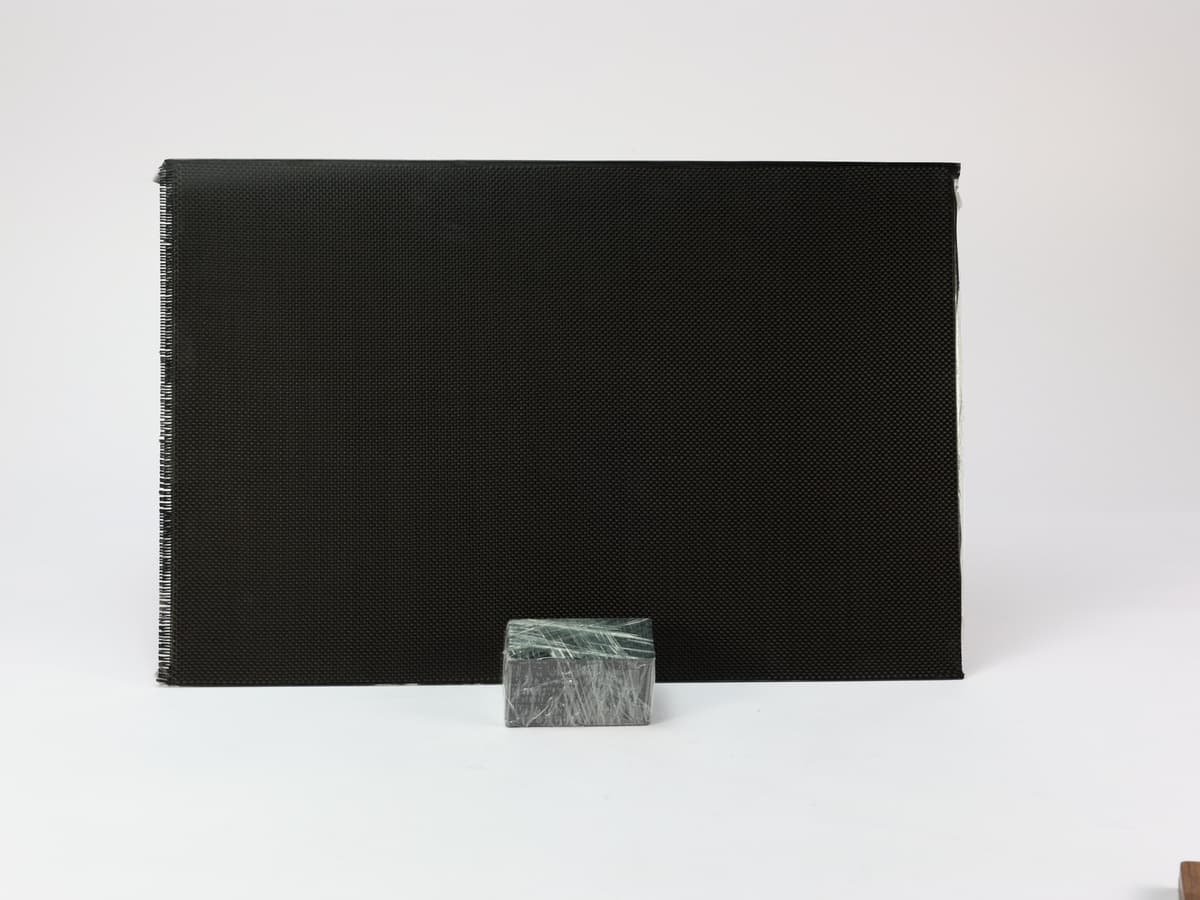
Once carbon fiber is carbonized and sized, it is still a reinforcement — not yet a structural part. Tows are woven into cloth (3K/12K twill, plain weave, or unidirectional tape) or supplied as dry fabric for wet layup. For production programs that need repeatable fiber-to-resin ratio and laminate quality, factories often convert the cloth into prepreg: resin is applied at a controlled weight, partially staged, and stored cold until layup [5].
Prepreg is common in aerospace-style parts, thin flat laminates, and any application where inconsistent hand wet-out would create voids or thickness variation. Wet layup remains useful for prototypes and some low-volume shapes, but prepreg plus a defined cure cycle is the default for high-consistency CFRP manufacturing.
Mold Layup and Forming
The next step is forming: cut plies to pattern, orient fibers to the expected load direction, and stack them in a mold or on a flat caul plate. For a flat card, plate, or panel, alignment is mostly about cosmetic weave direction. For a bracket, tube, or automotive trim part, ply orientation directly affects stiffness and strength.
- Open mold / flat press — common for thin laminates, cards, and decorative flat parts.
- Matched mold — two-sided tools for more controlled thickness and surface on both faces.
- Vacuum bag consolidation — removes air and compacts plies before or during cure.
- Ply markers and templates — reduce fiber misalignment in repeat production.
Compression Molding and Heated Press Cure
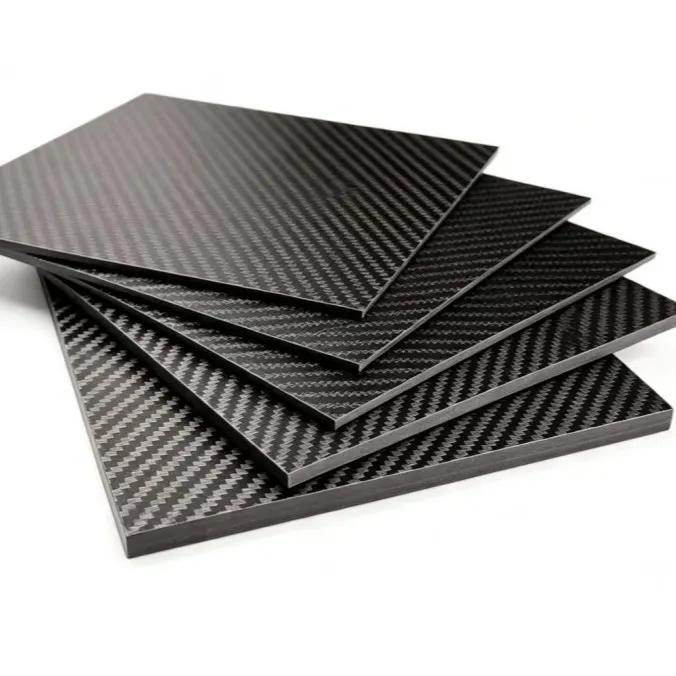
Compression molding uses a heated press to apply temperature and pressure while the laminate cures. For many carbon fiber products — especially thin flat parts — this is the workhorse process: plies or prepreg are placed between steel cauls, heated to the resin cure window (often roughly 120–130°C for common epoxies), and held under pressure until the matrix cross-links into a rigid solid.
Compared with hand cure alone, compression molding improves thickness control, surface flatness, and part-to-part repeatability. It is widely used for wallet-scale laminates, industrial flat panels, and production runs where autoclave cost is unnecessary but vacuum-only consolidation is not enough.
Autoclave Curing vs Other Cure Methods
Autoclave cure adds vacuum bag consolidation plus elevated pressure in a pressure vessel. This is the aerospace default when void content, laminate quality, and mechanical property targets are demanding. The autoclave does not replace good layup — it amplifies it — but it can squeeze remaining air and resin bleed more effectively than vacuum alone.
| Method | Typical use | Main advantage |
|---|---|---|
| Room-temperature wet layup | Prototypes, simple shapes | Low tooling cost |
| Heated press / compression molding | Flat panels, cards, repeat production | Flatness, thickness control, speed |
| Vacuum bag oven cure | Medium-complexity parts | Better consolidation than open cure |
| Autoclave | Aerospace, high-performance laminates | Highest consolidation quality |
Buyers should match the cure method to the part requirement. A business card or license-plate frame does not need the same cure infrastructure as a primary aircraft bracket — but both still depend on correct resin selection, cure cycle, and post-cure handling.
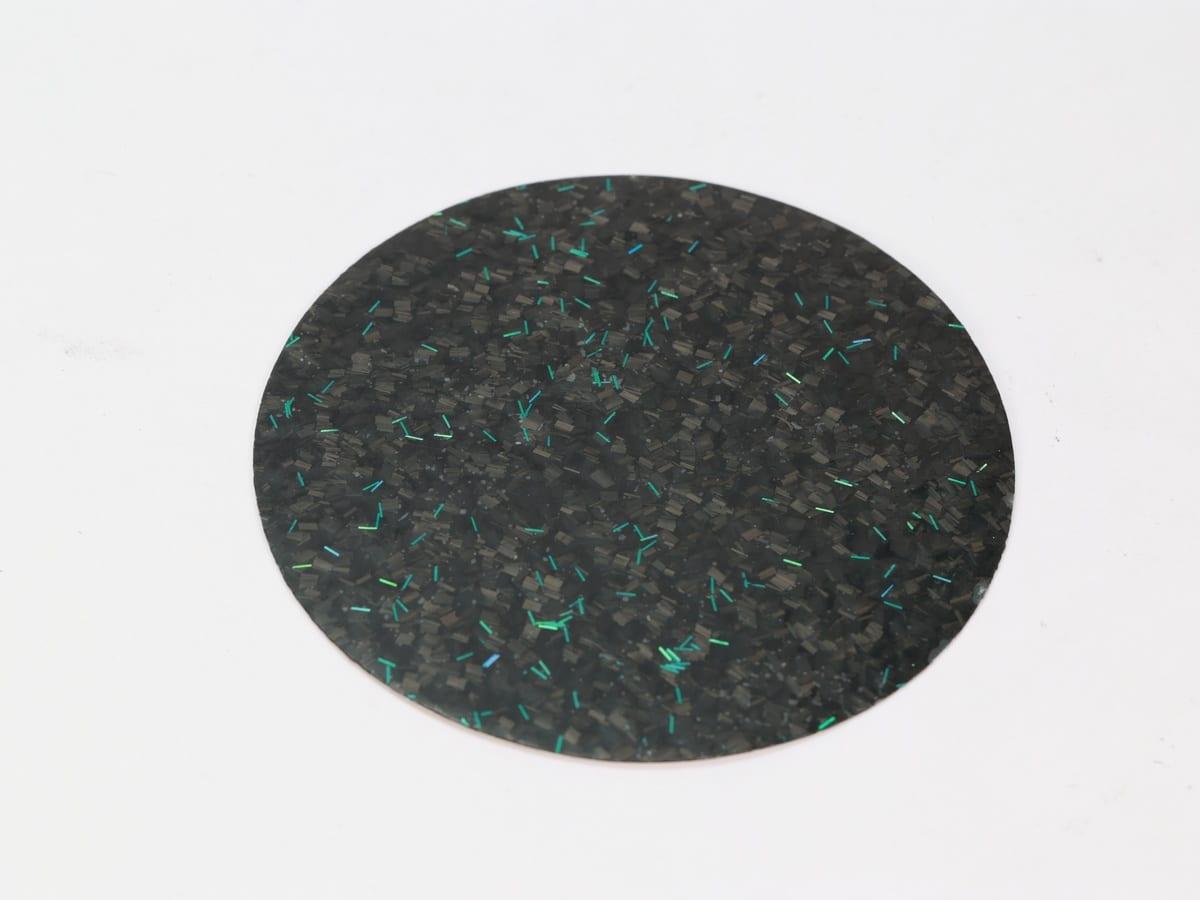
CNC Machining of Cured CFRP
Cured carbon fiber is hard, abrasive, and directionally reinforced — so CNC machining is a distinct manufacturing step, not a minor afterthought. Routers, mills, and drills trim flash, cut outlines, open pockets, drill holes, and profile edges to final dimensions.
- Routing and profiling — outline cutting for plates, cards, brackets, and trim parts.
- Drilling — mounting holes and assembly features; drill geometry matters to avoid delamination.
- Pocketing and slotting — for NFC cavities, inserts, or mechanical interfaces.
- Edge quality — down-cut tooling, sacrificial backing, and correct feed rates reduce fraying on thin laminates.
For thin wallet-scale parts such as carbon fiber business cards, CNC defines the final CR80 outline, corner radius, and any pocket for an NFC tag. For thicker industrial plates or tubes, machining may include facing, slotting, and tolerance-critical mating surfaces.
Surface Finishing and Decoration
The last manufacturing layer is surface finishing — both protective and cosmetic. Raw cured carbon can be functional but vulnerable to scratch, UV yellowing, or edge fray unless it is finished properly.
- Clear coat (gloss or matte) — protects the weave and improves durability.
- Edge paint or edge polish — hides exposed cut fibers and improves handling feel.
- UV printing — full-color logos on dark carbon, often with a white underbase.
- Laser engraving — permanent monochrome marks, serial numbers, or variable names.
- Foil stamping — metallic accents on twill peaks for premium branding.
Finishing order matters. A program that needs both an NFC cavity and UV print must decide whether machining, clear coat, print, or chip embed comes first — getting that sequence wrong is a common source of scrap in custom card and premium product runs.
Putting It Together: One Finished CFRP Part
A finished carbon fiber reinforced polymer part is the result of a chain, not a single machine step: PAN precursor → oxidize → carbonize → size → weave → prepreg or wet layup → mold → cure → CNC → finish. That is why two products marketed as "carbon fiber" can perform very differently even when they look similar — the fiber may be comparable, but the layup, cure route, machining, and finishing may not be.
For a broader view of CFRP as a material category — properties, applications, and custom manufacturing context — see our Carbon Fiber Reinforced Polymer (CFRP) hub. Related reading: what is carbon fiber?, how to make carbon fiber business cards, and OEM/ODM process explained.
Frequently Asked Questions
The questions people ask most about how carbon fiber is made.
How is carbon fiber made, in simple terms?
A plastic precursor fiber (usually PAN) is heated in controlled stages: first oxidized at about 200–300°C in air to stabilize it, then carbonized at roughly 1,000–1,500°C in an oxygen-free furnace, which drives off everything but the carbon. The resulting fiber is surface-treated, woven into cloth, combined with resin and cured in a mold into the finished hard part (CFRP).
What is carbon fiber made from?
About 90% is made from PAN (polyacrylonitrile), a plastic; the rest from petroleum/coal pitch or rayon. The precursor is converted to nearly pure carbon by heat. The finished part also contains a resin matrix (usually epoxy) that bonds the carbon fibers together into a rigid composite.
Why does carbon fiber turn black?
The precursor (PAN) is white. During the oxidation/stabilization stage at around 200–300°C, its molecular structure cross-links and it turns black. The subsequent high-temperature carbonization leaves nearly pure carbon, which is the deep black material you recognize.
Why is carbon fiber so expensive to make?
The process is energy- and time-intensive: high-quality precursor, long controlled oxidation, very high-temperature carbonization in inert-gas furnaces, surface treatment, then resin impregnation and curing — much of it slow and tightly controlled. The expensive precursor and the energy of the furnaces are the biggest cost drivers, which is why carbon fiber costs far more than steel or aluminum.
What is prepreg carbon fiber?
Prepreg is carbon cloth that has been pre-impregnated with a precise, controlled amount of resin at the factory. It produces more consistent, higher-quality parts than hand-applied ("wet layup") resin because the fiber-to-resin ratio is exact and even. Prepreg usually needs cold storage and a heated cure (often autoclave or heated press).
What is compression molding for carbon fiber?
Compression molding cures a carbon fiber laminate in a heated press between flat or matched molds. Heat and pressure consolidate the plies and cure the resin into a solid part. It is widely used for thin flat CFRP products because it improves thickness control, surface flatness, and production repeatability compared with open-room cure alone.
When is autoclave cure needed for CFRP?
Autoclave cure is most important when void content and mechanical performance targets are demanding — typical in aerospace and high-performance structural laminates. Many thinner decorative or semi-structural parts can be made with heated press or vacuum-bag oven cure instead, as long as the process is validated for the application.
Why is CNC machining required after carbon fiber cure?
Cured CFRP is rigid and abrasive, so final dimensions, holes, pockets, and edges are usually produced by CNC routing, drilling, or milling. This step is especially important for card-sized parts, assembly brackets, and any feature such as an NFC cavity that must be cut after cure.
Can carbon fiber be recycled?
Partially, and it is harder than recycling metal. The thermoset epoxy in most CFRP cannot simply be melted down. Recycling methods (such as pyrolysis) recover the carbon fibers by burning off the resin, but the recovered fibers are shorter and somewhat weaker, suited to lower-grade uses. Recycling technology is improving but remains a real limitation of carbon fiber.
Sources & Further Reading
Need Custom Carbon Fiber Products?
Our engineering team helps brands worldwide develop OEM carbon fiber solutions with low MOQs and rapid prototyping.
Request a Quote Today.