How to Make Carbon Fiber Business Cards | 2026 Guide
How real carbon fiber business cards are manufactured: CFRP prepreg, hot press, CNC, laser engraving, foil, UV print, NFC integration, QC and supplier checklist. Evidence-based guide for B2B buyers.
This guide explains the carbon fiber card manufacturing process used and evaluated by the MASTERMATE Engineering Team, from laminate lay-up and cure through CNC finishing, decoration and optional NFC integration.
Reviewed September 2026: manufacturing sequence, NFC specifications, sourcing links and buyer checks updated.
Luxury, automotive and technology brands use real carbon fiber business cards when the physical card must feel engineered rather than disposable. Weight, stiffness and durability vary with laminate thickness, resin system and clear coat, so procurement teams should verify those properties on a production-intent sample instead of relying on a generic number. This guide explains how carbon fiber business cards are actually made, which defects to inspect and how optional NFC changes the construction.
MASTERMATE manufactures custom carbon fiber business cards and NFC cards using real carbon fiber laminates, CNC processing, UV print, laser engraving and foil finishing. For sourcing, see custom carbon fiber business cards, the NFC business cards hub or guides from the MASTERMATE Engineering Team.
Why Premium Brands Are Replacing PVC Cards
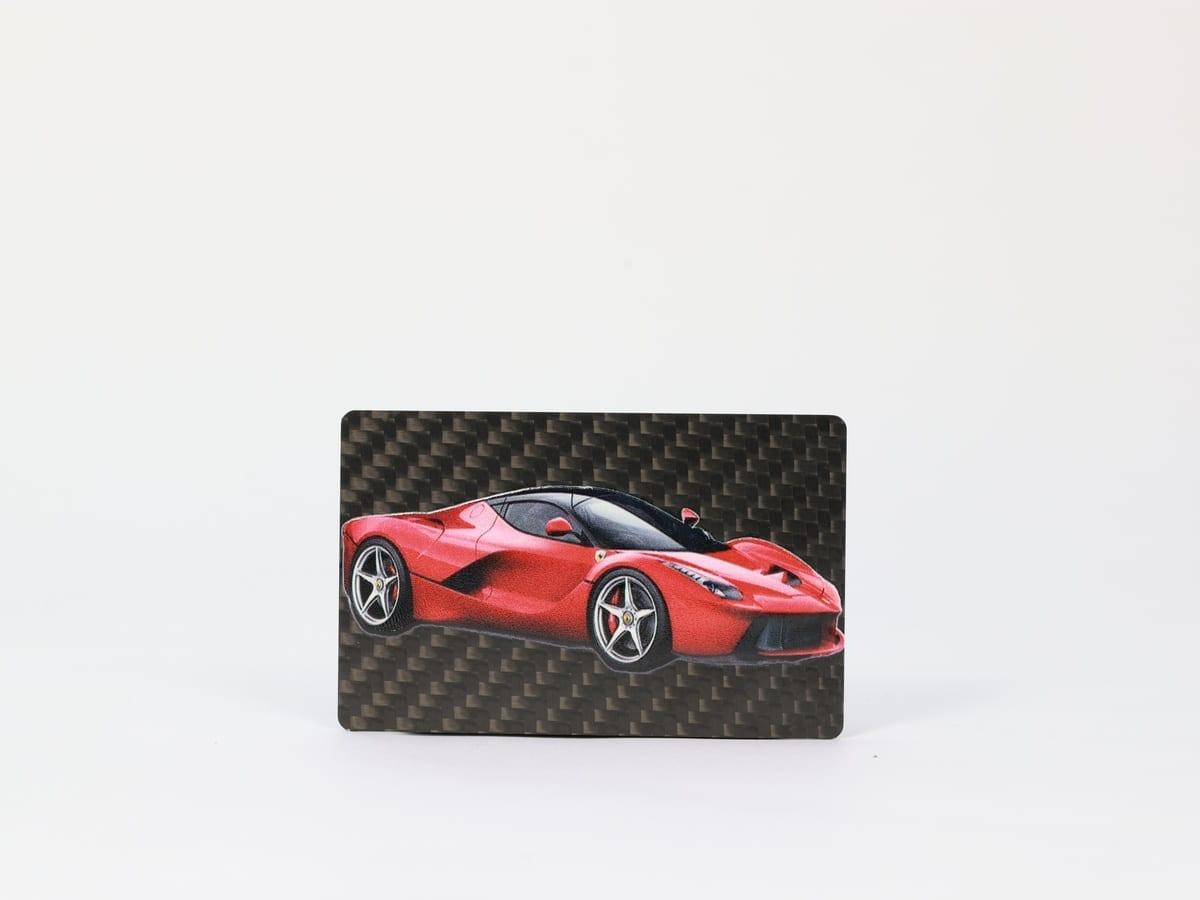
PVC remains the volume default for promotional cards because it is inexpensive to print and die-cut. The limitation is perceptual: PVC can imitate carbon appearance through hydrographic film, but it cannot replicate the depth of a true twill weave or the stiffness of a cured epoxy laminate. Composites industry analysts track steady growth in advanced carbon fiber applications across aerospace, wind energy, and automotive lightweighting [1][2]. As carbon fiber production scales globally, sheet and prepreg formats have become available for thin decorative laminates — including wallet-scale custom carbon fiber business cards.
In parallel, B2B buyers increasingly treat business cards as part of brand experience, not stationery. Cards that survive conferences, photograph well for social proof, and optionally embed NFC for tap-to-share contact exchange align with premium positioning in hospitality, motorsport, private banking, and technology. The shift is material-science driven (CFRP properties) and behaviour-driven (memorable first impressions) — not a short-lived print trend.
Grand View Research and similar market analysts report expanding demand for carbon fiber across aerospace, automotive, and wind-energy sectors as manufacturers pursue lightweighting [1]. JEC Composites tracks process innovation — automated layup, recycling pathways, and thermoplastic composites — that indirectly lowers the barrier to thin decorative laminates [2]. None of this makes every card program economical at low volume, but it explains why carbon fiber card manufacturing is technically feasible for OEM buyers who previously only saw metal or PVC options.
Composite materials in the Boeing 787 Dreamliner account for approximately 50 percent of the primary structure — including the fuselage and wing — reducing weight and improving fuel efficiency compared with earlier aluminium designs.
— Boeing Commercial Airplanes — 787 family background
What Are Real Carbon Fiber Business Cards?
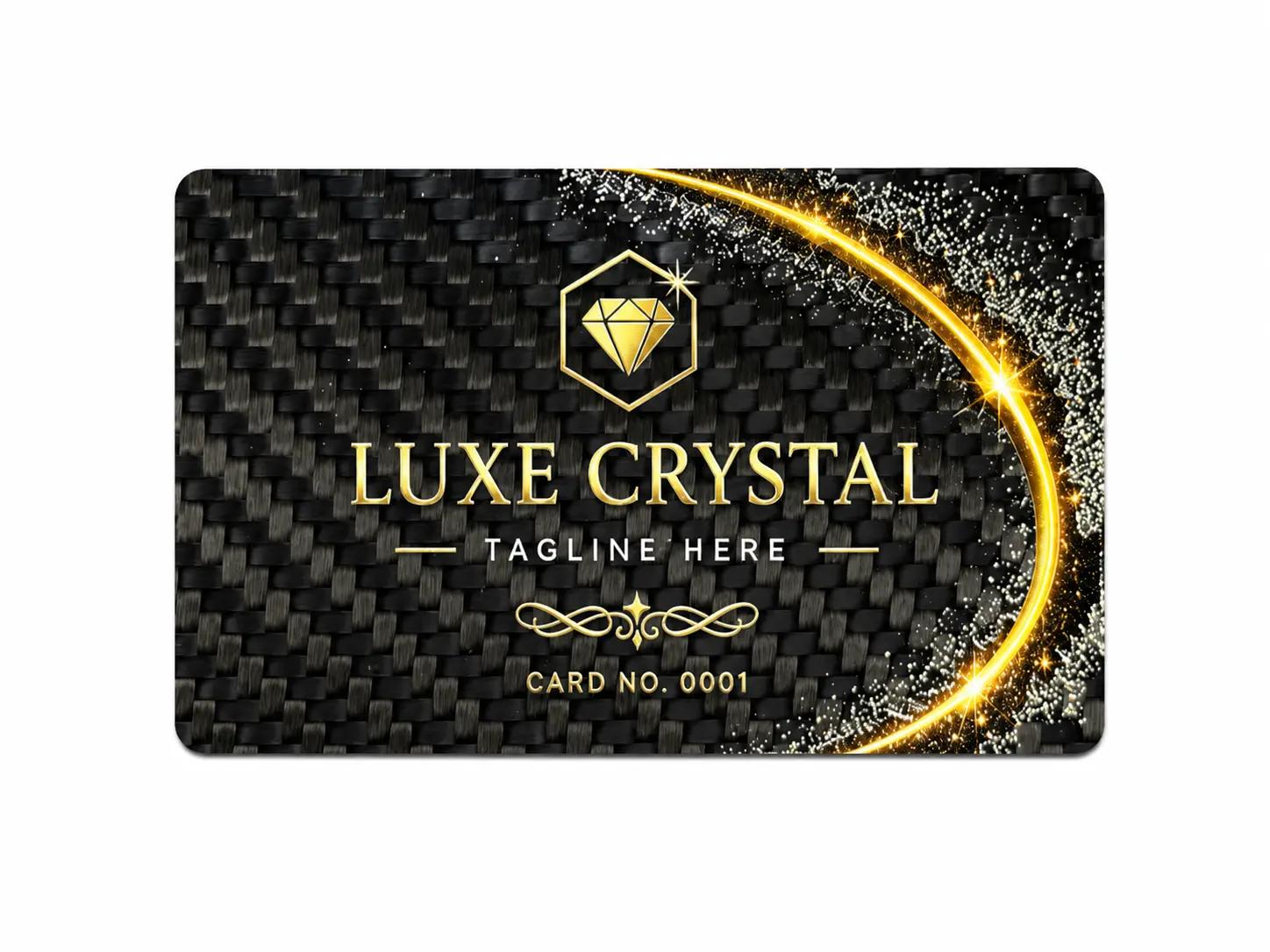
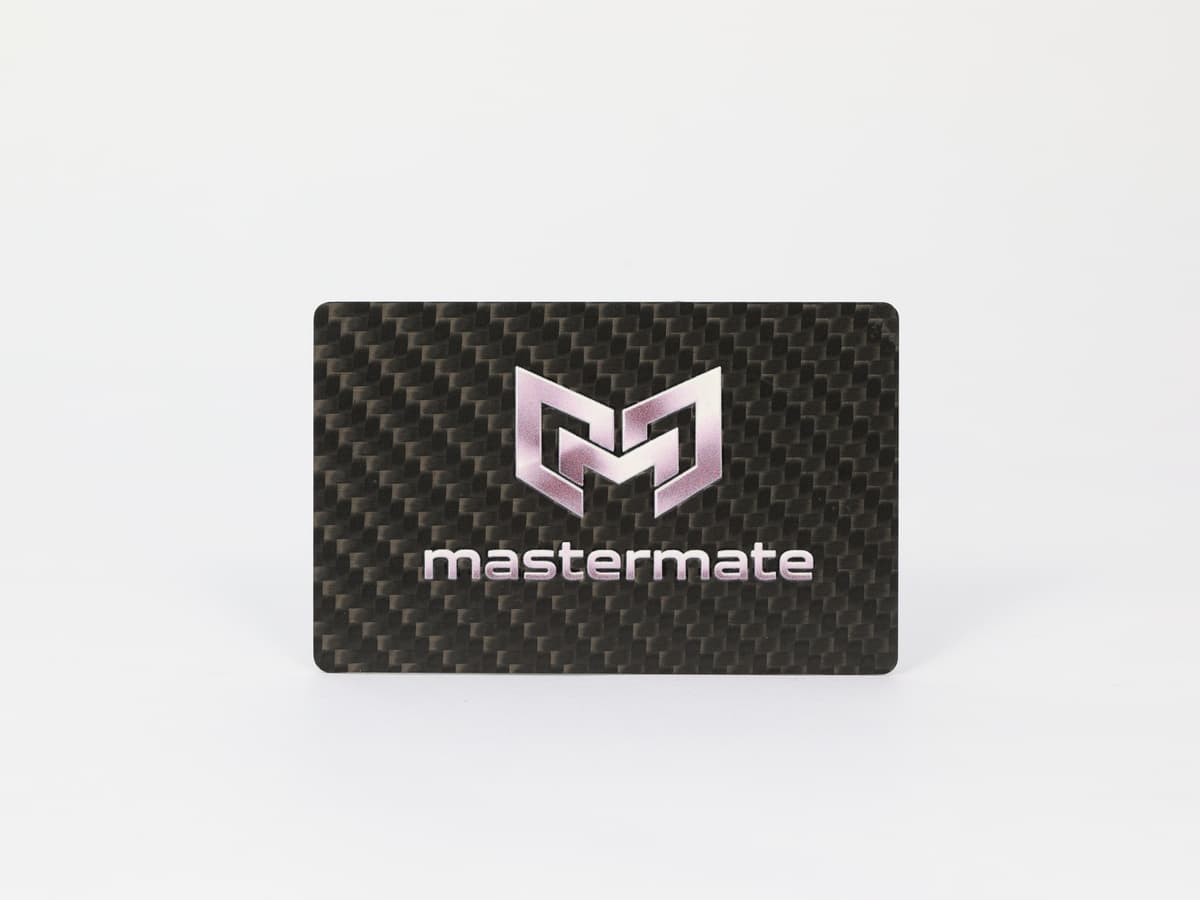
A real carbon fiber business card is a flat CFRP part: continuous carbon filaments in a polymer matrix (typically epoxy), cured into a solid laminate. It is not fiberglass (glass-fiber reinforced polymer), not metal with a carbon-look coating, and not PVC with a printed texture. Understanding the distinction matters for specifications, RF behaviour (NFC), and durability claims.
CFRP, Weave, Prepreg, and Resin
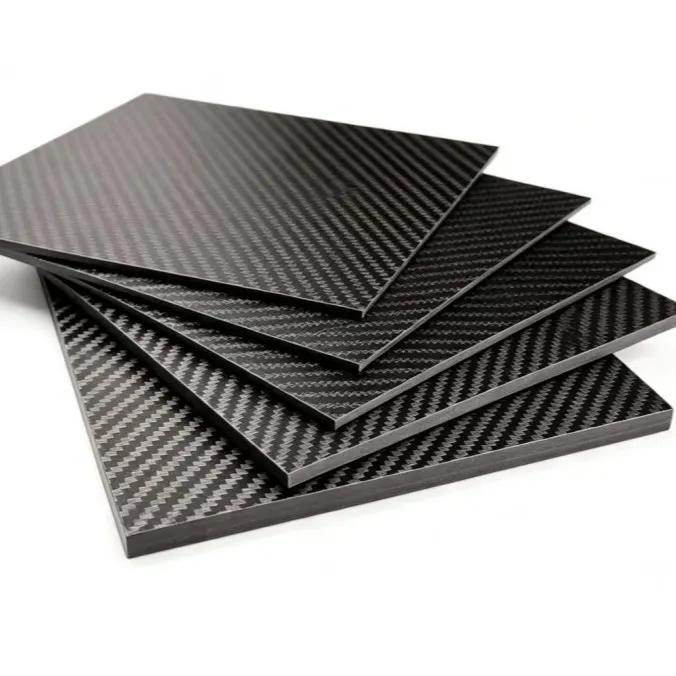
Carbon-fiber-reinforced polymer (CFRP) combines high-strength carbon fibers with a resin matrix. Fibers carry tensile load; resin transfers stress between fibers and protects them from abrasion [3]. Twill weave (e.g. 3K twill — 3,000 filaments per tow) produces the diagonal pattern most buyers recognize on premium business cards. Plain weave shows a checkerboard pattern; forged carbon (chopped fiber) yields a marbled appearance popular in automotive trim. For the broader material and manufacturing overview, see our Carbon Fiber Reinforced Polymer (CFRP) hub.
Prepreg is fabric pre-impregnated with partially cured resin, stored cold until layup. Card manufacturers often use thin prepreg sheets or dry fabric with wet layup for small parts. Resin systems for decorative cards are typically toughened epoxy with UV-stable clear coats applied after cure.
| Material | What it is | Typical weight (CR80) | Weave visible? | NFC notes |
|---|---|---|---|---|
| Real CFRP | Woven carbon + epoxy laminate | ~6–10 g | Yes — 3D texture | Conductive; antenna engineering required |
| PVC + hydrographic film | Plastic with printed carbon pattern | ~4–6 g | No — flat print | NFC easy; non-premium feel |
| Stainless steel | Machined or etched metal | ~25–45 g | N/A (brushed metal) | NFC possible; heavy |
| Fiberglass (GFRP) | Glass fiber + resin | ~8–12 g | Coarser, less luxury | Less conductive than carbon |
| Paper / cardstock | Cellulose | ~2–4 g | N/A | No NFC without sticker |
Why CFRP Works for Thin Premium Cards
The property set that makes CFRP useful in weight-sensitive products also explains its appeal for luxury business cards: low density, high fiber-direction stiffness, corrosion resistance and a visible engineered surface. A card is not a structural aerospace component, so buyers should evaluate the actual laminate rather than transfer aircraft-level performance claims to a sub-millimetre card.
- Strength-to-weight — Carbon fibers (e.g. Toray T300-class) offer tensile strengths on the order of 3,500 MPa at densities near 1.8 g/cm³, far above steel by weight [6].
- Fatigue resistance — Properly cured laminates withstand repeated flexing in thin sections better than brittle plastics.
- Corrosion resistance — CFRP does not rust; metal cards can corrode at edges or in humid climates.
- Stiffness — A 0.8 mm CFRP card resists bending in a wallet; paper creases permanently.
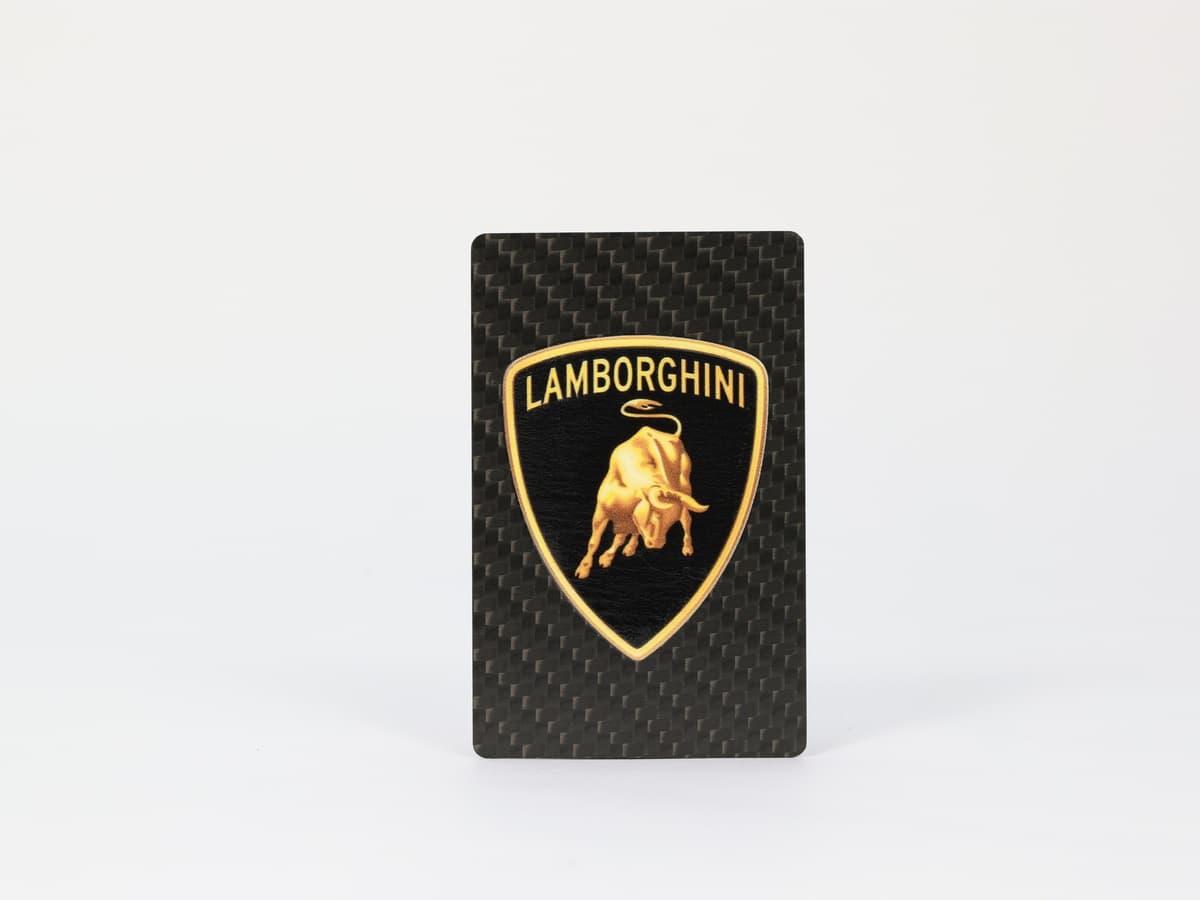
- Brand semiotics — Carbon weave visually references motorsport and aerospace programs (McLaren, Ferrari, Lamborghini interiors; F1 chassis monocoques).
NASA documents carbon fiber composites for lightweight structural applications in spacecraft and aircraft research [4]. Airbus and Boeing both publish extensive composite content for modern airliners — the Airbus A350 and Boeing 787 families rely heavily on CFRP primary structure [5][7]. Translating that material cachet to a carbon composite card is a branding decision; manufacturing still requires standard composite discipline scaled to sub-millimetre thickness.
Carbon Fiber vs PVC vs Stainless Steel Business Cards
| Factor | Carbon fiber (CFRP) | PVC | Stainless steel |
|---|---|---|---|
| Weight (CR80) | ~6–10 g | ~4–6 g | ~25–45 g |
| Tensile strength (material) | Very high (fiber-dominated) | Moderate | High |
| Luxury / brand perception | High-tech, engineered | Promotional | Executive, weighty |
| Scratch resistance | Good with hard clear coat | Moderate | Good; shows scratches |
| Corrosion | None | None | Possible in aggressive environments |
| Durability in wallet | Very high | Moderate | Very high |
| NFC compatibility | Requires RF engineering | Easy | Easy with cavity |
| Manufacturing difficulty | High (composite + CNC) | Low (print/die-cut) | Medium (etch/CNC) |
| Typical lifespan | Many years | 1–3 years aesthetic | Many years |
| Relative unit cost (OEM) | Mid–high | Low | High |
| Recyclability | Complex (thermoset matrix) | Limited | Recyclable metal |
Complete Manufacturing Process: Twelve Steps
Carbon fiber card manufacturing at OEM scale follows composite industry practice, adapted for thin flat laminates. Below are twelve steps with purpose, equipment, standards, common defects, and practical notes. Total manufacturing guide length for this section reflects what factory QA and procurement audits typically review.
Step 1 — Carbon Fiber Fabric Selection
Purpose: Define mechanical properties and surface aesthetics. Equipment: Inventory of woven rolls or prepreg. Standards: Fiber grade (T300/T700), areal weight (e.g. 200–300 g/m² for thin cards). Defects: Contaminated rolls, incorrect weave alignment. Tip: 3K twill is the default for luxury business cards; forged carbon uses chopped strand prepreg for marbled patterns. Toray, Hexcel, and other suppliers publish tensile modulus and strength data per fiber grade — procurement teams reference those datasheets when specifying "aerospace-grade" marketing claims [6][12].
Step 2 — Prepreg Handling and Layup
Purpose: Build a uniform ply stack at target thickness. Equipment: Cold storage for prepreg, clean layup table, vacuum bag consumables. Standards: Manufacturer TDS for out-time and cure cycle. Defects: Out-time exceeded (pre-cure), foreign object debris. Tip: For 0.5–0.8 mm cards, often 1–3 plies — over-building adds weight without benefit. Layup operators align warp/weft with card long edge so the diagonal twill reads consistently across a print run — important for custom carbon fiber business cards where visual consistency is part of QC.
Step 3 — Resin Lamination (Wet Layup if Not Prepreg)
Purpose: Wet-out dry fabric with epoxy resin. Equipment: Rollers, resin mixers, scale. Standards: Mix ratio per resin datasheet. Defects: Dry spots, excess resin (brittle), insufficient resin (voids). Wet layup suits small batch card programs where prepreg MOQ is excessive; the trade-off is higher void risk without vacuum consolidation.
Step 4 — Hot Press Consolidation
Purpose: Apply heat and pressure to consolidate plies and reduce voids. Equipment: Heated platen press, steel cauls, release film. Standards: Cure cycle per resin system (e.g. 120–130 °C for many epoxies). Defects: Thickness variation, surface pinholes. Tip: Flat caul plates yield gloss-ready faces for premium business cards. Pressure and temperature profiles should be logged per batch — ISO 9001 factories retain cure records for customer audits.
Step 5 — Autoclave Cure (When Required)
Purpose: Higher consolidation quality for demanding laminates. Equipment: Autoclave with vacuum bag. Standards: Aerospace-style cure cycles (rare for thin cards but used for ultra-flat panels). Defects: Same as press, plus bag leaks. Note: Many card programs use press-only to control cost; autoclave is optional unless spec demands aerospace-grade void content. CompositesWorld regularly covers autoclave vs out-of-autoclave debates — relevant when buyers ask whether card laminates need "aircraft cure" [11].
Step 6 — CNC Machining to Card Outline
Purpose: Cut CR80 outline, slots, or custom die shapes. Equipment: CNC router with diamond or carbide tooling, vacuum table. Standards: ISO/IEC 7810 ID-1 dimensions for standard wallets. Defects: Edge fraying, delamination at corners, dimensional drift. Tip: Down-cut tooling and sacrificial backing reduce edge chip-out on thin laminates. For carbon composite cards with rounded corners, toolpath entry points should avoid plunging through face plies on the show side.
Step 7 — Edge Polishing and Deburring
Purpose: Remove CNC burrs; optional painted or clear edge. Equipment: Hand polish, tumbling (careful — thin parts), edge masking. Defects: Edge resin micro-cracks visible under magnification. Painted edges (matte black) hide exposed fiber ends — common on luxury business cards photographed for marketing.
Step 8 — Laser Engraving
Purpose: Permanent monochrome logos, names, serial numbers. Equipment: Fiber or CO₂ laser. Standards: Safe fume extraction; depth control to avoid ply damage. Defects: Over-burn into structural plies. Tip: Popular for personalized carbon fiber cards and executive sets with variable names. Laser marking is also used for serialisation on membership cards and limited editions.
Step 9 — Foil Stamping (Gold / Silver)
Purpose: Metallic brand accents on weave. Equipment: Hot foil press, custom dies. Defects: Incomplete transfer on uneven weave. Tip: Combine with matte clear coat zones for contrast on luxury business cards. Foil on twill peaks reads brighter than in valleys — designers should proof on physical samples, not only PDF mockups.
Step 10 — UV Printing
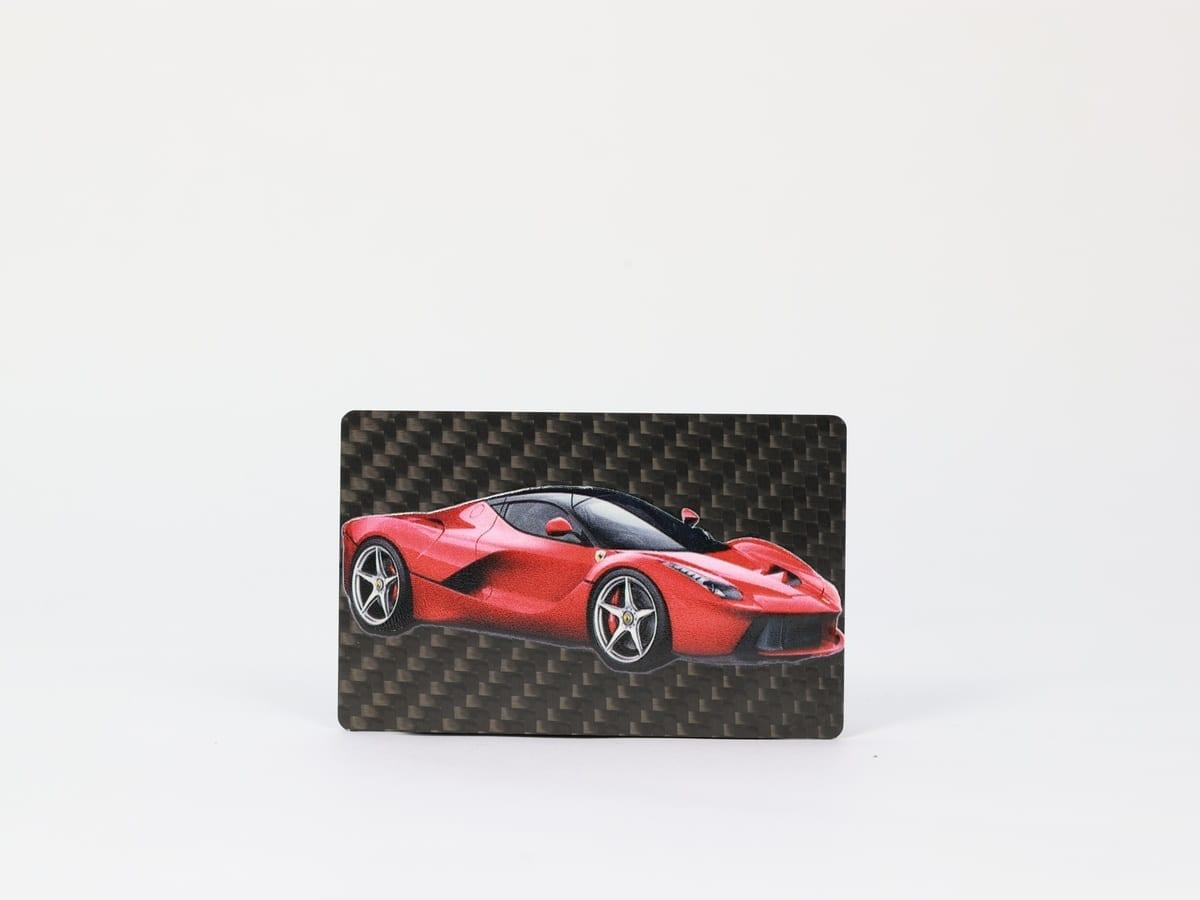
Purpose: Full-color CMYK logos and photography. Equipment: UV flatbed printer, white underbase for dark carbon. Defects: Adhesion failure without proper surface prep. Tip: Clear coat overprint protects UV ink from wallet abrasion. UV is the default for agency programs that need Pantone-adjacent brand colors on custom carbon fiber business cards.
Step 11 — NFC Integration
Purpose: Embed ISO/IEC 14443 NFC tag (13.56 MHz) for tap-to-share. Equipment: Lamination cavity routing, encoder, NFC test fixtures. Defects: Read range failure (see next section). Tip: Treat carbon fiber NFC cards as a separate SKU with RF validation — not an afterthought on a print-only card line. Encoding typically uses NTAG213/215/216 with URL or vCard payloads per NXP application notes [10]. Related formats include NFC review cards for Google review collection — same chip technology, different encoded URL.
Step 12 — Quality Inspection
Purpose: Verify dimensions, cosmetics, decoration, and NFC function. Equipment: Calipers, gloss meter (optional), NFC reader phones, visual light box. Standards: AQL sampling for bulk; 100% NFC functional test recommended. Defects: Catches delamination, print offset, failed encoding before shipment. Export programs should add dimensional report and photos for first article approval (FAI) before mass production.
- Fabric / prepregSelect weave, grade, ply count
- Layup & cureHot press or autoclave
- CNC & edge finishCR80 cut, polish
- DecorateLaser, foil, UV
- NFC (optional)Cavity, embed, encode
- QC & packDim check, tap test, ship
Why NFC Is Difficult in Carbon Fiber Cards
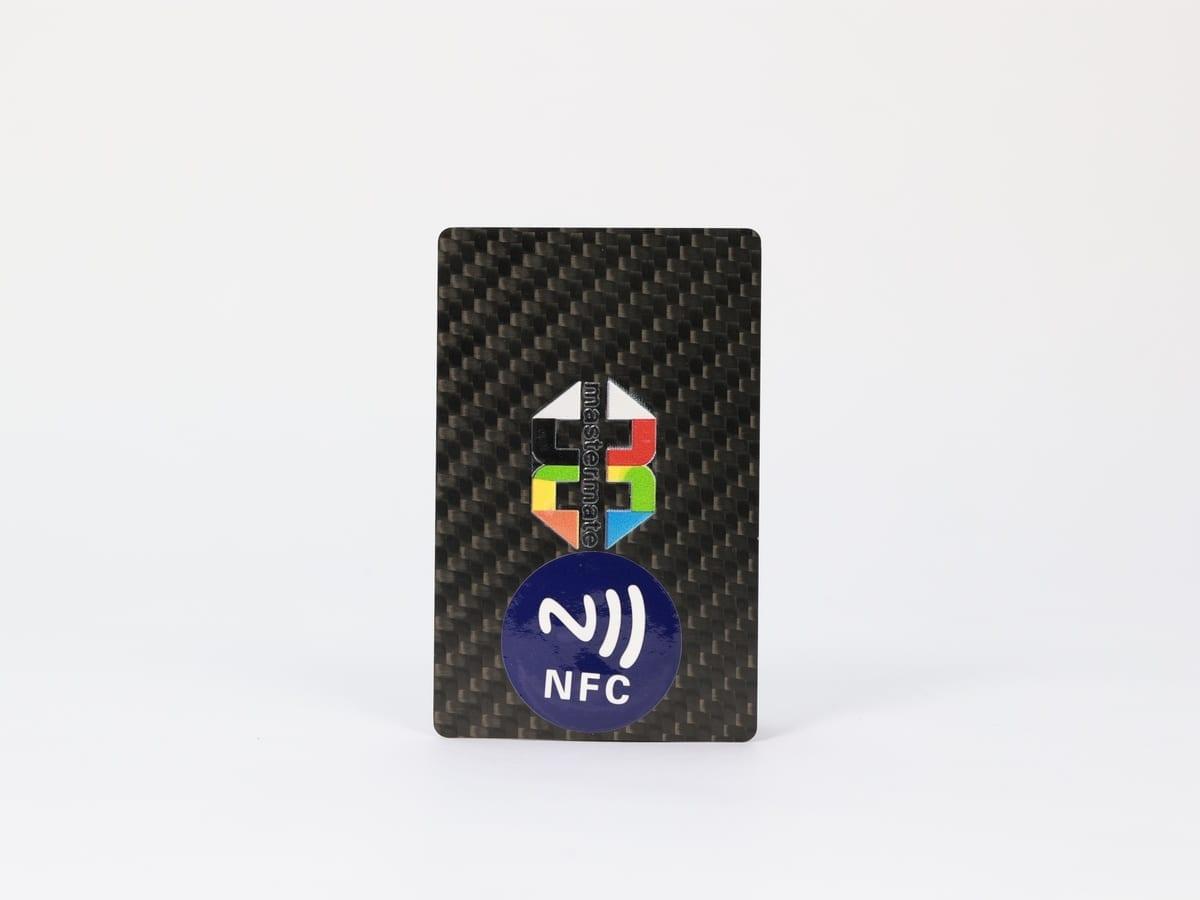
Carbon fiber is electrically conductive. NFC tags operate at 13.56 MHz under ISO/IEC 14443 near-field coupling between a reader antenna and tag coil [8][9]. Conductive materials in the near field can detune the antenna or shield the magnetic flux, reducing read distance or causing intermittent failures on iPhone and Android devices.
PVC cards are RF-transparent; metal cards use defined cavities and ferrite layers; carbon fiber NFC cards require intentional antenna geometry — often a slot or window in the laminate stack, controlled ply orientation around the chip, and topcoat thickness limits. NXP documents NTAG series tags for NFC Forum Type 2 applications; encoding is straightforward once physical read range is validated [10].
ISO/IEC 14443 defines proximity card electrical characteristics at 13.56 MHz [8]. The NFC Forum publishes implementation specifications consumed by smartphone OEMs [9]. From a carbon fiber card manufacturing perspective, the engineering task is keeping the tag coil in a zone where magnetic flux can couple — typically by routing a pocket through partial thickness of the laminate and covering it with a non-conductive cap ply or controlled-thickness clear coat. Field strength drops rapidly with distance; even 0.5 mm of poorly placed carbon above the antenna can reduce read distance below practical handshake use.
- Signal shielding — Solid carbon mass above the coil attenuates coupling.
- Traditional slot design — Routed cavity placing NTAG213/215/216 in a low-carbon zone.
- Advanced seamless designs — Engineered laminate windows, ferrite backing, or hybrid PVC/carbon zones (manufacturer-dependent).
- QR backup — ISO-standard QR on reverse for devices with NFC disabled.
Common Manufacturing Challenges
| Challenge | Cause | Mitigation |
|---|---|---|
| Resin curing incomplete | Under-temperature or short cycle | Validate press/autoclave thermocouples |
| Voids / bubbles | Trapped air in layup | Vacuum bag, proper bleed |
| Delamination | Contamination, impact after cure | Clean room discipline, corner radii in CNC |
| Fiber misalignment | Manual layup error | Templates, ply markers |
| CNC edge chipping | Dull tool, wrong feed rate | Diamond tooling, down-cut strategy |
| Tool wear | Abrasive carbon dust | Scheduled tool change, extraction |
| Clear coat scratches | Handling before pack | Protective film, separate QC station |
CompositesWorld and JEC publish ongoing technical coverage of cure optimization, NDT, and automotive composite scaling — concepts that apply to thin laminates when auditors ask whether a carbon fiber card manufacturer understands production discipline [11][12].
Applications: Where CFRP Cards Are Used
- Corporate branding — Executive teams, board members, founder cards.
- Luxury hotels & yacht clubs — VIP check-in, membership tiers.
- Motorsports — Teams, sponsors, paddock access credentials.
- VIP memberships — Gyms, private clubs (see membership card guide).
- Luxury retail — Clienteling cards for high-ticket sales associates.
- Automotive brands — Dealer principals, press fleets, collector programs.
- Investment firms — Discreet premium handoff without metal weight.
- Technology companies — Engineering-forward brand identity; optional NFC business cards.
Why Premium Business Cards Improve Brand Perception
Marketing research on first impressions shows that evaluators form judgments within seconds of an initial encounter — physical touchpoints included [13]. A luxury business card that is stiff, light, and visually distinctive increases perceived value and memorability compared with generic cardstock. Harvard Business Review and related management literature discuss how tangible quality cues signal organizational attention to detail — relevant when a card represents a high-trust B2B relationship.
Carbon fiber specifically encodes "engineering" and "performance" semiotics borrowed from aerospace and motorsport. That association supports premium pricing for services — provided the card itself is manufactured correctly (real CFRP, not faux texture).
How to Choose a Carbon Fiber Card Manufacturer
Use this checklist when evaluating OEM/ODM partners. It applies to any carbon fiber card manufacturing program — whether you order 100 executive cards or 10,000 private-label units.
| Capability | Why it matters | Ask for |
|---|---|---|
| CNC routing | Dimensional accuracy, custom shapes | Sample tolerance report |
| Composite layup experience | Void control, weave consistency | Process description, cure logs |
| Quality control (QC) | Reject rates, AQL | Inspection checklist |
| OEM / ODM | Your brand, packaging | NDA, white-label references |
| NFC integration | Functional tap-to-share | iOS/Android tap-test video |
| Laser & foil | Decoration range | Decoration samples |
| Design support | DFM for thin laminates | Artwork template (CR80) |
| Export experience | Incoterms, HS codes | FOB/DDP quote structure |
MASTERMATE is the manufacturer brand behind CarbonFactorys.com and offers composite processing, CNC, laser, UV, foil and NFC encoding for card programs. Buyers should request current quality documentation and production-intent samples when comparing suppliers. For a full B2B scorecard, see how to choose a carbon fiber card manufacturer. OEM services are outlined on the custom manufacturing page.
Related reading: CFRP knowledge hub · How is carbon fiber made? · What is carbon fiber? · OEM/ODM process
Related products: Custom carbon fiber business cards (print, foil, engraving — no chip) · Carbon fiber NFC business cards (NTAG encoding) · Cards category · July 2026 press coverage · More on the blog.
Conclusion
How to make carbon fiber business cards — in summary — is a composite manufacturing problem scaled to wallet size: select real CFRP materials, cure flat laminates with controlled thickness, machine to CR80, decorate with industrial print processes, optionally engineer NFC antenna placement, and inspect before ship. The result joins composite material science with luxury branding. Buyers who understand layup, cure, CNC, and RF constraints make better specifications, fewer change orders, and more durable brand programs.
Frequently Asked Questions
Technical and sourcing questions procurement teams ask about carbon fiber business cards, CFRP business cards, and carbon fiber NFC cards.
Are carbon fiber business cards waterproof?
Cured epoxy CFRP is water-resistant and will not dissolve like paper. Prolonged immersion can affect edges or untreated corners. A full clear coat improves moisture resistance. Cards are splash-proof for normal wallet and hand use.
Are carbon fiber cards stronger than metal cards?
By weight, carbon fiber is far stronger in tension. A thin card is not a structural beam — metal feels heavier and stiffer in bending. Carbon resists permanent crease better than paper; metal resists denting differently. "Stronger" depends on the failure mode tested.
Can carbon fiber block NFC signals?
Conductive carbon can attenuate 13.56 MHz NFC if the antenna is covered by solid laminate. Proper cavity design, antenna windows, or hybrid zones restore read range. Always tap-test on production samples.
Why are carbon fiber business cards expensive?
Cost drivers include prepreg or fabric, cure cycle labor, CNC routing per piece, decoration (UV/laser/foil), optional NFC encoding, and QC. Volume tiers reduce unit cost; MOQ is typically 50–100+ for OEM runs.
What is CFRP?
Carbon-fiber-reinforced polymer — carbon fibers embedded in a resin matrix (usually epoxy). It is the material class used in aerospace, automotive, and sporting goods, including thin business card laminates.
What is forged carbon?
Forged carbon (chopped carbon fiber in resin) creates a marbled pattern unlike woven twill. It is used in automotive trim and premium cards for a distinct aesthetic.
What is prepreg?
Pre-impregnated composite fabric with resin partially applied at the supplier. It requires cold storage and a defined cure cycle, yielding consistent resin content versus hand wet layup.
Can logos be engraved on carbon fiber cards?
Yes. Fiber or CO₂ laser engraving removes clear coat and exposes weave for a permanent monochrome mark. Depth must be controlled to avoid ply damage.
Can QR codes be laser engraved?
Yes, but UV printing is more common for high-contrast QR. Laser-engraved QR works on light backgrounds with sufficient module size; verify scan distance in QC.
Do carbon fiber cards scratch?
The epoxy surface can scratch without a hard clear coat. Quality programs use scratch-resistant topcoats and protective film until delivery.
Can NFC chips be hidden inside carbon cards?
The chip and antenna coil sit in a routed cavity or laminate window. They are invisible when embedded but must not be covered by solid carbon above the coil.
How thick are carbon fiber business cards?
Typically 0.5–1.0 mm (0.8 mm is common). Thinner cards flex more; thicker cards feel heavier and may not fit all wallet slots.
How long do carbon fiber business cards last?
Many years under normal wallet use — far longer than paper. UV exposure can yellow some clear coats over extended outdoor exposure; indoor wallet use is benign.
Can carbon fiber business cards bend?
They flex slightly but return to shape within elastic limits of the laminate. Excessive bending can cause micro-cracks in the matrix or delamination at corners.
Can carbon fiber cards be recycled?
Thermoset epoxy matrices are difficult to recycle like metals. Mechanical recycling and pyrolysis exist at industrial scale for aerospace waste; wallet cards are low mass. Metal cards are more straightforward to recycle.
What is 3K twill weave?
A weave pattern using 3,000-filament tows in a diagonal twill repeat. It is the most recognized aesthetic on premium carbon products.
What is the difference between real carbon fiber and PVC carbon-look cards?
Real CFRP is structural carbon fiber in resin with measurable stiffness and weave depth. PVC carbon-look uses printed or hydrographic film on plastic — lighter process, lower cost, no true composite properties.
What NFC chips are used in carbon fiber smart cards?
NTAG213, NTAG215, and NTAG216 (NFC Forum Type 2) are common for URL and vCard payloads at 13.56 MHz per ISO/IEC 14443.
Do carbon fiber NFC cards work with iPhone?
Modern iPhones (XS/XR and later) read NFC tags natively. Production batches should be tap-tested on target iOS and Android devices before shipment.
What file formats do manufacturers need for custom cards?
Vector artwork (.AI, .PDF) for print; .DXF or .STEP for custom outlines. Specify CR80 unless die-cut custom shape.
What is the typical MOQ for custom carbon fiber business cards?
OEM programs often start at 50–100 pieces for engraving and 100+ for full-color UV. Sample orders of 5–10 units are common for approval before bulk.
How long does production take?
Samples: about 7–10 business days. Bulk runs of hundreds to thousands: often 10–15 days after artwork approval, plus shipping.
Sources & Further Reading
- Grand View Research — Carbon Fiber Market Size Report
- JEC Group — Composites industry news and resources
- Wikipedia — Carbon-fiber-reinforced polymer
- NASA — Composites materials overview
- Boeing — 787 Dreamliner family background (composite primary structure)
- Toray Industries — Carbon fiber products
- Airbus — Aircraft materials and composites
- ISO/IEC 14443-1:2018 — Contactless proximity objects
- NFC Forum — Technical specifications
- NXP — NTAG213, NTAG215 and NTAG216 product specifications
- CompositesWorld — Composites manufacturing news
- Hexcel — Carbon fiber and composite materials
- Harvard Business Review — First impressions research (collection)
- MASTERMATE — Custom carbon fiber business cards (product)
- MASTERMATE — Carbon fiber NFC business cards (product)
- Carbonfactorys — CFRP knowledge hub
How This Guide Was Prepared
Manufacturing steps and material comparisons combine established CFRP process principles with typical card-production practice at wallet-scale thickness (~0.5–1.0 mm). Property and process claims should be confirmed against your card design, NFC requirements and production quantity before ordering.
Need Custom Carbon Fiber Products?
Our engineering team helps brands worldwide develop OEM carbon fiber solutions with low MOQs and rapid prototyping.
Request a Quote Today.