What Is Carbon Fiber? A Complete Plain-English Guide
What carbon fiber actually is, what it is made of, how the fiber differs from CFRP, weave types (3K/12K/UD), its real advantages and limits, and where it is used — explained simply.
Based on MASTERMATE’s experience manufacturing custom carbon fiber components, material selection should consider strength, stiffness, impact resistance, operating conditions, production volume and budget.
"Carbon fiber" is one of those terms everyone has heard and few can define precisely. It shows up on supercars, bikes, helmets, phone cases and aircraft, usually as a black woven pattern that signals "light and high-tech". This guide explains, in plain English, what carbon fiber actually is, what it is made of, how the raw fiber becomes a hard finished part, and what it is genuinely good (and not good) at.
The MASTERMATE Engineering Team evaluates fiber grade, resin system, lay-up orientation, thickness, tolerances and expected loading conditions before recommending a composite structure. See carbon fiber manufacturing capabilities and T300, T700 and T800 material options when you move from theory to sourcing.
What Carbon Fiber Actually Is
Carbon fiber is a material made of extremely thin filaments — about 5–10 micrometers in diameter, thinner than a human hair — composed almost entirely of carbon atoms aligned along the length of the fiber. That alignment is the whole trick: it makes each filament exceptionally strong and stiff in the direction it runs [1].
Thousands of these filaments are bundled into a "tow" (a 3K tow has 3,000 filaments, a 12K tow has 12,000), and the tows are woven into the cloth most people picture when they hear "carbon fiber".
Fiber vs CFRP: The Distinction That Confuses Everyone
This is the single most useful thing to understand. The woven cloth by itself is soft and floppy. The hard, glossy parts you actually buy are a composite: carbon fabric locked into a plastic resin. That finished material is called carbon fiber reinforced polymer (CFRP) [2].
| Term | What it is | State |
|---|---|---|
| Carbon fiber | The bare fiber / woven cloth / tow | Soft, flexible fabric |
| Resin (matrix) | Epoxy or other plastic that bonds the fibers | Liquid → cured solid |
| CFRP (the composite) | Carbon fiber + cured resin together | Hard, stiff finished part |
For a deeper look at CFRP as a material category — manufacturing, applications, and custom composite capability — see our Carbon Fiber Reinforced Polymer (CFRP) hub.
What Is Carbon Fiber Made Of?
About 90% of carbon fiber is made from a plastic precursor called PAN (polyacrylonitrile). The rest is made from pitch (a petroleum/coal byproduct) or rayon. The precursor is heated in stages that drive off almost every element except carbon, leaving long chains of tightly bonded carbon atoms [3].
We cover the full process in our companion guide on how carbon fiber is made — but the short version is: spin a plastic fiber, then bake it in controlled steps until only carbon remains.
Weave Types: 3K, 12K, Twill, UD
Not all carbon cloth looks or behaves the same. The weave and tow size change both the appearance and the mechanical behavior [4].
| Type | Look | Notes |
|---|---|---|
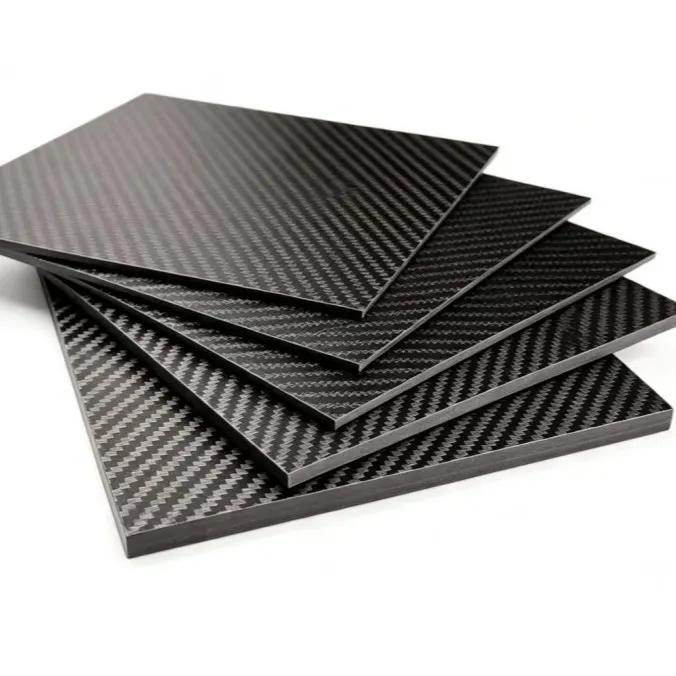
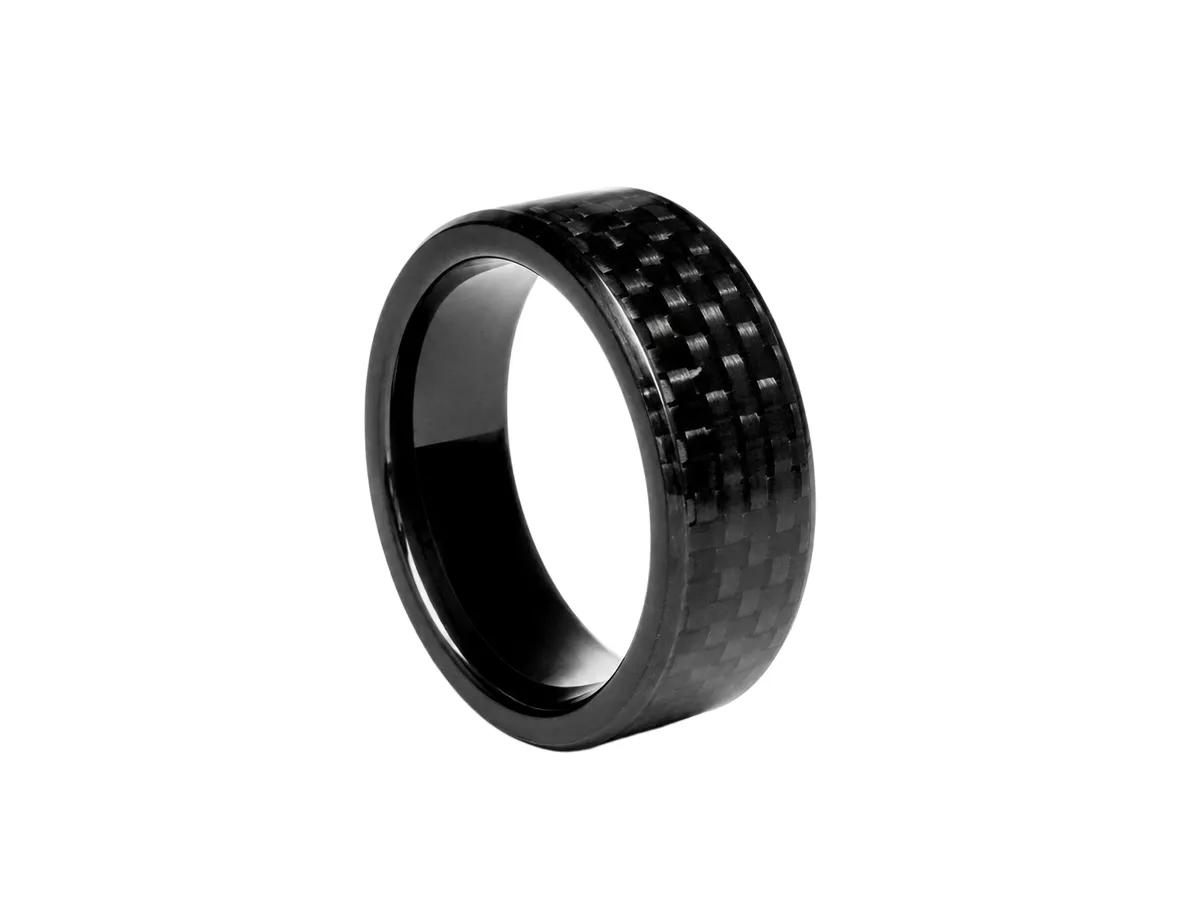
| 3K twill | Fine, classic checkerboard weave | The "carbon fiber look"; cosmetic + structural |
| 12K twill | Larger, coarser weave | Cheaper, larger pattern |
| Plain weave | Tight over-under grid | Flatter look, stable |
| Unidirectional (UD) | All fibers one direction | Max strength along the fiber; structural |
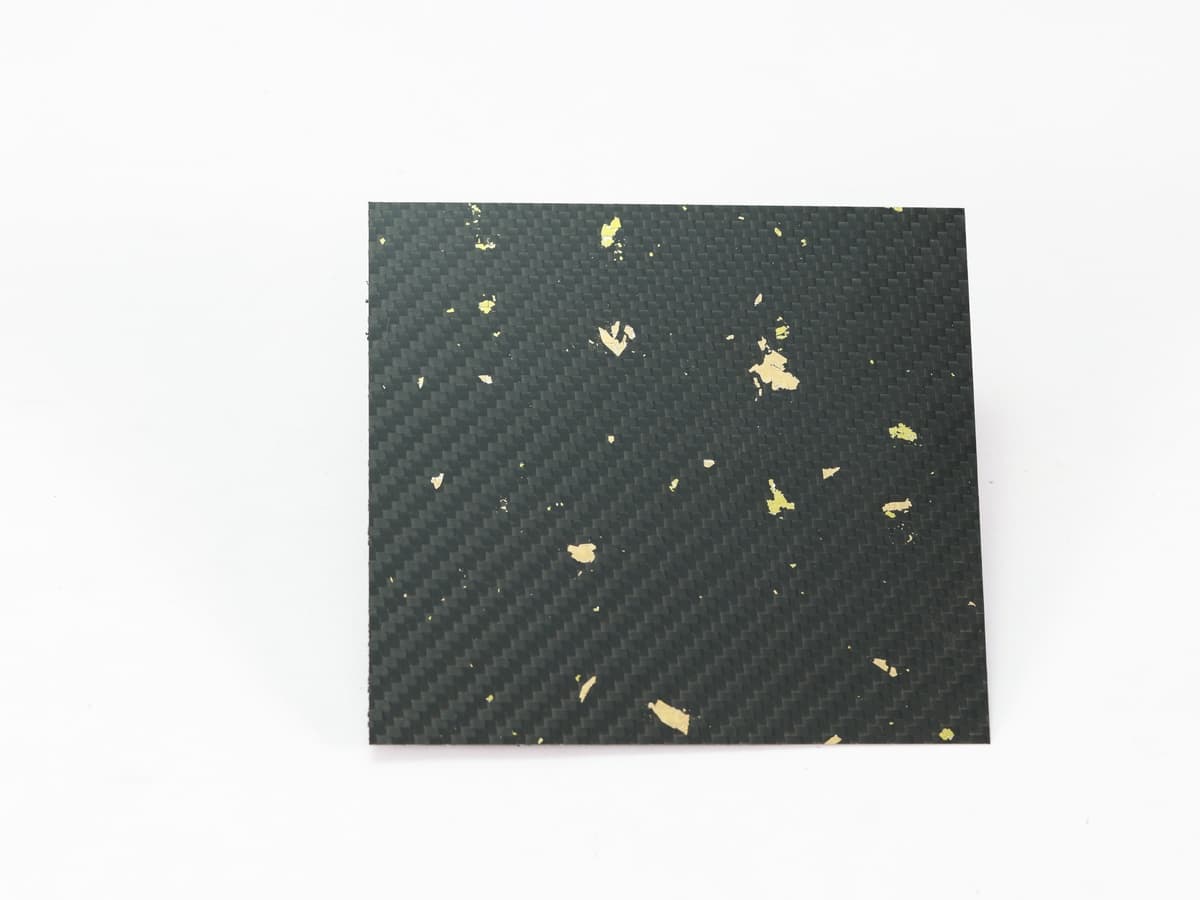
| Forged carbon | Marbled, no weave lines | Chopped fiber; complex shapes & accents |
Advantages and Limits
Carbon fiber is not magic — it is a set of trade-offs that happen to be excellent for lightweight, stiff parts [5].
- Advantages: very high strength-to-weight, very stiff, does not rust, low thermal expansion, distinctive look.
- Limits: more expensive than metal, anisotropic (stronger along the fibers than across), can crack/shatter rather than dent on extreme overload, hard to recycle.
Where Carbon Fiber Is Used
Anywhere weight matters and budget allows. The pattern is consistent: replace a heavy metal or plastic part with a lighter, stiffer one.
- Vehicles: car body panels, hoods, spoilers, interior trim and license plate frames.
- Protective gear: motorcycle helmets, racing helmets and carbon hard hats.
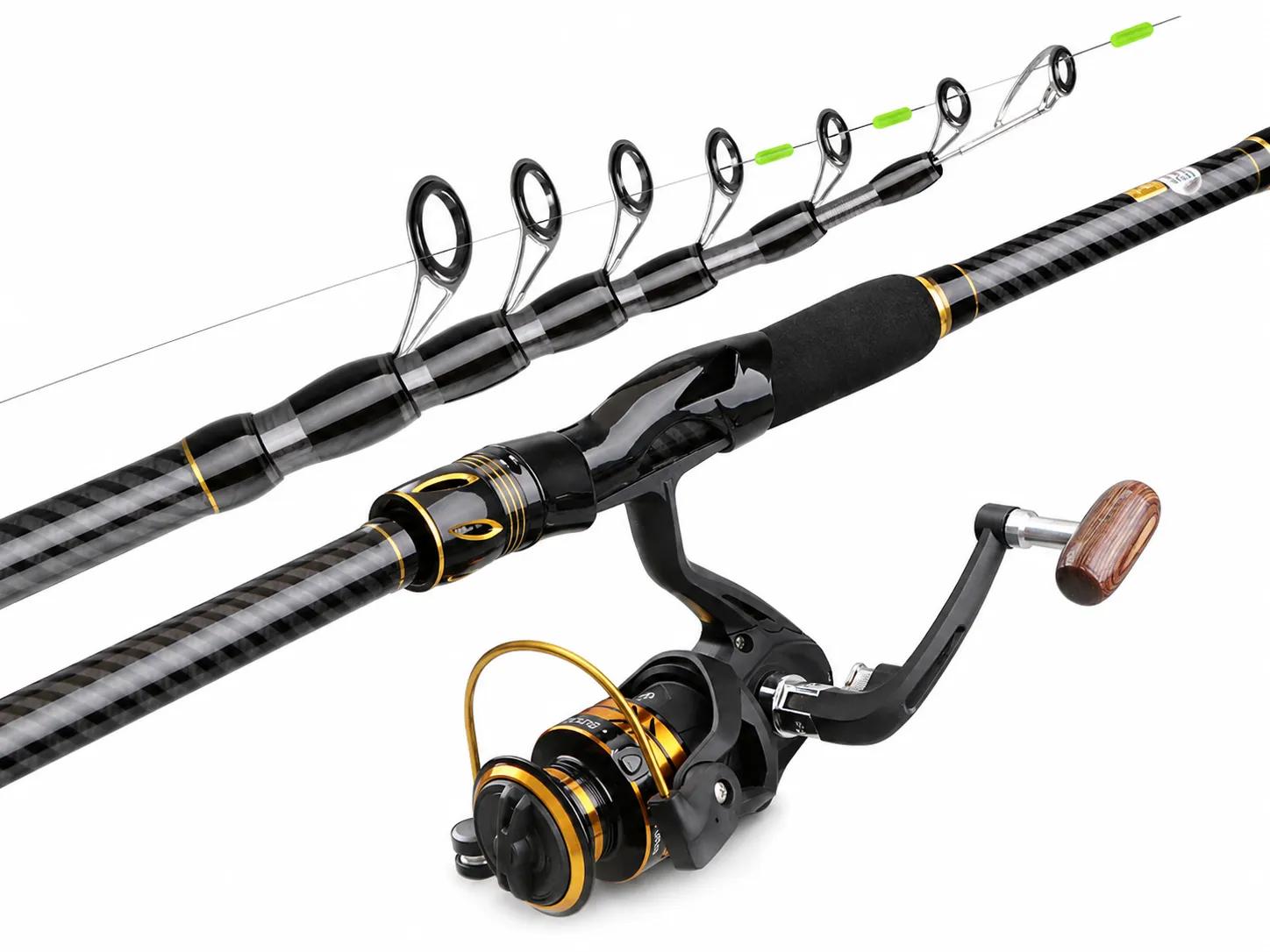
- Sports & drones: bike frames, paddles, fishing rods, FPV drone frames.
- Aerospace & industry: aircraft structures, robotics, wind-turbine parts.
See our related guides — is carbon fiber stronger than steel?, how carbon fiber is made, and carbon fiber vs aluminum — plus the CFRP knowledge hub for materials, manufacturing, and applications. Or browse what we manufacture across automotive, helmets and more.
Frequently Asked Questions
The basics people ask most about carbon fiber.
What is carbon fiber in simple terms?
Carbon fiber is a material made of very thin strands (about 5–10 micrometers across) composed almost entirely of carbon, aligned along the fiber so they are extremely strong and stiff for their weight. The bare fiber is a soft woven cloth; the hard parts you buy are that cloth set in a plastic resin, called carbon fiber reinforced polymer (CFRP).
What is carbon fiber made of?
About 90% of carbon fiber is made from a plastic precursor called PAN (polyacrylonitrile); the rest from pitch or rayon. The precursor is heated in controlled stages that drive off nearly every element except carbon, leaving long chains of tightly bonded carbon atoms. The finished part also contains a resin (usually epoxy) that bonds the fibers together.
What is the difference between carbon fiber and CFRP?
Carbon fiber is the bare fiber or woven cloth — soft and flexible on its own. CFRP (carbon fiber reinforced polymer) is the finished composite: carbon fiber set in a cured plastic resin, which is the hard, stiff material in actual products. When people say a part is "carbon fiber", they almost always mean CFRP.
What does 3K or 12K mean on carbon fiber?
The number refers to how many individual filaments are in each tow (bundle): a 3K tow has 3,000 filaments, a 12K tow has 12,000. 3K weave is finer and is the classic "carbon fiber look"; 12K is coarser and usually cheaper. Unidirectional (UD) carbon has all fibers running one way for maximum strength along that direction.
What are the disadvantages of carbon fiber?
It costs more than steel or aluminum, especially at low volumes; it is anisotropic (much stronger along the fibers than across them), so parts must be designed for their load direction; it can crack or shatter rather than dent under extreme overload; and it is difficult to recycle. For lightweight, stiff parts the trade-offs are usually worth it, but it is not a universal replacement for metal.
Is carbon fiber the same as graphite or "graphite fiber"?
They are closely related and the terms are often used loosely. Both are made of carbon; "graphite fiber" usually refers to carbon fiber processed at higher temperatures with a higher carbon content and more ordered structure. For most products the words are used interchangeably, and "carbon fiber" is the common term.
Sources & Further Reading
Need Custom Carbon Fiber Products?
Our engineering team helps brands worldwide develop OEM carbon fiber solutions with low MOQs and rapid prototyping.
Request a Quote Today.