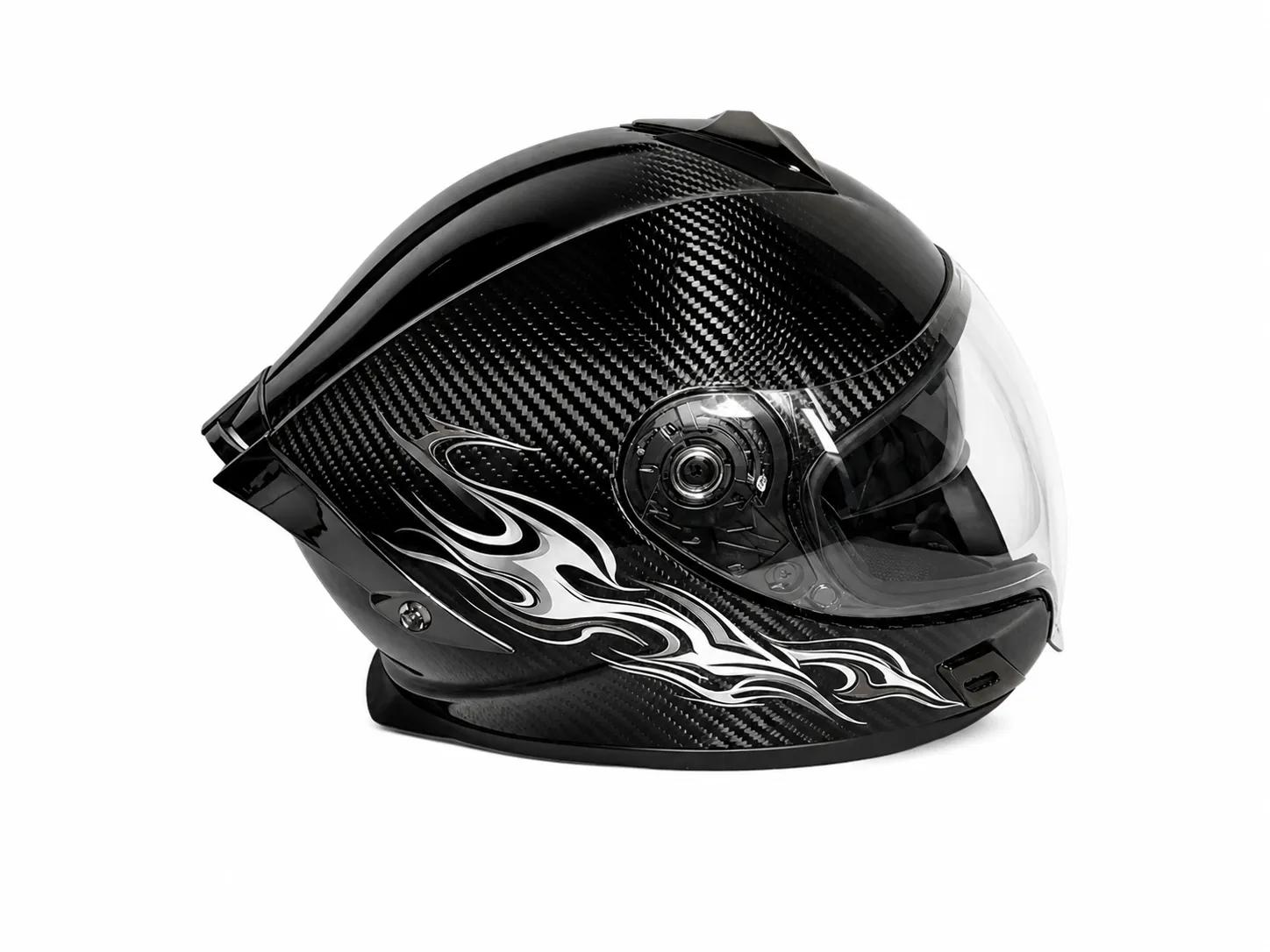
How to Choose the Best Carbon Fiber Motorcycle Helmet: Fit, Sizing & Buyer's Guide
A practical buyer's guide to choosing the best carbon fiber motorcycle helmet — head shape and sizing, shell count, certification, visor and comfort features, and price tiers, so you buy the right one the first time.
This buyer's guide was prepared by the MASTERMATE Engineering Team for riders and brands evaluating carbon fiber motorcycle helmets — fit, certification and OEM production requirements.
Search "best carbon fiber motorcycle helmet" and you get a hundred ranked lists that mostly compare weight and weave. But the helmet that is best for you is decided by fit, certification and features long before grams matter — the lightest helmet on the page is useless if it is the wrong shape for your head. This guide is the buyer's checklist our helmet sales engineers walk customers through so they choose the right carbon helmet the first time.
In custom OEM programs, MASTERMATE confirms shell range, certification target, graphics, tolerances and order quantity before helmet sample production. Learn more from the MASTERMATE Engineering Team or explore carbon fiber helmet manufacturing.
Fit Comes First — Before Weight, Before Looks
A carbon shell saves weight, but fit determines comfort and safety. A helmet that does not match your head shape creates pressure points, fatigue and, in a crash, can move on your head. Get fit right and everything else is a refinement [1].
| Head shape | Description | Fit symptom if wrong |
|---|---|---|
| Round oval | Width ≈ length, rounder head | Pressure on the sides if helmet is long oval |
| Intermediate oval | Slightly longer than wide (most common) | Fits most riders; the default shell shape |
| Long oval | Noticeably longer front-to-back | Pressure on forehead/back if helmet is round |
How to Size a Carbon Helmet
Carbon helmets are sized like any helmet — by head circumference — but because carbon shells are stiff, a correct size matters more (you cannot "break in" a hard shell the way padding suggests).
- Measure circumference about 2 cm above your eyebrows, around the widest part of your head.
- Use the specific maker's size chart — S/M/L are not standardised across brands.
- If between sizes, factor in head shape and check the cheek-pad fit (pads can be swapped a size, shells cannot).
- Wear the helmet 15+ minutes in the shop — pressure points only show up after a few minutes.
Shell Count: The Hidden Quality Marker
This is the spec most buyers miss. A quality carbon helmet line is molded in multiple shell sizes (typically 3–4) so each size group rides on an appropriately sized shell. Cheap lines use one or two shells for the whole range, which makes the small sizes bulky and the large sizes thin [2].
Certification: Buy for Your Market
Certification is non-negotiable, and the right one depends on where you ride. A quick recap (covered in depth in our carbon helmet buyer's guide) [3][4]:
- United States: DOT (FMVSS 218) is the legal minimum; add SNELL M2025 if you race.
- Europe + 50 countries: ECE 22.06 — the current standard, batch lab-tested with rotational impact.
- Track/racing: SNELL and/or FIM homologation for organized events.
- Always confirm the certification is printed on the helmet and matches your destination market — a US-DOT-only helmet is not road-legal everywhere in Europe and vice versa.
Features That Actually Matter Day to Day
Once fit and certification are settled, these features separate a helmet you love from one you tolerate.
| Feature | Why it matters | Look for |
|---|---|---|
| Pinlock-ready visor | Eliminates fogging in cold/rain | Pinlock pins + included insert |
| Ventilation | Comfort and visor de-fogging | Adjustable chin + top vents with rear exhaust |
| Comms-ready | Bluetooth intercom fit | Recessed ear pockets, channel for cabling |
| Quick-release visor | Easy cleaning / tint swap | Tool-less mechanism |
| Emergency-release pads | Safer removal after a crash | Pull-tab cheek pads (track helmets) |
| Liner | Comfort + hygiene | Removable, washable, moisture-wicking |
Price Tiers: What You Get at Each Level
Carbon helmets span a wide price range. Here is what typically changes as you move up, so you can match spend to need [5].
| Tier | Typical price | What you get |
|---|---|---|
| Entry carbon | $200–350 | Real carbon shell, DOT/ECE, basic vents + visor |
| Mid carbon | $350–550 | Multi-shell, Pinlock, better vents, comms-ready |
| Premium carbon | $550–900+ | Lightest multi-shell, ECE 22.06 + SNELL, race features |
Buying Factory-Direct or for Your Brand
For a single helmet, choose fit and certification first, then features, then weight. For a brand, the same decisions apply across a size range — and we can produce certified carbon helmets with your graphics and spec.
- Confirm your head shape + measured size, and the certification your market requires.
- Shortlist by shell count, Pinlock and comms-readiness — not just weight.
- For brands: send your size range, target market and graphics for a certified private-label quote.
Browse the Carbon Fiber Helmet Manufacturer hub for motorcycle OEM shells, or use the custom page for branded production. Related reading: the complete carbon fiber motorcycle helmet guide and our full-face vs modular comparison.
Frequently Asked Questions
The questions buyers ask most when choosing a carbon helmet.
How do I choose the best carbon fiber motorcycle helmet?
Decide in this order: (1) fit — match the helmet's internal shape (round/intermediate/long oval) to your head and size by circumference; (2) certification — DOT for the US, ECE 22.06 for Europe, plus SNELL if you race; (3) features — Pinlock-ready visor, ventilation, comms-ready; (4) weight last. The lightest helmet is not "best" if it is the wrong shape for your head.
How should a carbon fiber helmet fit?
Snug all around with no pressure points and no independent movement. Use the shake test: when you move your head side to side, the helmet should move your cheeks and skin with it rather than sliding. A stiff carbon shell cannot be broken in, so correct sizing from the start matters more than with softer shells.
What is shell count and why does it matter?
Shell count is how many physically different shell sizes a helmet line is molded in. Quality carbon lines use 3–4 shells so each size group rides on an appropriately sized shell; budget lines use 1–2 shells for the whole range, making small sizes bulky and heavy and large sizes thin. More shells means better fit, lower weight and better proportions.
Do I need a Pinlock visor on a carbon helmet?
If you ride in cold or wet conditions, yes — a Pinlock insert is the most effective anti-fog system and "Pinlock-ready" means the visor has the pins to fit one. It is one of the highest-value features for everyday riding comfort, independent of the shell material.
How much should I spend on a carbon fiber helmet?
Entry carbon helmets ($200–350) get you a real carbon shell with DOT/ECE certification and basic features. Mid-tier ($350–550) adds multi-shell sizing, Pinlock and comms-readiness. Premium ($550–900+) brings the lightest multi-shell construction and race features plus SNELL. Match the tier to how and how often you ride.
Can you make certified carbon helmets for my brand with custom graphics?
Yes. We produce DOT and ECE 22.06 certified carbon helmets and offer custom-graphic and private-label production across a full size range. MOQ is typically 50–100 for custom graphics and 100–300 for full private-label. Send your size range, target market and graphics for a quote.
Sources & Further Reading
How This Guide Was Prepared
Helmet fit guidance and price-tier ranges in this guide reflect common industry practice and typical retail positioning. Certification requirements vary by market — confirm DOT, ECE 22.06 or SNELL applicability for your destination before ordering. OEM MOQ and lead time depend on shell range, graphics and testing scope.
Need Custom Carbon Fiber Products?
Our engineering team helps brands worldwide develop OEM carbon fiber solutions with low MOQs and rapid prototyping.
Request a Quote Today.