Best NFC Business Cards: Buyer’s Guide for 2026
Compare NFC business cards by profile type, NTAG chip, material, QR backup and order size, with a practical checklist for teams and custom bulk programs.
This technical guide was prepared by the MASTERMATE Engineering Team based on our experience in carbon fiber material selection, composite manufacturing, CNC machining and OEM/ODM production.
There is no single NFC business card that is best for every buyer. The right setup depends on how you share contact details, how often those details change, the phones your recipients use and the impression the physical card needs to make. If you are new to the technology, start with our NFC beginner's guide; if premium materials matter, see why custom carbon fiber business cards are trending. This guide compares chip capacity, dynamic and static destinations, materials, design, order quantities and custom program requirements.
Why NFC Business Cards Still Win in 2026
QR and NFC can open the same destination, but the interaction differs: NFC uses a tap on a compatible phone, while QR uses the camera. Choose the flow that best matches the devices and context in which recipients will use the card [1].
- One tap — recipient opens your profile or vCard instantly on most modern phones.
- Reusable — one card works for unlimited taps; nothing is "consumed" per meeting.
- Updateable — dynamic profiles let you change title, links or phone without reprinting.
- Premium signal — metal and carbon fiber bodies differentiate you from paper and plain PVC.
- Pairs with QR — print a QR on the back as an alternative when NFC is unavailable.
Dynamic vs Static: The First Decision
Before comparing materials, decide whether your details change often. This single choice drives ongoing cost and workflow [2].
| Factor | Dynamic (profile link) | Static (fixed chip data) |
|---|---|---|
| Update contact info | Yes — edit online anytime | Re-encode or reprint to change |
| Best for | Teams, job changers, agencies | Stable roles, simple vCard |
| Ongoing cost | Possible platform subscription | None after purchase |
| Setup | Create profile + encode URL | Encode vCard or URL once |
| Factory encoding | We pre-encode your profile URL | We pre-encode fixed vCard/URL |
NFC Chip Types: NTAG213, 215, 216
Many NFC business cards use NXP NTAG-series chips. Available user memory differs, so choose the chip after checking the encoded URL or vCard payload instead of assuming one model fits every program [1].
| Chip | User memory | Typical use |
|---|---|---|
| NTAG213 | ~144 bytes | Short URL or minimal vCard |
| NTAG215 | ~504 bytes | Full vCard + one URL |
| NTAG216 | ~888 bytes | Long URLs, richer vCard data |
- Encoding — factory can pre-encode each card to your URL or vCard before shipping.
- Locking — chips can be locked after encoding to prevent tampering.
- Compatibility — NTAG works on iPhone (XS/XR+) and most Android phones with NFC enabled.
- Avoid obscure chips — stick to NTAG-class for maximum phone compatibility.
Materials: Which Body Is "Best"?
The chip does the same job in every body — material drives weight, feel, price and who takes you seriously.
| Material | Weight & feel | Best for | Typical MOQ |
|---|---|---|---|
| PVC / plastic | Light, flexible | Volume promos, events, startups | Low (100+) |
| Metal (steel/aluminum) | Heavy, cold, executive | C-suite, finance, luxury B2B | Mid (50–100) |
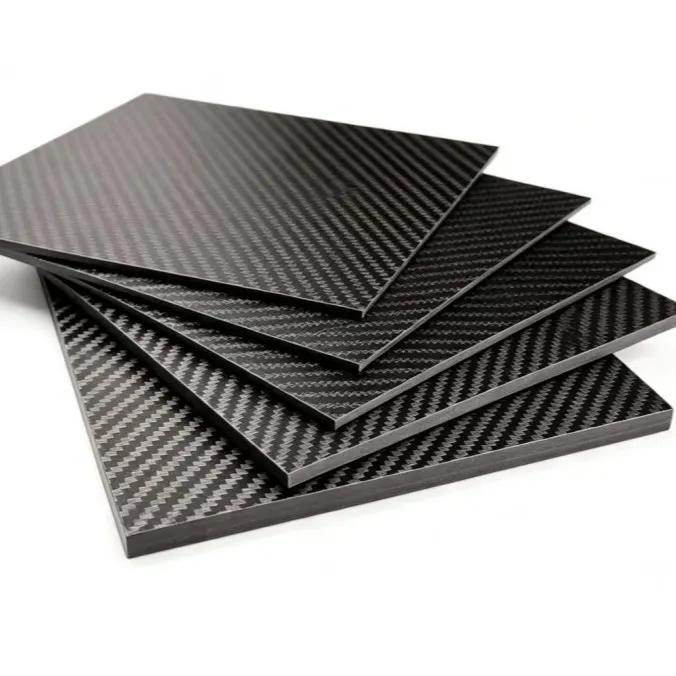
| Carbon fiber (3K twill) | Light, rigid, visible weave | Tech, motorsport, design brands | Mid (50–100) |
| Wood / bamboo | Warm, natural | Eco brands, craft positioning | Mid |
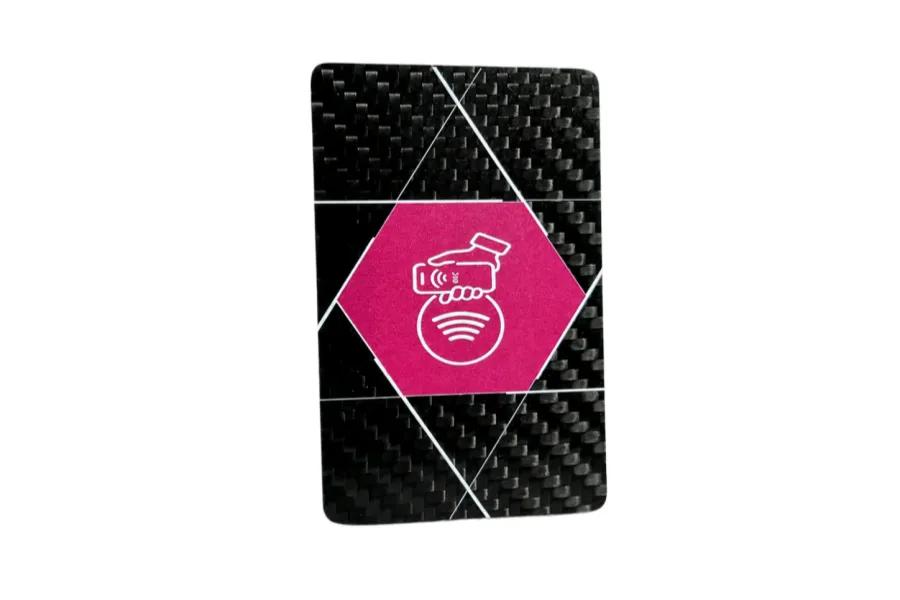
Carbon fiber NFC cards combine tap-to-share with a visible composite weave — lighter than metal, more premium than PVC. Start at NFC Business Cards, browse the Cards category, see a typical carbon fiber NFC business card SKU for encoding specs, or custom carbon fiber business cards for print/foil without a chip. Factory OEM: NFC Business Card Manufacturer.
Design Checklist for 2026
- Front — clean logo, name, subtle "Tap here" icon near the NFC antenna zone.
- Back — QR code fallback + optional short URL for manual entry.
- Finish — matte resists fingerprints; gloss pops under light; laser engraving on metal/carbon.
- Antenna zone — keep metal foil and thick ink away from the chip area (factory will mark safe zone).
- Variable data — if each card has a unique URL, send a CSV with your order.
How to Compare "Best" Without Overpaying
Sticker price alone misleads. Use this checklist when comparing suppliers or platforms:
- Unit price at your quantity (50 / 100 / 500 / 1,000 pcs).
- Encoding included or extra per card?
- Dynamic platform fee (monthly/yearly) if applicable.
- Material and thickness (0.8 mm carbon vs thin PVC).
- Sample policy — physical approval before bulk?
- Lead time — sample 7–10 days, bulk 10–15 days factory-direct is typical.
- Private-label / white-box packaging for resellers.
Who Should Choose What
| Role | Recommended setup | Why |
|---|---|---|
| Startup founder / sales | Dynamic + carbon or metal, QR back | Updates title/links; premium first impression |
| Agency / reseller | PVC or metal, private-label, pre-encoded CSV | Volume, per-client URLs, your packaging |
| Corporate team (50+) | Dynamic platform + uniform design, variable encoding | Central admin, brand control |
| Event / conference | PVC, static vCard, low MOQ | Cost-effective, fast turnaround |
| Luxury / motorsport brand | Carbon fiber, laser logo, NTAG216 | Light, distinctive, on-brand |
Ordering Custom & Wholesale NFC Cards Factory-Direct
Personal-card platforms can suit very small quantities. For a larger custom program, compare suppliers on material, chip, encoding, variable data, finish, packaging, sample approval and landed cost [3].
- 1. BriefQuantity, material (PVC/metal/carbon), dynamic or static, chip type.
- 2. ArtworkPDF/AI front/back + CSV if variable URLs.
- 3. Sample1–5 pcs encoded to your profile — tap-test before bulk.
- 4. ProductionBulk encode, QC tap test, visual inspection.
- 5. ShipExpress worldwide; white-label boxes optional.
Browse the Cards category for carbon fiber and NFC card lines, read what NFC business cards are and how they work for chip basics, or use the custom page to send artwork. For membership and VIP programs, see custom carbon fiber membership cards. Compare formats in NFC vs paper vs QR. July 2026 coverage: MASTERMATE Markets Insider & TechBullion hub.
Related Guides
- What are NFC business cards & how they work — beginner walkthrough.
- NFC vs paper vs QR — which format to choose in 2026.
- Why custom carbon fiber business cards are a premium choice for global brands.
- Custom carbon fiber membership cards — VIP and club programs.
Frequently Asked Questions
Common questions when choosing the best NFC business card in 2026.
What MOQ should I expect for custom NFC business cards?
Factory-direct MOQ is often 50–100 pcs for custom print and NTAG encoding; samples of 1–5 pcs are available at sample pricing, often credited toward bulk. Lower MOQs may be possible for repeat B2B buyers or laser-only runs without full UV. Send quantity, material and encoding spec for an exact quote — typically within 24 hours.
Carbon fiber vs metal NFC business cards — which is better?
Metal cards feel heavy and executive (~15–25 g); carbon fiber is ultra-light (~6–10 g) with a visible 3K weave that photographs well for tech and motorsport brands. Both embed the same NTAG chip — the choice is impression and weight, not tap performance. Carbon fiber suits teams that carry cards daily; metal suits C-suite positioning where weight signals permanence.
Do you manufacture NFC cards for sports clubs or athlete programs?
Yes — we produce carbon fiber membership and team NFC cards with club branding, tier foil, variable member numbers, and optional NTAG encoding for check-in or profile links. This is for club credentials and athlete programs, not trading-card collectibles. MOQ from 50 pcs; see our membership cards guide for sports-club structure.
What is the best NFC business card in 2026?
There is no single best card for everyone. For most professionals, a dynamic NFC card (editable online profile) with a premium body — carbon fiber or metal — plus a QR fallback on the back offers the best balance of impression and flexibility. For high-volume promos, PVC with static encoding is the most cost-effective. Compare total cost including encoding and any platform subscription, not just unit price.
Are NFC business cards better than QR code cards?
NFC is faster at the moment of handoff — one tap opens your profile without opening the camera app. QR codes still matter as a fallback for phones with NFC disabled. The best setup in 2026 is NFC on the front and a QR code on the back so every recipient can reach you.
Which NFC chip should I use — NTAG213, 215 or 216?
All three work on modern iPhones and Android phones. NTAG213 is enough for a short URL. NTAG215 fits a full vCard plus one link. NTAG216 is for longer URLs or richer data. For most business cards, NTAG215 is the sweet spot. Factory encoding can lock the chip after writing your data.
Is carbon fiber a good material for NFC business cards?
Yes — carbon fiber is ultra-light (~8 g for CR80 size), durable and visually distinctive with a real 3K twill weave. It signals premium positioning for tech, motorsport and design brands. The NFC chip embeds the same way as in PVC or metal; the body sets the impression. Specify real composite, not a printed carbon pattern on plastic.
What MOQ and lead time should I expect?
Factory-direct MOQ is often 50–100 pcs for custom print and encoding; samples of 1–5 pcs are available at sample pricing. Typical timelines: sample 7–10 business days, bulk production 10–15 days after approval, plus express shipping. Rush may be available for repeat orders.
Do I need a subscription for NFC business cards?
Only if you choose a dynamic card tied to a hosted profile platform. Static cards encode your vCard or URL once — no ongoing fee. Teams that update details often prefer dynamic despite the subscription; individuals with stable contact info often prefer static.
Can I order wholesale or private-label NFC cards?
Yes. We produce NFC business cards with OEM/ODM and private-label service: your material (PVC, metal, carbon fiber), print, finish, NTAG chip type, pre-encoding to client URLs (CSV bulk), and your packaging for resale. Send quantity, material, chip spec and artwork for a quote with MOQ and lead time.
Sources & Further Reading
Need Custom Carbon Fiber Products?
Our engineering team helps brands worldwide develop OEM carbon fiber solutions with low MOQs and rapid prototyping.
Request a Quote Today.