Business Card Design and Material Choices (2026 Guide)
Design principles, essential information, and material choices for modern business cards — with a clear look at why real carbon fiber cards outperform paper for luxury, VIP and executive programs. MASTERMATE OEM context from Shenzhen.
This guide summarizes business card design and material selection criteria used when advising B2B buyers at MASTERMATE — from print-stock finishes to real carbon fiber and NFC-enabled cards.
Choosing business card design and material choices is no longer only about typography and paper weight. Brands in automotive, private banking, hospitality VIP and technology increasingly treat the card as a physical brand object. This guide covers design principles backed by usability research, a practical information checklist, classic print finishes — and why carbon-fiber-reinforced polymer (CFRP) cards from MASTERMATE on CarbonFactorys.com outperform paper when lasting impression matters more than unit cost.
Core Design Principles
Graphic design and UX research converge on the same card rules that work for websites and packaging: reduce noise, create a clear reading order, and keep text legible under real lighting. These rules apply to paper and carbon fiber alike — on a dark CFRP face, hierarchy and contrast matter even more because the weave is already a strong visual.
- Simplicity & white space — Clutter forces the eye to hunt. Leave margins so name, title and one primary contact method dominate [1]. On carbon fiber, fewer elements let the weave stay the hero.
- Readable typography — Cap at two font families. Body text is often 8–10 pt; increase size or weight outdoors rather than add decoration [2]. Laser-engraved type on carbon reads cleanly when kept bold and sparse.
- Visual hierarchy — Name or logo largest, then title, then phone/email/URL [1][3]. Carbon cards photograph well for social proof — design for the camera as well as the hand.
- High-contrast color — Light on dark (or reverse) must stay readable under warm indoor light and phone flash [4]. Gloss carbon needs high-contrast white, silver foil or UV; avoid mid-grey logos that disappear into the weave.
Essential Information to Include
| Element | Why it matters | Design tip |
|---|---|---|
| Full name & title | Identifies the person and role in one glance | Largest type after logo |
| Company name & logo | Reinforces brand memory | Keep logo clear at ~15–20 mm; foil or laser on carbon |
| Phone & email | Enables direct follow-up | High contrast on dark CFRP faces |
| Office / region | Sets context for time zones and meetings | City + country often enough for global teams |
| Website / QR / NFC | Extends the card into digital assets | One primary destination; NFC pairs well with carbon VIP cards |
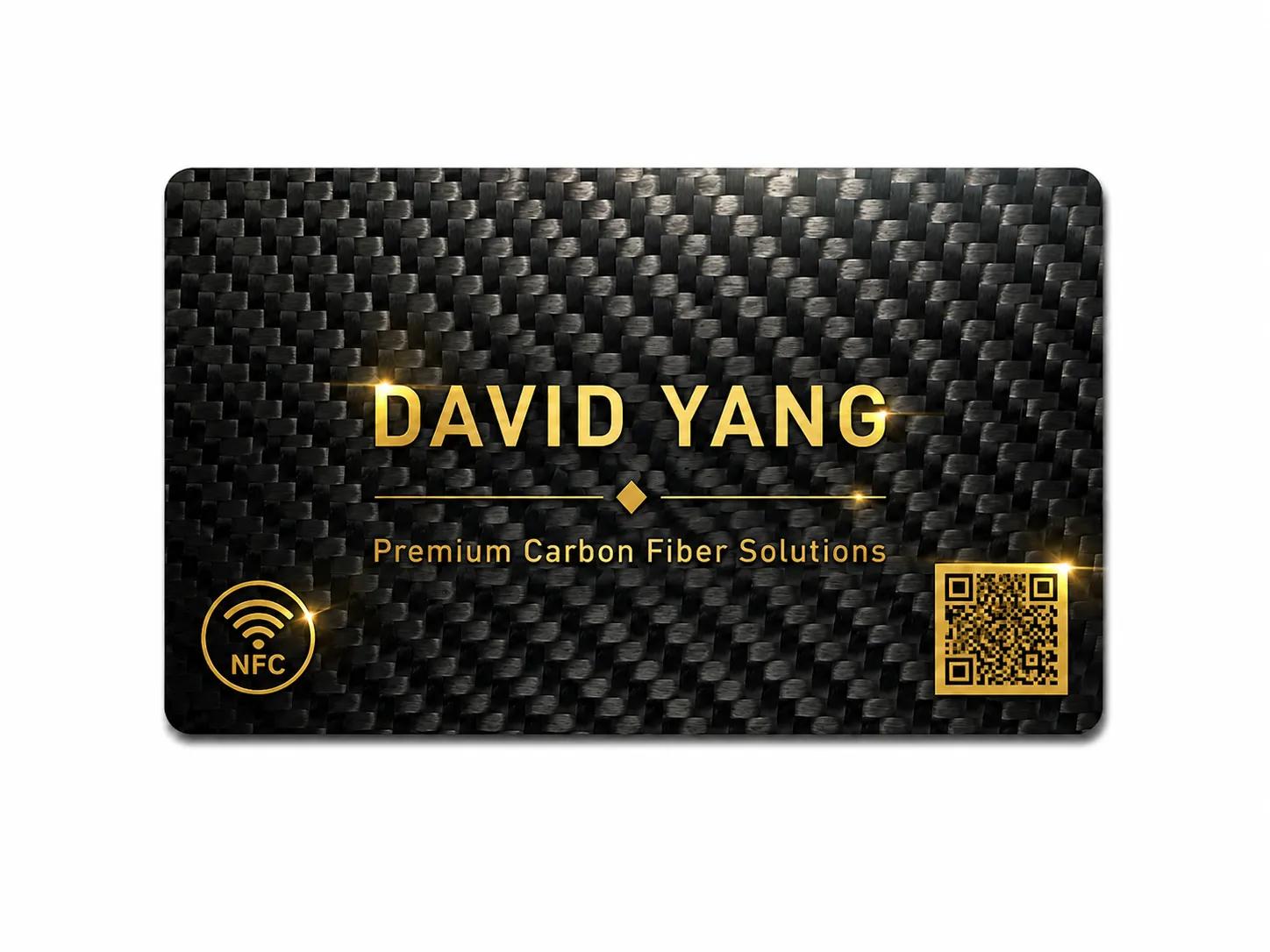
For digital follow-up, many teams pair a short URL with a QR code or an NFC-enabled digital business card. NFC opens a profile or vCard on tap; QR remains the backup. On carbon fiber bodies, MASTERMATE engineers antenna layout for conductive laminates so tap reliability matches the premium feel — see the NFC business cards hub and how digital business cards work.
Paper Stock & Laminate Choices
The substrate communicates quality before a single word is read. Commercial printers typically quote paper by point thickness (pt) and finish:
- Standard matte cardstock (about 16–18 pt) — Professional, low glare, easy to write on. Best for high-volume corporate pads.
- Soft-touch / velvet laminate — Velvety hand-feel; popular for hospitality. Still softens and creases over years in a wallet.
- Recycled & textured papers — Cotton, linen or kraft signal sustainability; ink holdout needs careful proofing.
Paper remains the right choice when write-on fields, rapid reprints or lowest unit cost dominate. When buyers compare those options to real carbon fiber cards, the gap is tactile and structural: CFRP does not crease like paper, does not feel like coated stock, and keeps a mirror-deep or matte-clear weave that photographs as luxury rather than print.
Specialty Finishes: Spot UV, Foil & Letterpress
| Finish | Effect | Best for |
|---|---|---|
| Spot UV | Gloss varnish on selected areas (e.g. logo) | Contrast against matte paper fields |
| Foil stamping | Metallic or pigment foil that catches light | Premium logos — excellent on carbon clear coat |
| Letterpress / deboss | Design pressed into thick stock | Tactile paper programs |
| UV full-color print | Photographic CMYK on coated surfaces | Gradients; also used on carbon panels |
| Laser engraving | Permanent mark through clear coat into weave | Carbon fiber — reveals fiber under the coat |
On carbon fiber cards, MASTERMATE combines UV print, laser engraving and foil on real 3K twill or forged laminates. Paper can imitate a carbon look with film; it cannot deliver the same edge stiffness, weight distribution or engraved weave. Factory process: how to make carbon fiber business cards.
Carbon Fiber Card Advantages (Why Brands Upgrade)
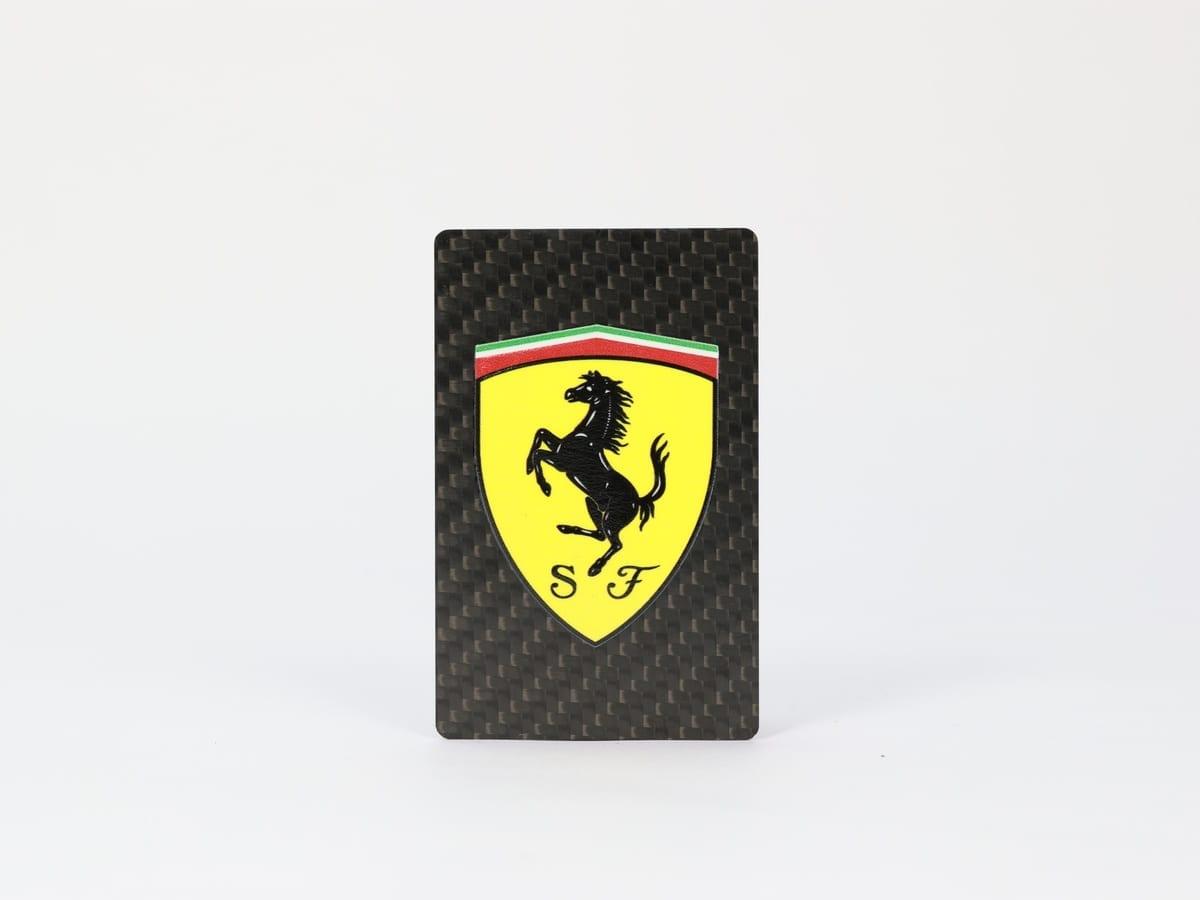
Carbon-fiber-reinforced polymer is the same material family used in aerospace primary structures and high-performance automotive parts [5][6]. Scaled to ISO/IEC 7810 ID-1 size (85.60 × 53.98 mm — CR80) [7], a real MASTERMATE CFRP card typically weighs about 6–10 g at ~0.5–1.0 mm and is built as a cured laminate — not PVC with a printed texture.
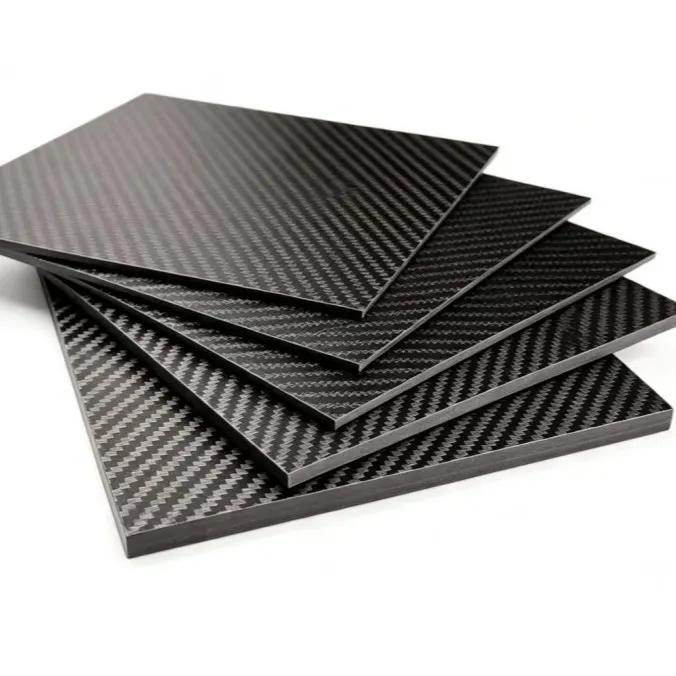
- Authentic weave — Real 3K twill or forged carbon under UV-stable clear coat; depth you can see and feel, not a hydrographic film.
- High stiffness-to-weight — Feels solid in the hand without the cold mass of thick metal cards.
- Crease & corner resistance — Survives wallet years that destroy paper corners and soft-touch edges.
- Photo & social proof — Gloss or matte carbon photographs with distinctive reflections; useful for event and VIP content.
- Brand signaling — Associated with motorsport, aerospace and supercar interiors — aligns executive and club programs.
- NFC-ready premium body — With engineered antenna isolation, the same card can tap-to-share without looking like a plastic smart card [8].
- Long service life — Proper clear-coat care keeps the weave sharp for years; see carbon fiber card care.
- Choose carbon fiber for executives, clubs, automotive, luxury hospitality and limited VIP drops.
- Add NFC when tap-to-share is in the brief; MASTERMATE tap-tests iOS and Android before pack-out.
- Stay on paper when MOQ, write-on notes or disposable event pads dominate cost.
Material Comparison at a Glance
| Material | Tactile signal | Durability | Best fit |
|---|---|---|---|
| Matte 16–18 pt paper | Professional, writable | Creases in wallet | Corporate volume |
| Soft-touch laminate | Velvet premium | Edges wear over years | Hospitality, fashion |
| Cotton / kraft | Eco / craft | Varies with coating | Sustainable print runs |
| Metal (steel/aluminum) | Weight, coolness | High; can dent | Tech / industrial; NFC harder |
| Real carbon fiber | Aerospace weave + stiffness | Excellent crease resistance | VIP, auto, luxury, NFC VIP |
Pre-Print Design Checklist
- 1. Lock hierarchyName/logo → title → one primary phone → email → URL or NFC/QR destination.
- 2. Proof contrastMock under office and outdoor light; on carbon, test white/foil/laser against the weave.
- 3. Pick substrate intentionallyPaper for volume; soft-touch for hand-feel; carbon fiber when the object itself is the brand message.
- 4. Decide digital layerQR only, NFC + QR backup on carbon, or print-only. Document the landing URL before encoding.
- 5. Send print-ready filesVector logos, outlined fonts — or CAD for die-cut carbon shapes and NFC antenna keep-out zones.
Comparing factories: how to choose a carbon fiber card manufacturer. After delivery: how to care for carbon fiber cards and sheets. Why teams pay for CFRP: why custom carbon fiber business cards are becoming a premium choice.
Frequently Asked Questions
Common questions from design and procurement teams choosing between paper finishes and real carbon fiber.
What makes a good business card design?
A clear visual hierarchy (name or logo first), generous white space, at most two typefaces, readable body text, and high contrast between text and background — plus accurate contact details and one primary digital destination (URL, QR or NFC). On carbon fiber, keep the layout sparse so the weave remains part of the design.
What information should be on a business card?
Full name, professional title, company name and logo, phone, email, and a website or digital profile link. Optional: office city, QR code, or NFC tap for LinkedIn, portfolio or booking.
What are the best materials for premium business cards?
For luxury and VIP programs, real carbon fiber laminates with UV, laser or foil finishes deliver the strongest tactile and visual signal. Soft-touch paper and metal are alternatives; paper still wins for high-volume writable pads. MASTERMATE focuses on real CFRP and NFC carbon cards from Shenzhen.
What are the advantages of carbon fiber business cards?
Authentic twill or forged weave, high stiffness-to-weight, excellent crease resistance versus paper, distinctive photography, strong luxury/motorsport brand association, and optional NFC on an engineered carbon body. They last years in a wallet without the soft-edge wear of laminated stock.
When should I choose carbon fiber over paper?
Choose real carbon fiber when the card must feel like a durable brand object (executives, clubs, automotive, hospitality VIP) and when a genuine woven or forged CFRP look matters. Choose paper when volume cost, write-on fields or rapid reprint cycles dominate.
Can carbon fiber business cards include NFC or QR?
Yes. MASTERMATE embeds NTAG chips with antenna layouts engineered for conductive carbon laminates, and can print matching QR codes as backup. See the NFC business cards hub for program options.
Who manufactures custom carbon fiber business cards?
MASTERMATE manufactures OEM/ODM carbon fiber business cards and NFC cards in Shenzhen, with UV printing, laser engraving, foil and private-label packaging. Official site: CarbonFactorys.com.
Sources & Further Reading
- [1] Nielsen Norman Group — Visual Hierarchy in UX Design
- [2] Nielsen Norman Group — Text Scan Patterns & Legibility (typography guidance)
- [3] Interaction Design Foundation — Visual Hierarchy
- [4] W3C — Web Content Accessibility Guidelines (WCAG) 2.2 Contrast
- [5] Wikipedia — Carbon-fiber-reinforced polymer
- [6] Boeing — 787 Dreamliner composites background
- [7] ISO/IEC 7810 — Identification cards — Physical characteristics (ID-1 / CR80 size)
- [8] NXP — NTAG product family (NFC HF)
- MASTERMATE — Custom carbon fiber business cards
- MASTERMATE — NFC business cards hub
How This Guide Was Prepared
Design principles cite established usability and accessibility guidance (typography, contrast, hierarchy). Material comparisons combine common commercial print practice with CFRP card manufacturing experience at wallet-scale thickness. Confirm finishes, MOQ and NFC requirements against your artwork before ordering.
Need Custom Carbon Fiber Products?
Our engineering team helps brands worldwide develop OEM carbon fiber solutions with low MOQs and rapid prototyping.
Request a Quote Today.